

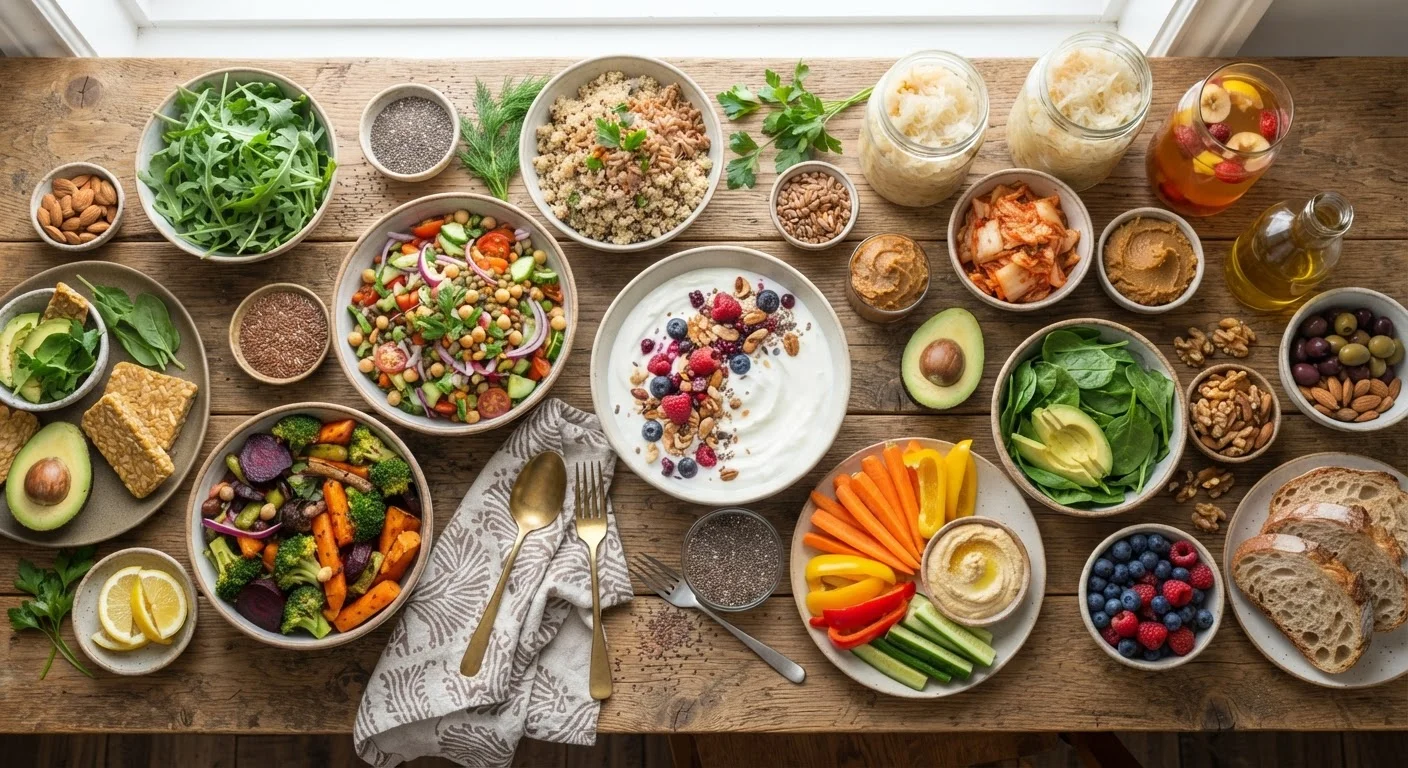
Key Takeaways
- Dietary fiber feeds beneficial gut bacteria, helping them thrive and produce health-supporting compounds.
- Diverse plant foods tend to support greater microbial diversity in the gut.
- Fermented foods introduce live microorganisms that may benefit the gut environment.
- Highly processed foods and excess added sugar are associated with reduced microbial diversity.
- Consistent dietary patterns matter more than any single superfood or supplement.
Gut Microbiome
The gut microbiome is the vast community of trillions of bacteria, fungi, viruses, and other microorganisms living in your digestive tract. These microbes influence digestion, immune function, inflammation, and even mood. The composition of your microbiome is shaped by many factors - and diet is one of the most powerful levers you have.
Microbial diversity - the variety of different species present - is generally considered a marker of a healthier microbiome, though the field is still evolving and context matters considerably.
Why the Microbiome Responds to What You Eat
Your gut microbes depend on the food you consume for their own survival. When you eat, you are not just feeding yourself - you are feeding a complex ecosystem. Different microbial species thrive on different substrates, and your dietary choices determine which populations flourish and which diminish.
For a foundational overview of how the digestive system and microbiome interact, see Gut Health 101. The key principle is that microbial communities are dynamic: they respond to nutritional input relatively quickly, making diet one of the most modifiable influences on gut composition.
~38 trillion
Microbial cells estimated in the human gut
Current estimates suggest the number of microbial cells in the gut is roughly equivalent to the number of human cells in the body, underscoring the scale of this ecosystem.
95%
Americans not meeting daily fiber recommendations
Public health data broadly indicates the vast majority of US adults consume less dietary fiber than recommended guidelines suggest, limiting the substrate available for beneficial gut bacteria.
30+
Plant types per week linked to higher diversity
Research associated with the American Gut Project found that people eating more than 30 different plant foods weekly had significantly more diverse gut microbiomes than those eating fewer than 10.
Fiber: The Microbiome's Primary Fuel Source
Dietary fiber - found in vegetables, fruits, legumes, and whole grains - is the single most studied dietary factor in microbiome research. Many gut bacteria ferment fiber into short-chain fatty acids (SCFAs) such as butyrate, propionate, and acetate. These compounds help maintain the intestinal lining, regulate immune responses, and may reduce inflammation throughout the body.
A diet consistently low in fiber limits the substrate available to fiber-fermenting bacteria, which research associates with reduced microbial diversity. Most Americans fall well short of recommended fiber intake - an issue explored in depth in our article on dietary fiber and how to increase it.
Eating a variety of fiber sources - not just one type - appears particularly beneficial. Different fiber structures feed different bacterial species, and plant diversity in the diet is strongly associated with greater microbial richness.
Practical Way to Increase Plant Variety
A simple goal is to aim for a wider variety of plant foods across the week rather than focusing on eating more of the same ones. Try rotating your vegetable and grain choices, adding a new legume to a familiar recipe, or including an unfamiliar fruit in your rotation. Small additions to an existing pattern are easier to sustain than overhauling an entire diet at once.
Fermented Foods and Live Microorganisms
Yogurt, kefir, kimchi, sauerkraut, miso, and kombucha are all fermented foods containing live microorganisms. Some research suggests that regularly consuming these foods can increase microbial diversity and reduce populations of potentially harmful bacteria. However, the evidence is still developing and varies by food type and individual.
It's worth approaching fermented food claims with measured expectations. Our editorial on fermented foods and gut health provides a balanced look at what is well-supported and where gaps remain. For most people, including fermented foods as part of an overall varied diet is a reasonable, low-risk dietary habit - but they are not a standalone solution.
What Undermines Gut Microbial Health
Just as certain foods support microbiome diversity, others are consistently associated with negative shifts. Diets high in ultra-processed foods, added sugars, and low in plant variety have been linked to reduced microbial diversity and higher levels of inflammatory microbial metabolites in research studies.
Excess added sugar can preferentially feed bacteria associated with inflammation, while the emulsifiers and additives common in highly processed foods may disrupt the mucus layer protecting the gut lining. Chronic low fiber intake, noted above, further limits the capacity for beneficial fermentation.
Alcohol consumed at heavy levels is also associated with altered gut microbiome composition and increased intestinal permeability. These are population-level associations from observational research - individual responses vary, and causality is complex.
Antibiotics and the Microbiome
Antibiotic use can substantially disrupt gut microbial communities, sometimes reducing diversity significantly in the short term. For most people, the microbiome partially recovers over months, though full recovery varies by individual and antibiotic type. If you have concerns about how antibiotic treatment may be affecting your gut health, speak with your healthcare provider rather than self-treating with supplements.
Dietary Patterns Matter More Than Individual Foods
The microbiome research literature consistently points to overall dietary patterns rather than single foods or nutrients as the strongest predictors of gut health. A diet centered on whole plant foods, adequate fiber, moderate fermented food intake, and limited ultra-processed foods is broadly supportive of microbial diversity - whether or not any given food is labeled a 'superfood.'
This aligns with broader nutrition science findings. Our article on eating patterns associated with long-term health covers the wider picture of how overall diet quality relates to health outcomes. The gut microbiome appears to be one important pathway through which these patterns exert their effects.
How meals are approached also matters. Mindful eating practices can support more consistent, varied dietary choices without the rigidity of restrictive diets. Consistency over time - not perfection at any single meal - is what research points to as most meaningful for microbiome health.
This article is for general informational and educational purposes only and does not constitute medical or nutritional advice. Individual health needs vary. Please consult a qualified healthcare professional before making significant changes to your diet, particularly if you have a digestive condition or other chronic health concern.