

| General adult protein RDA | 0.8 g per kg of body weight per day (U.S. Dietary Reference Intakes (DRI)) |
| Higher needs groups | Older adults, pregnant individuals, highly active people (Academy of Nutrition and Dietetics) |
| Essential amino acids | 9 (must come from food) (National Institutes of Health) |
| Plant foods that are complete proteins | Soy (tofu, edamame, tempeh), quinoa, buckwheat (USDA FoodData Central) |
| Protein calories per gram | 4 kcal per gram (Standard nutrition reference) |
Why Protein Sources Matter Beyond the Total
Getting enough protein each day matters, but where that protein comes from also shapes the nutritional picture. Different food groups deliver protein alongside distinct combinations of fats, fiber, vitamins, and minerals - which means the source affects far more than just your daily gram count.
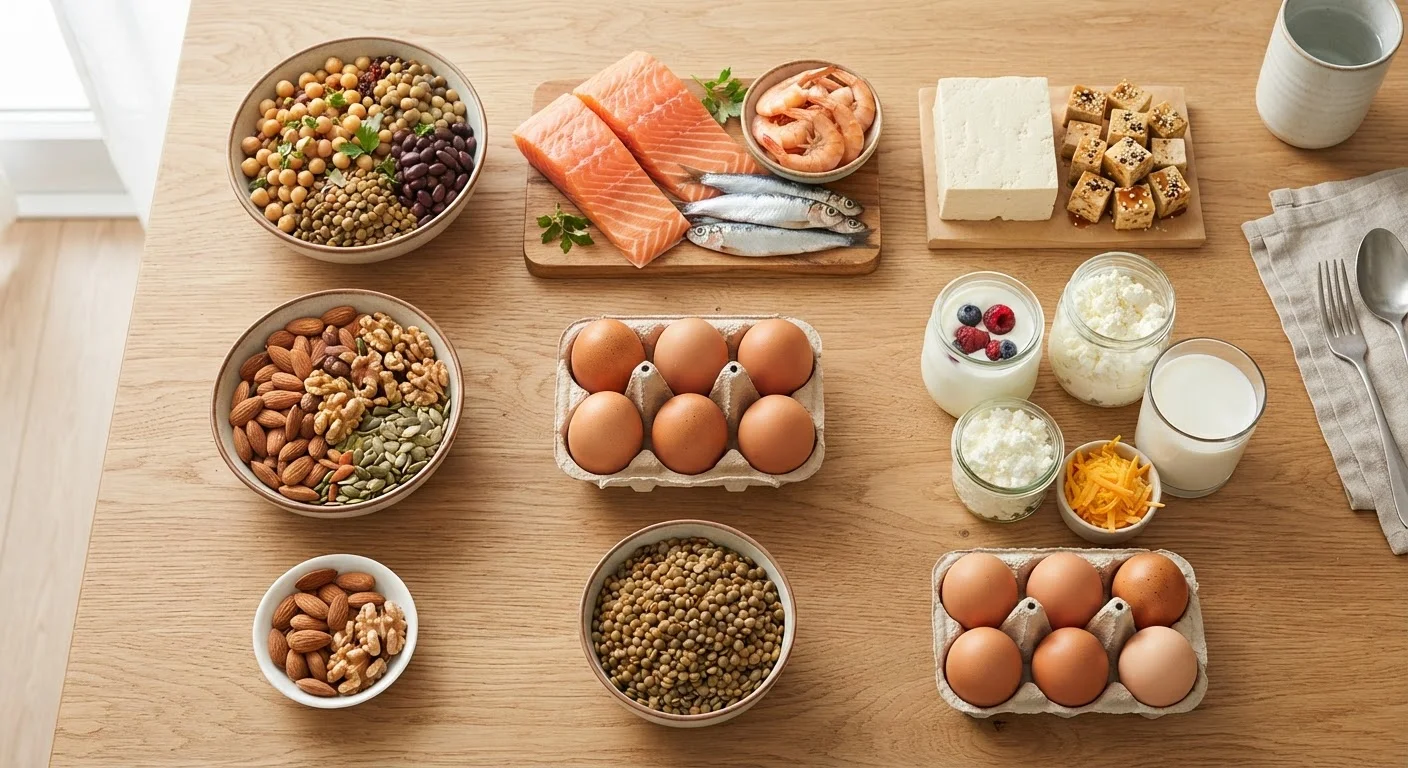
This reference covers approximate protein content across major food groups. Values shown are general estimates for common serving sizes; exact amounts vary by preparation method, cut, variety, and brand. For precise data, the USDA FoodData Central database is a reliable public resource.
For a broader look at how different dietary patterns compare nutritionally, see our comparison of plant-based and omnivorous diets.
| General adult protein RDA | 0.8 g per kg of body weight per day (U.S. Dietary Reference Intakes (DRI)) |
| Higher needs groups | Older adults, pregnant individuals, highly active people (Academy of Nutrition and Dietetics) |
| Essential amino acids | 9 (must come from food) (National Institutes of Health) |
| Plant foods that are complete proteins | Soy (tofu, edamame, tempeh), quinoa, buckwheat (USDA FoodData Central) |
| Protein calories per gram | 4 kcal per gram (Standard nutrition reference) |
Animal Protein Sources at a Glance
Animal foods are often called complete proteins because they contain all nine essential amino acids in proportions the body uses readily. Here's a general look at common sources:
- Chicken breast (3 oz cooked): ~26 g protein, low in saturated fat
- Canned tuna (3 oz): ~22 g protein, a convenient pantry staple
- Salmon (3 oz cooked): ~21 g protein, also a source of omega-3 fatty acids
- Lean ground beef (3 oz cooked): ~22 g protein; fat content varies by blend
- Eggs (2 large): ~12 g protein, plus choline and fat-soluble vitamins
- Greek yogurt (6 oz, plain): ~15-17 g protein; dairy also contributes calcium
- Cottage cheese (½ cup): ~14 g protein, low in calories relative to protein content
- Milk (1 cup): ~8 g protein; available in varying fat levels
If you exercise regularly, protein timing and muscle recovery is a topic worth understanding - the science is more nuanced than common gym advice suggests.
~30%
Share of US adults not meeting protein RDA
Estimates vary, but older adults in particular often fall short of recommended intake according to national dietary survey data.
0.8 g/kg
Minimum daily protein per kilogram of body weight
This is the Recommended Dietary Allowance for sedentary healthy adults, established by U.S. Dietary Reference Intakes.
16 g
Protein in 3 oz of tempeh
Tempeh is one of the highest-protein plant foods per serving, making it a practical anchor for plant-forward meals.
Plant Protein Sources and How to Use Them
Plant foods can collectively meet protein needs, though most individual sources are lower in one or more essential amino acids. Eating a variety throughout the day - rather than worrying about combining at every meal - generally covers this gap for most people.
Complete protein
A protein source that contains all nine essential amino acids in sufficient amounts. Most animal foods and a few plant foods (such as soy and quinoa) qualify.
Essential amino acids
The nine amino acids the body cannot make on its own and must obtain through food. They are histidine, isoleucine, leucine, lysine, methionine, phenylalanine, threonine, tryptophan, and valine.
Complementary proteins
A pairing of two or more plant foods that together provide all essential amino acids - for example, rice and beans. Research suggests these pairings don't need to happen at the same meal.
Bioavailability
The proportion of a nutrient that the body can actually absorb and use. Animal proteins generally have higher bioavailability than most plant proteins, though both contribute meaningfully to overall intake.
- Lentils (½ cup cooked): ~9 g protein, plus fiber and iron
- Chickpeas (½ cup cooked): ~7 g protein; also used as hummus or roasted snacks
- Black beans / kidney beans (½ cup cooked): ~7-8 g protein
- Edamame (½ cup shelled): ~9 g protein; one of the few complete plant proteins
- Tofu (3 oz): ~8 g protein; absorbs flavors well in cooking
- Tempeh (3 oz): ~16 g protein, fermented and higher in protein than tofu
- Quinoa (½ cup cooked): ~4 g protein; a complete protein grain
- Peanut butter (2 tbsp): ~7 g protein; also provides healthy unsaturated fats
- Almonds (1 oz / ~23 nuts): ~6 g protein, alongside vitamin E and magnesium
Vegetarians building meals around these foods may want to pay attention to a few other key nutrients. Our guide to vegetarian nutrition covers what to plan around beyond protein.
This article is for general informational and educational purposes only and is not a substitute for personalized dietary or medical advice. Consult a registered dietitian or qualified healthcare provider for guidance specific to your health needs and circumstances.