

Key Takeaways
- Controlled breathing activates the parasympathetic nervous system, reducing physiological stress responses.
- Several techniques - including box breathing and diaphragmatic breathing - have research backing for stress relief.
- No single technique is universally superior; effectiveness varies by individual and context.
- Breathing exercises are generally safe but are not a substitute for professional care in clinical anxiety or trauma.
- Consistency matters more than technique perfection - brief daily practice builds the most durable benefit.
Our Verdict
Controlled breathing techniques are among the most accessible, low-risk tools for everyday stress management, supported by a growing body of physiological and psychological research. While no single method outperforms all others, diaphragmatic breathing and box breathing have the broadest evidence base for general use. The most important factor is regular, sustained practice rather than choosing the 'perfect' technique.
| Best for | Recommended |
|---|---|
| Those seeking a structured, easy-to-learn technique for acute stress | Box Breathing |
| Those wanting a foundational practice for chronic tension and relaxation | Diaphragmatic Breathing |
| Those managing pre-sleep anxiety or winding down | 4-7-8 Breathing |
| Those integrating breathwork with mindfulness or meditation | Alternate Nostril Breathing |
Why Breathing Affects Stress: The Physiology
Breathing is one of the few autonomic bodily functions that can also be voluntarily controlled - and that dual nature makes it a powerful lever for influencing the nervous system. When stress is perceived, the sympathetic nervous system triggers the well-known fight-or-flight response: heart rate climbs, respiration quickens, and cortisol is released. Slow, deliberate breathing can interrupt this cascade by stimulating the vagus nerve and activating the parasympathetic nervous system - sometimes called the rest-and-digest state.
Research published in journals including Frontiers in Human Neuroscience and Psychophysiology has documented measurable reductions in heart rate variability, cortisol levels, and self-reported anxiety following structured breathing protocols. The precise mechanisms are still being studied, but the core finding - that voluntary breath control modulates stress physiology - is well established. For a broader look at what chronic stress does to the body over time, see how stress affects the body over time.
Four Common Techniques Compared
Multiple breathing practices have been studied for stress relief. Here is how four of the most widely used approaches compare across key dimensions.
| Diaphragmatic Breathing | Box Breathing | 4-7-8 Breathing | Alternate Nostril Breathing | |
|---|---|---|---|---|
| Core mechanism | Belly expansion activates diaphragm | Equal-count rhythm calms nervous system | Extended exhale drives relaxation | Alternating airflow, yogic tradition |
| Ease of learning | Moderate - requires posture awareness | Easy - simple structure | Moderate - count timing needed | Moderate - hand coordination required |
| Strength of evidence | Strong - multiple RCTs | Moderate - occupational and clinical studies | Emerging - promising early research | Limited - small studies only |
| Best use context | Everyday practice, chronic tension | Acute stress, high-pressure moments | Pre-sleep anxiety, winding down | Meditation, yoga integration |
| Session length | 5-10 minutes effective | 2-5 minutes effective | 3-5 minutes typical | 5-10 minutes typical |
Each technique has a distinct mechanism and learning curve. Diaphragmatic breathing - expanding the belly rather than the chest - is often considered the foundation, since shallow chest breathing is itself associated with heightened arousal. Box breathing (inhale, hold, exhale, hold - each for equal counts) has been adopted in high-pressure professions partly because its structured rhythm is easy to recall under stress. The 4-7-8 method (inhale for 4 counts, hold for 7, exhale for 8) emphasizes the extended exhale, which research suggests has an outsized calming effect. Alternate nostril breathing, rooted in yogic tradition, has shown promise in small clinical studies for reducing blood pressure and anxiety, though the evidence base remains thinner than for diaphragmatic techniques.
Start With the Exhale
If you're unsure which technique to try first, focus simply on making your exhale longer than your inhale - for example, inhaling for 4 counts and exhaling for 6. This ratio activates the parasympathetic response without requiring you to learn a full protocol. Once comfortable, you can layer in a more structured approach like box breathing or diaphragmatic practice.
What the Research Does - and Doesn't - Confirm
The evidence for breathing techniques is encouraging but should be understood with appropriate nuance. Most studies are relatively small, often self-reported, and vary considerably in how they define and measure outcomes. A 2017 study in Frontiers in Psychology found that a brief diaphragmatic breathing program reduced cortisol and improved sustained attention. A 2023 Stanford-led study compared several daily breathing techniques against mindfulness meditation, finding cyclic sighing (a double inhale followed by a long exhale) produced the greatest self-reported improvement in mood and reduction in respiratory rate - a notable finding, though the researchers themselves noted the need for replication.
~5 min
Daily practice linked to stress reduction
Several controlled studies have found measurable stress marker changes with daily sessions as short as five minutes.
~68%
Participants reporting reduced anxiety
A 2023 Stanford-led study found the majority of participants using daily breathing techniques reported reduced anxiety over one month.
What the research does not yet confirm is a definitive hierarchy of techniques, optimal session length, or how effects compare across populations with clinical anxiety disorders versus everyday stress. Breathing exercises complement - but do not replace - evidence-based treatments for diagnosed conditions. Anyone experiencing persistent anxiety, panic attacks, or trauma-related symptoms should consult a qualified healthcare professional. For context on how breathwork fits alongside other wellness habits, mindfulness practice shares a related evidence profile worth understanding.
Practical Guidance for Getting Started
The most consistent finding across the literature is that regularity of practice matters more than which specific technique is used. Even sessions as brief as five minutes, practiced daily, have been associated with measurable shifts in stress markers in controlled settings. A few principles apply across techniques:
- Prioritize the exhale. A slower, longer exhale relative to the inhale appears to be the key driver of parasympathetic activation in most protocols.
- Nasal breathing is generally preferred for everyday stress practice, as it filters and regulates airflow more effectively than mouth breathing.
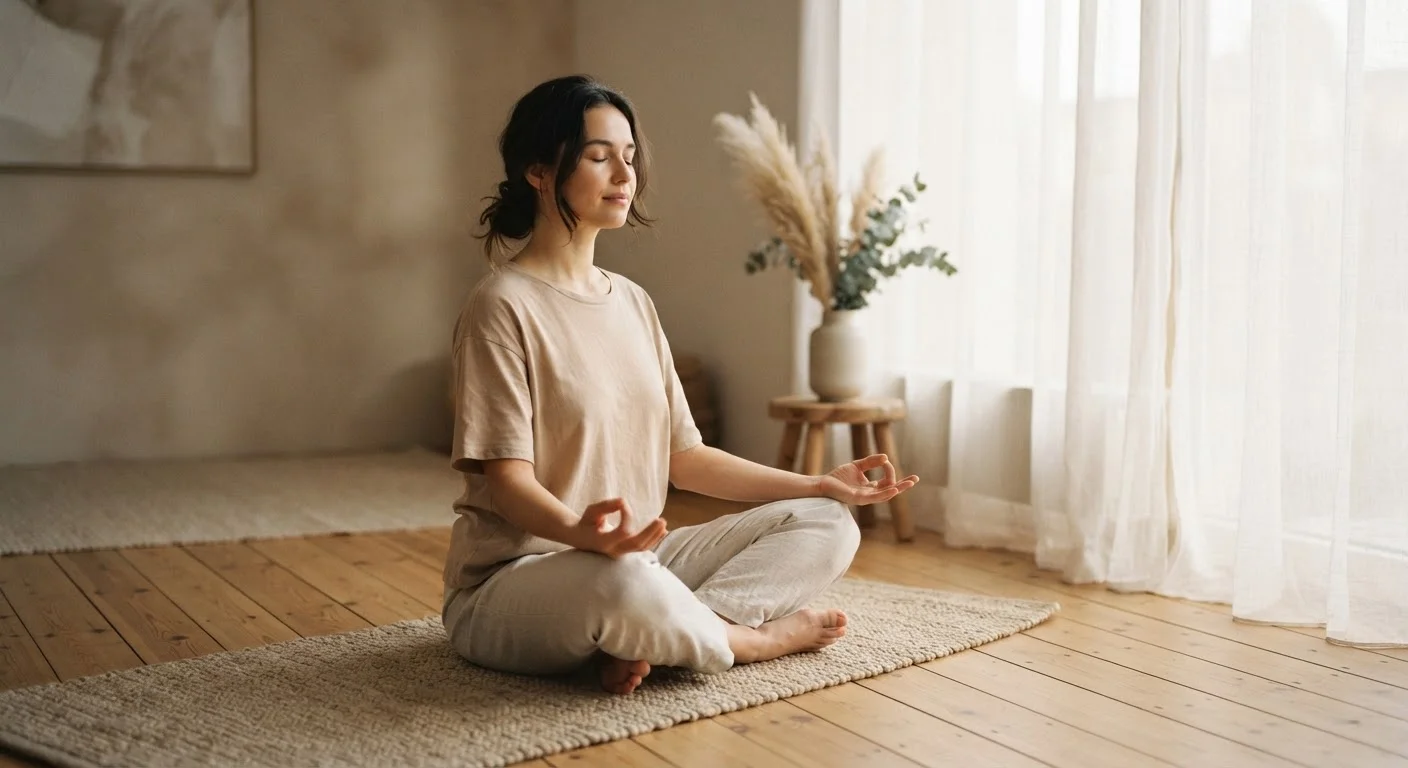
- Posture supports the practice. An upright seated position or relaxed lying position allows the diaphragm to move freely.
- Consistency outperforms intensity. Short daily sessions tend to outperform infrequent longer ones in sustaining effects.
Breathing techniques also pair well with other evidence-supported habits. Physical activity and breathwork address stress through different but complementary pathways, and workplace stress in particular may benefit from both approaches. If you're curious how breath control extends into physical performance, breathing techniques during exercise follow different principles suited to exertion.
This article is for general informational purposes only and does not constitute medical advice. If you are experiencing significant anxiety, stress-related health issues, or any mental health concerns, please consult a qualified healthcare professional.