

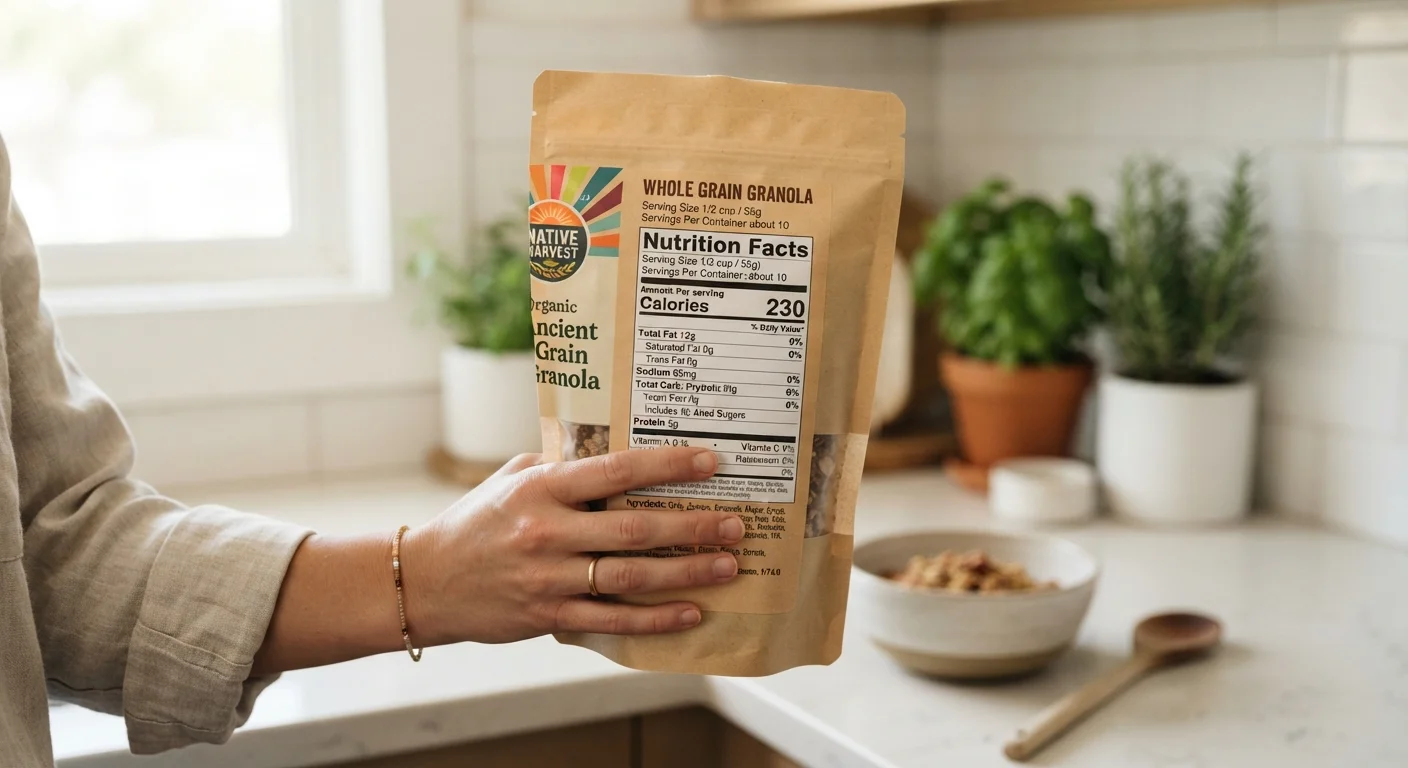
Key Takeaways
- Serving size is the foundation of every number on the label - always check it first.
- Percent Daily Values (%DV) are based on a 2,000-calorie reference diet and help contextualize nutrients.
- Nutrients like sodium, saturated fat, and added sugars are worth limiting; fiber and vitamins are worth prioritizing.
- The ingredient list and the Nutrition Facts panel work together to give a fuller picture of a food.
- Front-of-package claims are regulated but can be misleading without reading the full label.
What you will need
Why Nutrition Labels Exist - and Why They Can Be Confusing
The Nutrition Facts label is a federally mandated panel required on most packaged foods sold in the United States, regulated by the Food and Drug Administration (FDA). Its purpose is straightforward: give consumers standardized, comparable information to inform food choices. But the format - dense with numbers, percentages, and nutrient names - can feel more like a chemistry exam than a practical tool.
Much of the confusion stems from a few recurring misunderstandings: misreading serving sizes, conflating different types of fats or sugars, or placing too much weight on front-of-package claims without reading the full label. Understanding how the label is structured makes it considerably easier to use. For context on how front-of-package language relates to what's inside the package, see our piece on what terms like 'low fat' and 'multigrain' actually mean.
This Is General Information, Not Medical Advice
The guidance in this article is intended for general educational purposes only. Individual nutritional needs vary based on age, health status, activity level, and medical conditions. Always consult a registered dietitian or qualified healthcare provider before making significant changes to your diet, especially if you manage a chronic health condition.
For broader guidance on evaluating nutrition information, including how to assess credibility of sources you encounter, our article on evaluating online nutrition sources offers a practical framework.
How to Read a Nutrition Label Step by Step
The steps below walk through the Nutrition Facts label in the order it's designed to be read - from serving size at the top to vitamins and minerals at the bottom. Working through the label in sequence helps each figure make sense in relation to the others.
What you will need
Nutrition Facts Label
The federally required panel on packaged foods that lists serving size, calories, and key nutrients.
Ingredient List
Listed beneath or beside the Nutrition Facts panel; ingredients appear in descending order by weight.
Start with the serving size
Every number on a Nutrition Facts label - calories, fat, sodium, everything - applies to one serving, not necessarily the whole package. The serving size is displayed prominently at the top of the panel and is expressed in a common household measure (such as cups or pieces) alongside a metric weight in grams.
If a bag of chips lists a serving size as 28g (about 12 chips) but you eat double that, every value on the label doubles accordingly. This single step is the most important one: misreading serving size is the most common source of confusion when interpreting labels.
Read the calorie count in context
Calories measure the energy provided by one serving of the food. While calories matter as part of overall dietary balance, they don't distinguish between foods that are nutrient-dense and those that offer little nutritional value beyond energy.
A 200-calorie serving of nuts and a 200-calorie serving of a sugary snack have very different nutrient profiles. Use calorie information as one data point, not the only one. See our full breakdown of what the Nutrition Facts label is actually telling you for more on interpreting this figure in context.
Identify nutrients to limit
The label highlights several nutrients that most Americans consume in amounts associated with health concerns when eaten in excess. These include:
- Saturated fat - associated with cardiovascular risk at high intake levels
- Sodium - high intake is linked to elevated blood pressure in many people
- Added sugars - distinct from naturally occurring sugars; listed separately since 2020 FDA label updates
- Trans fat - largely removed from the US food supply but still worth checking
A lower %DV for these nutrients generally aligns with broader dietary guidance, though individual needs vary.
Identify nutrients to prioritize
Below the nutrients to limit, the label lists nutrients many people under-consume. These typically include dietary fiber, vitamin D, calcium, iron, and potassium. Choosing foods with higher %DV for these nutrients can support a more balanced diet over time.
Dietary fiber, in particular, is worth paying attention to - most Americans fall well short of recommended intake levels according to data from the USDA and CDC.
Understand Percent Daily Values (%DV)
Percent Daily Value tells you how much of a nutrient one serving contributes toward a daily total, based on a reference diet of 2,000 calories per day. This figure won't match everyone's actual needs - caloric requirements differ by age, sex, and activity level - but %DV is a consistent benchmark for comparing products.
Cross-reference the ingredient list
The Nutrition Facts panel and the ingredient list are complementary tools. Ingredients are listed in descending order by weight, meaning the first ingredient makes up the largest proportion of the food. A product listing sugar or refined flour as the first or second ingredient will have a very different nutritional profile than one leading with whole grains or vegetables.
The ingredient list also reveals what the numbers can't fully show - such as whether a food contains multiple forms of added sugar under different names, or what gives it its flavor and texture. Our guide to reading ingredient lists covers this in greater detail.
Use %DV as a Quick Reference Tool
A general rule of thumb from the FDA: 5% DV or less is considered low for a nutrient, while 20% DV or more is considered high. This can help you quickly assess whether a food is a meaningful source of a particular nutrient - or whether it contributes more than you might expect of something like sodium.
Don't Judge a Product by One Number
Focusing solely on calories or a single nutrient - like fat or carbohydrates - can give a misleading picture of a food's overall nutritional value. A holistic read of the full label, including the ingredient list, provides far more useful context than any single figure.
Once you're comfortable reading labels at the grocery store, the same skills transfer to other eating contexts. Our article on eating out without losing track of your nutritional goals applies similar principles to restaurant meals.
This article is for informational purposes only and is not a substitute for professional medical or dietary advice. Consult a qualified healthcare provider or registered dietitian for guidance tailored to your individual health needs.