
Nutrition Label Claims Decoded: What 'Low Fat,' 'Natural,' and 'Multigrain' Really Mean

| Regulatory Body for Nutrient Claims | U.S. Food and Drug Administration (FDA) (FDA Code of Federal Regulations, Title 21) |
| Definition of 'Low Fat' | 3g fat or less per serving (FDA nutrient content claim regulations) |
| Definition of 'Low Calorie' | 40 calories or less per serving (FDA nutrient content claim regulations) |
| Regulation Status of 'Natural' | Informal policy only - not formally regulated (FDA guidance on use of the term 'natural') |
| Definition of 'High In' (nutrient) | 20% or more of Daily Value per serving (FDA nutrient content claim regulations) |
| 'Multigrain' Regulation | No whole grain requirement - grain type unspecified (FDA labeling rules) |
Why Front-of-Package Claims Matter
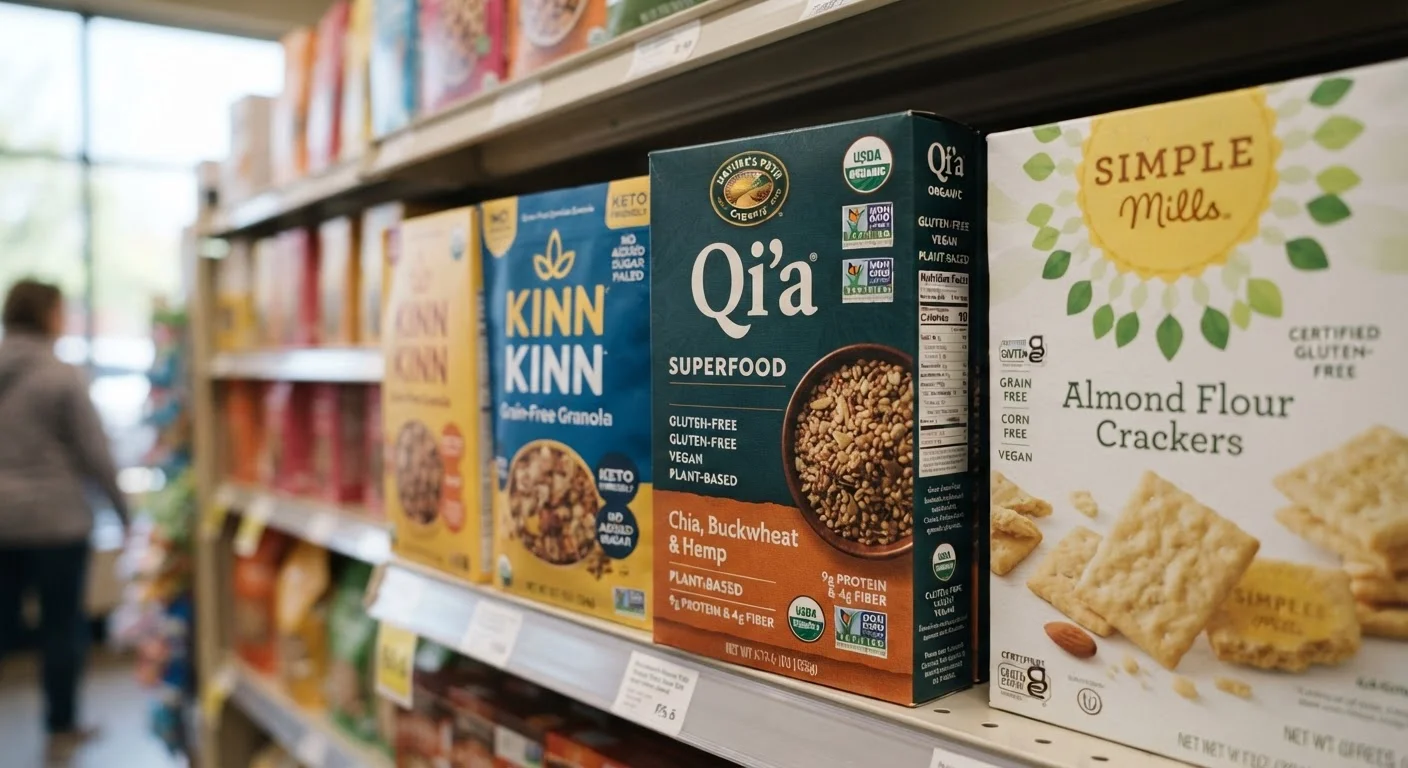
When you reach for a product at the grocery store, the front of the package is doing a lot of persuading. Words like "low fat," "natural," and "multigrain" are strategically placed to influence purchasing decisions. Some of these terms have precise, legally defined meanings established by the U.S. Food and Drug Administration (FDA). Others are largely unregulated and can be applied by manufacturers with little restriction.
Understanding the difference can help you evaluate packaged foods more critically - and pair that front-label information with what's actually on the Nutrition Facts panel and ingredient list. For a thorough walkthrough of the Nutrition Facts panel itself, see what the Nutrition Facts label is actually telling you.
| Regulatory Body for Nutrient Claims | U.S. Food and Drug Administration (FDA) (FDA Code of Federal Regulations, Title 21) |
| Definition of 'Low Fat' | 3g fat or less per serving (FDA nutrient content claim regulations) |
| Definition of 'Low Calorie' | 40 calories or less per serving (FDA nutrient content claim regulations) |
| Regulation Status of 'Natural' | Informal policy only - not formally regulated (FDA guidance on use of the term 'natural') |
| Definition of 'High In' (nutrient) | 20% or more of Daily Value per serving (FDA nutrient content claim regulations) |
| 'Multigrain' Regulation | No whole grain requirement - grain type unspecified (FDA labeling rules) |
FDA-Defined Terms: What They Actually Mean
The FDA regulates a category of language called nutrient content claims - specific words and phrases that describe the level of a nutrient in a food. These definitions apply consistently across all qualifying products.
Low Fat
An FDA-defined claim meaning the food contains 3 grams of fat or less per serving. It does not restrict sugar, sodium, or calorie content.
Fat-Free
Contains less than 0.5 grams of fat per serving. Despite sounding absolute, trace amounts of fat may be present.
Low Sodium
Contains 140 milligrams or less of sodium per serving, per FDA standards. 'Reduced sodium' means at least 25% less than the reference food.
Light (Lite)
A regulated term that can mean one-third fewer calories or 50% less fat compared to the standard version of the food. It can also legally refer to texture or color in some contexts.
Good Source Of
Contains 10-19% of the Daily Value for the specified nutrient per serving. 'Excellent source of' or 'high in' means 20% or more of the Daily Value.
Calorie-Free
Contains fewer than 5 calories per serving. The label can say zero, but a small caloric contribution is still possible.
A few key points worth noting: "Free" claims (fat-free, sugar-free, calorie-free) mean a food contains a negligible amount, not necessarily zero. "Light" can refer to calories, fat, or even color and texture - context matters. And "reduced" claims always compare the product to a standard reference food, not to any general health benchmark.
To understand how these claims interact with ingredient lists - and what to do when they seem to contradict each other - see reading ingredient lists.
Loosely Regulated or Unregulated Claims
Not every claim on a package carries FDA precision. Several widely used terms operate in a regulatory gray area.
- "Natural": The FDA has an informal policy that natural means a food contains nothing artificial or synthetic - but this is not a formal regulation, and enforcement is limited. A product labeled natural may still contain added sugars, refined oils, or heavily processed ingredients.
- "Multigrain": This simply means more than one type of grain was used. It says nothing about whether those grains are whole grains. A multigrain bread could be made primarily from refined white flour with a small amount of oats added.
- "Made with whole grain": Similar to multigrain - whole grain may be present, but it could represent a small fraction of total grain content. Look for "100% whole grain" or check that a whole grain is listed first in the ingredient list.
- "Lightly sweetened": No FDA definition exists for this phrase. It is determined entirely at the manufacturer's discretion.
For a broader look at how certifications and non-nutritional claims are verified, decoding product labels and certifications provides useful context.
When 'Whole Grain' Claims Appear on Labels
The Whole Grains Council's stamp is a voluntary industry program - not an FDA-regulated claim - and indicates varying levels of whole grain content depending on the stamp type. For the most reliable signal, look for a whole grain (such as whole wheat, oats, or brown rice) listed as the first ingredient on the ingredient list. The FDA's own regulations do not define a specific 'whole grain' nutrient content claim threshold in the same way they do for fat or sodium.
Using Claims as a Starting Point, Not a Final Answer
Front-of-package claims are best treated as prompts to look further - not as verdicts. A low-fat food may compensate with added sugar. A high-fiber claim may co-exist with high sodium. The Nutrition Facts panel and ingredient list together give you the complete picture that claims alone cannot.
Understanding the difference between minimally and ultra-processed foods can also help contextualize why some heavily marketed products - despite favorable claims - may warrant closer scrutiny. And if added sugars are a particular concern, spotting added sugars on ingredient lists offers practical guidance.
This article is for general informational and educational purposes only. It is not intended as medical or dietary advice. Consult a qualified healthcare professional or registered dietitian for guidance specific to your health needs.