

Key Takeaways
- Pooling water has a specific root cause-grade issues, soil compaction, or downspout placement-that must be identified before any fix is attempted.
- Digging or installing drainage without a diagnosis often relocates the problem rather than solving it.
- Simple observation after rainfall, combined with a few soil tests, can reveal the true source of most drainage failures.
- Some fixes-like regrading near a foundation-should involve a licensed professional to avoid structural risk.
Why Diagnosis Has to Come Before Any Solution
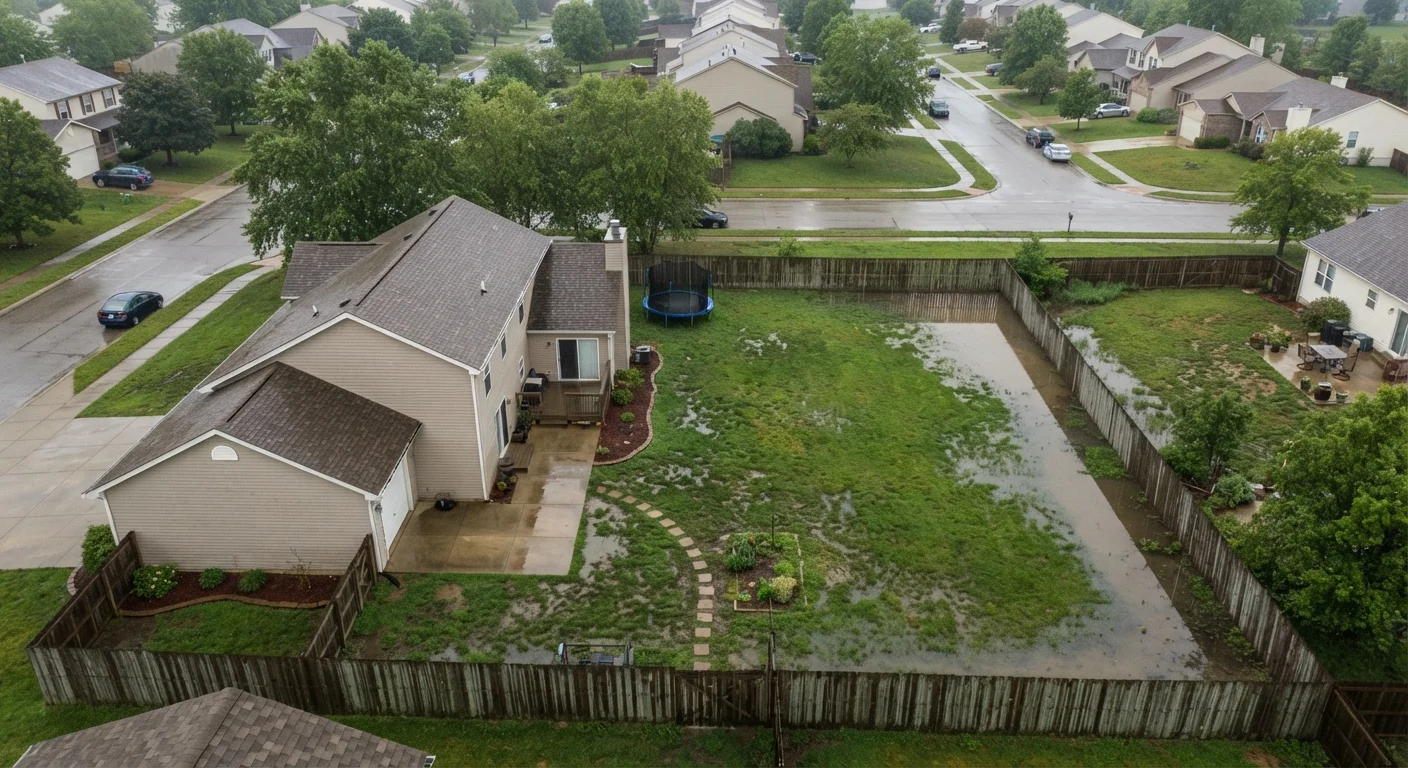
Backyard drainage problems share one frustrating trait: they look similar on the surface regardless of their cause. Standing water, soggy turf, muddy low spots-these symptoms could stem from a dozen different sources. Treating the symptom without tracing it to its origin is the single most expensive mistake homeowners make in yard drainage.
The good news is that careful observation costs nothing. Before spending money on materials or labor, spend time watching what your yard actually does during and after rainfall. That one step separates productive fixes from wasted effort. For a broader view of how drainage fits into overall yard health, see our overview of landscaping as a functional home upgrade.
Foundation Safety Is Non-Negotiable
If standing water consistently pools within six feet of your home's foundation, do not attempt to regrade or redirect water flow on your own. Improper grading near a foundation can accelerate moisture infiltration and cause structural damage. Consult a licensed grading contractor or civil engineer before making any changes in that zone.
Common Mistakes Homeowners Make Before They Even Pick Up a Shovel
Most drainage missteps happen in the planning phase-or more precisely, when planning gets skipped entirely. The mistakes below represent the most frequent errors, each with a specific reason it occurs and a clear path to avoiding it.
Installing a French drain before identifying why water is pooling in the first place.
Why it happens: French drains are widely promoted as the go-to fix, so homeowners reach for the solution before confirming the problem. If the yard's grade is pushing water toward a low spot, a French drain placed in that spot may simply fill and back up.
Assuming the problem is in the lawn when downspouts are actually the culprit.
Why it happens: Downspout discharge is easy to overlook, especially when it empties onto lawn that looks fine in dry weather. But a single downspout can release hundreds of gallons per hour directly at the foundation or in areas with no clear outlet.
Skipping a percolation (perc) test before designing any drainage solution.
Why it happens: Most homeowners don't know the test exists. A perc test simply measures how fast water drains through your soil-critical information if you're considering a dry well, rain garden, or any infiltration-based solution.
Adding topsoil or mulch to low spots without addressing the underlying grade.
Why it happens: Filling a low area feels intuitive, but if the surrounding grade still directs water toward that spot, the fill material simply compresses or washes away over time.
Ignoring hardpan or compacted subsoil as a drainage barrier.
Why it happens: The problem is invisible-surface soil may appear normal while a dense, impermeable layer just a few inches below prevents any downward water movement. This is especially common in newer construction where heavy equipment has compressed the subsoil.
Don't Dig Without Knowing What's Below
Before any digging-even for a simple French drain trench-contact your local utility notification service (call 811 in most US states) to have underground lines marked. Cutting into a gas, water, or electrical line is a serious safety hazard that's entirely preventable.
How to Read Your Yard Like a Drainage Map
Once you've avoided the diagnostic mistakes above, you can build a simple picture of how water moves across your property. Start at the highest point of your yard and identify natural flow paths. Look for areas where the lawn stays dark and spongy for more than 24 hours after rain-these are your problem zones.
Mark each problem zone and note what sits uphill from it: a downspout, a neighboring property that sheds water onto yours, a paved surface that can't absorb runoff, or a transition from one soil type to another. Each of these has a different solution. If you later consider adding a water feature, keep drainage patterns in mind-our guide on what backyard water features actually involve explains how site selection affects performance and maintenance.
With a clear source identified, your drainage fix-whether regrading, a downspout extension, a French drain, or a rain garden-has a real chance of working the first time.
2%
Minimum yard slope away from home foundation
The International Residential Code generally recommends a minimum 2% grade (2 inches per 10 feet) sloping away from any structure's foundation.
811
US utility notification number before digging
Dialing 811 connects homeowners to their regional utility notification center, a federally supported service that coordinates underground line marking.