

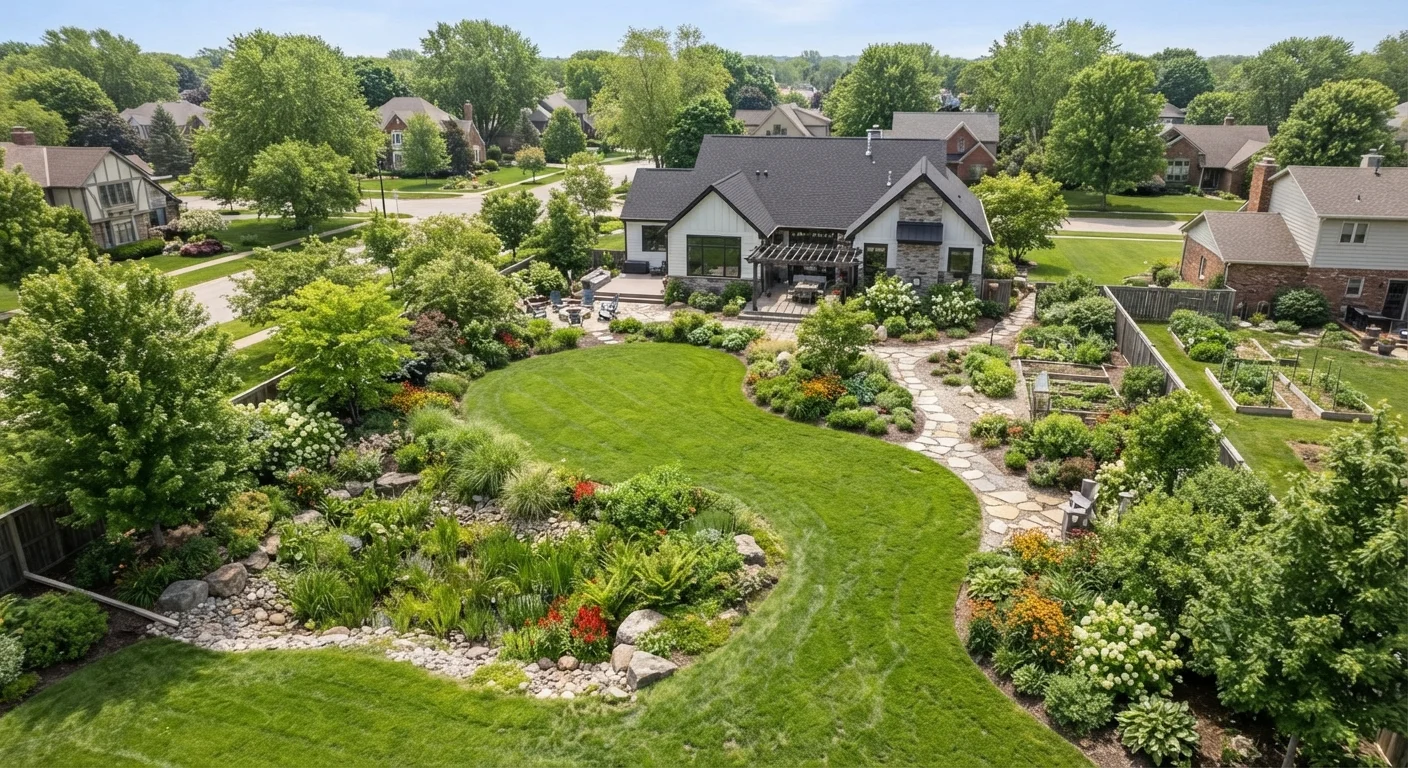
Key Takeaways
- Landscaping is a functional home system, not just decoration-grading and drainage protect your foundation.
- Plant selection should match your soil type, climate zone, and sun exposure to reduce maintenance.
- Hardscape elements like paths and retaining walls add structure and solve erosion or access problems.
- A phased approach lets you invest strategically rather than tackling the entire yard at once.
Why Landscaping Is a Home System, Not a Decorating Project
Most homeowners think of landscaping as the finishing touch-mulch beds, a few shrubs, maybe some seasonal color near the front door. But the land surrounding your home actively shapes how well the structure performs. The way your yard is graded (sloped) directs where rainwater flows. The plants you choose affect soil stability. The hardscape features you add or remove change drainage patterns and foot traffic wear.
When approached as a true home improvement, landscaping decisions reduce risk-standing water near a foundation, erosion on a slope, or muddy runoff crossing a walkway-while also improving how a property looks and functions day to day. Explore our broader outdoor improvement resources for context on the full range of yard and exterior projects.
Landscaping Can Affect More Than Curb Appeal
Changes to drainage, grading, or impervious surface coverage (like adding a large patio) may affect stormwater runoff in ways regulated by local municipalities. Before major grading or hardscape work, check with your local building or zoning department to understand whether permits are required. This is especially relevant in areas with stormwater management ordinances.
Start With the Ground: Grading, Drainage, and Soil
Before selecting a single plant, evaluate what your ground is doing. Proper grading means your yard slopes away from the home's foundation-generally a drop of at least six inches over the first ten horizontal feet, though local conditions vary. When grading is flat or slopes inward, water pools near the structure and can work its way into a basement or crawl space over time.
Drainage corrections might involve simple regrading with added fill soil, installing a French drain (a gravel-filled trench with a perforated pipe that redirects water), or creating a rain garden-a shallow, planted depression that captures and absorbs runoff. These aren't glamorous upgrades, but they protect the most expensive asset on the lot.
Soil quality matters too. Compacted clay drains poorly; sandy soil drains too fast and holds few nutrients. A basic soil test-available through many county cooperative extension offices-tells you pH and nutrient levels, giving you a starting point for amendments rather than guesswork.
6 in.
Minimum recommended grade drop from foundation
The International Residential Code generally calls for soil to slope at least 6 inches downward over the first 10 feet away from a home's foundation to direct water away effectively.
~30%
Of residential water use goes to outdoor irrigation
According to the EPA's WaterSense program, roughly 30 percent of average household water use is devoted to outdoor watering, much of it applied inefficiently.
Smart Plant Selection: Matching Plants to Place
Choosing plants because they look attractive at the nursery is one of the most common landscaping mistakes. Plants that don't suit your climate zone, soil type, or sun exposure struggle, require constant intervention, and often die-costing money and time with little return.
Start by identifying your USDA Plant Hardiness Zone (a free lookup by zip code on the USDA website) and your soil's drainage characteristics. Then consider mature size: a shrub that looks modest at planting can crowd a walkway or block a window within five years. Layered plantings-ground covers, mid-height shrubs, and taller anchor plants-provide year-round structure and reduce bare-soil erosion between plants.
For homeowners looking to lower water use and maintenance, native plants and lawn alternatives offer a practical path that also supports local biodiversity. See also our guide to mulching your garden correctly, which helps new plantings establish and reduces ongoing weed pressure.
Test your soil before amending or planting anything.
Soil pH and nutrient levels directly affect plant health and how well amendments work. Applying fertilizer to soil that doesn't need it wastes money and can harm plants. A test gives you a targeted starting point.
Grade soil away from the foundation before adding plantings or beds.
Water that pools near a foundation can cause structural damage, moisture intrusion, and mold issues over time. Correcting slope before planting avoids having to undo finished beds later.
Choose plants based on mature size, not nursery appearance.
Plants sold in small containers can triple or quadruple in size within a few years. Overcrowded plantings compete for resources, block light and views, and often need removal-an expensive do-over.
Use edging to define planted areas and reduce maintenance.
Without physical edging, lawn grass migrates into garden beds and mulch migrates onto lawns, creating ongoing weeding and cleanup. A defined border makes mowing and maintenance faster.
Plan hardscape before finalizing planting layouts.
Adding a path or patio after plants are established can damage root systems or require replanting. Getting structural elements in place first protects your plant investment.
Hardscape Elements That Do Real Work
Patios, retaining walls, edging, and pathways aren't just aesthetic-they solve structural and functional problems. A retaining wall on a sloped yard prevents soil from washing downhill. A well-placed path reduces lawn wear and keeps foot traffic off planted beds. Edging defines zones and makes mowing more efficient.
Understanding how hardscape and softscape (planted areas) work together helps you plan a yard that holds up over time. Our article on hardscape vs. softscape planning breaks down how to balance both elements. Note that retaining walls over a certain height-often 3 to 4 feet, depending on your jurisdiction-typically require a permit and sometimes an engineer's sign-off. Always verify local code requirements before building.
Planning in Phases: Making Progress Without Overwhelm
A full landscape overhaul is rarely necessary or financially practical all at once. A phased approach-fixing drainage first, then establishing plants, then adding hardscape features-lets you learn what the yard actually needs before committing to expensive changes. It also spreads costs across seasons or years.
Prioritize by impact and urgency. Drainage and grading issues that threaten the foundation come first. Then establish foundational plantings that take time to mature. Decorative upgrades like lighting or specialty garden beds can follow once the structural elements are in place. For more on pacing home projects, see the phased home upgrade approach.
If you're ready to develop a formal plan, the landscape design process walks through how professionals assess a site and how homeowners can apply the same methodology themselves.
“The best time to solve a drainage problem is before you plant. The second best time is before you plant anything else.”
— Home Editorial Team, Editorial guidance based on widely shared landscape planning principles