

Key Takeaways
- Most latching problems trace back to a misaligned strike plate, loose hinges, or a swollen door.
- You can diagnose the exact cause using lipstick or chalk transferred from the latch bolt.
- Strike plate adjustments and hinge tightening are straightforward DIY fixes requiring basic tools.
- Seasonal wood swelling may resolve on its own, but persistent issues need physical correction.
- Mortising or repositioning a strike plate is the most reliable long-term fix for alignment gaps.
What you will need
Why Doors Stop Latching
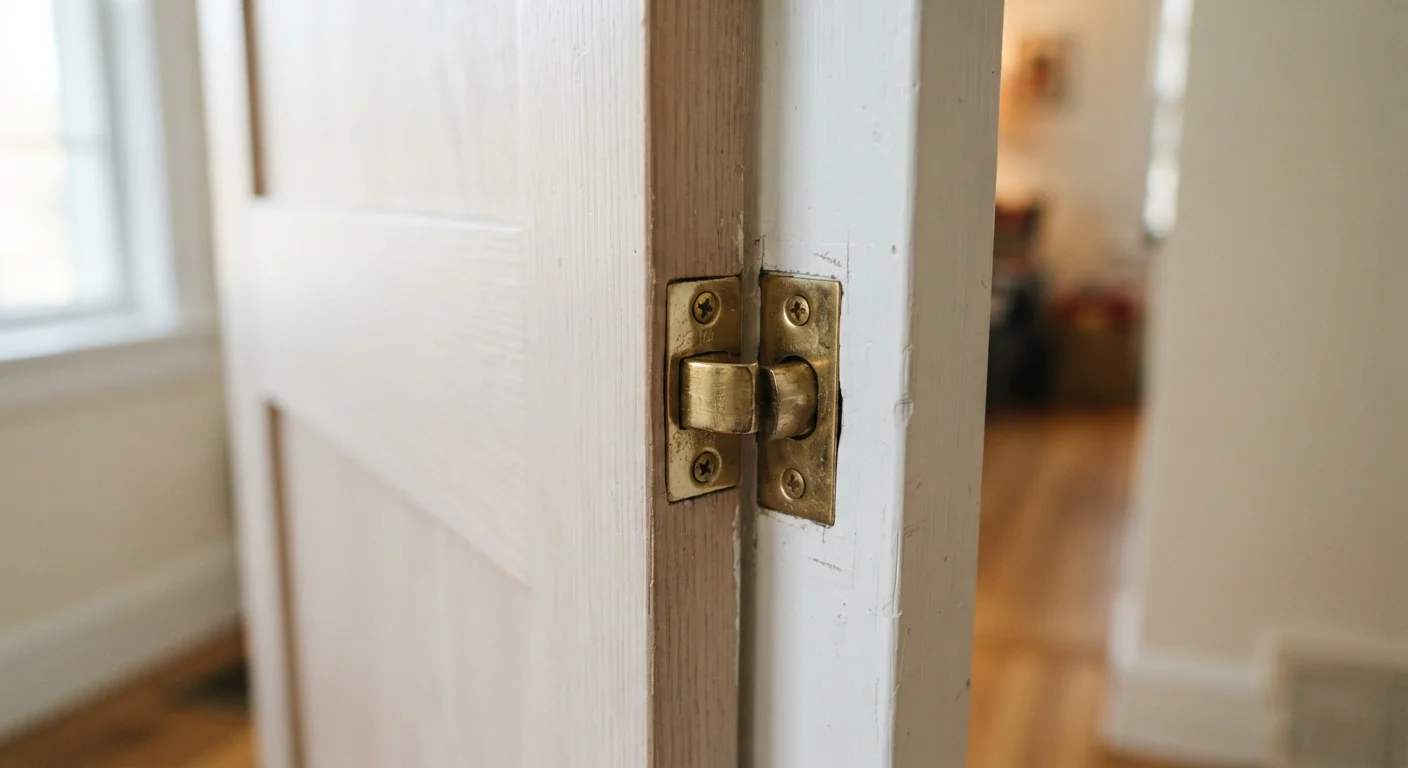
Interior and exterior doors stop latching for a handful of predictable reasons, nearly all of which involve the latch bolt and the strike plate falling out of alignment. The strike plate is the metal piece mortised into the door frame that the latch bolt clicks into when the door closes. When these two components no longer line up, the door won't catch - or it catches only if you lift or push the door while closing it.
The most common causes include:
- Loose or failing hinge screws - Screws that have worked loose over years of use allow the door to sag, dropping the latch below the strike plate opening.
- Seasonal wood movement - Wood expands in humid conditions and contracts when it dries out. A door that latches fine in winter may stick or miss the plate in summer.
- House settling - Gradual foundation movement can shift door frames out of square, pulling the strike plate away from where the latch expects it to be.
- Strike plate shift - The plate itself can loosen and drift slightly over time.
The good news is that diagnosing which issue you're dealing with takes only a few minutes, and most fixes require nothing more than basic hand tools.
What you will need
How to Diagnose and Fix the Problem
Before reaching for a chisel or screwdriver, run the lipstick test described below - it tells you exactly how far off the latch is and in which direction, so you're not guessing.
Use the Lipstick Test to Find the Gap
Rub lipstick, chalk, or a dry-erase marker on the latch bolt face, then close the door slowly and open it again. The mark left on the strike plate - or on the frame above or below it - tells you exactly which direction the latch is missing by. This eliminates guesswork before you pick up any tools.
Diagnose Where the Latch Is Missing
Apply lipstick or chalk to the latch bolt face. Close the door fully (or as far as it goes), then open it and check where the mark appears on the strike plate area. If the mark lands above the strike plate opening, the latch is hitting too high. Below means too low. No mark on the plate at all often means the door has sagged far enough that the latch misses the plate entirely.
Tighten Loose Hinge Screws
Open the door and inspect all hinge screws on both the door and the frame side. Loose frame-side screws are a leading cause of doors dropping and missing the strike plate. Remove each screw and replace it with a 3-inch wood screw that reaches through the frame into the underlying stud. This pulls the door back into proper alignment without any other adjustment.
File or Adjust the Strike Plate for Minor Misalignment
If the latch is missing the strike plate opening by 1⁄8 inch or less, a metal file is often all you need. Remove the strike plate with a screwdriver, clamp it in a vise or hold it steady, and file the edge of the opening in the direction the latch needs to travel. Reinstall and test before filing further.
Reposition the Strike Plate for Larger Gaps
When misalignment exceeds 1⁄8 inch, moving the strike plate is more reliable than filing. Remove the plate, then use a utility knife to score the wood and a chisel to deepen or shift the mortise in the direction needed. Reposition the plate and mark new screw hole locations. Drill pilot holes, then reinstall the plate with screws. Fill the old screw holes with wood filler if they're now exposed.
Address a Swollen or Warped Door
If the door swells seasonally - common in humid summers - try leaving it open in a dry room for a day or two to see if it shrinks back. For persistent swelling, the latch-side edge of the door may need light planing or sanding. This requires removing the door from its hinges. Mark the high spot first using the lipstick test, then sand or plane only that area in small passes, rehang the door, and test before removing more material.
Avoid Over-Chiseling the Strike Plate Mortise
When deepening the mortise (the recessed pocket that holds the strike plate), remove wood gradually in thin passes. Taking off too much weakens the door frame around the latch area and can make the repair harder to reverse. Work slowly and test the fit frequently.
Don't Force a Repeatedly Sticking Door
Repeatedly forcing a door that won't latch can damage the latch bolt, strike plate, and door frame over time. If the door resists closing with normal hand pressure, diagnose the cause before continuing to push it shut. Structural causes - such as a foundation shift - should be evaluated by a qualified contractor before you attempt any DIY repair.
For most homeowners, tightening hinges with longer screws alone resolves the issue. If you've worked through all the steps and the door still won't latch reliably - or if you notice the frame itself is visibly out of square - that can be a sign of foundation movement worth having a contractor evaluate. Similarly, if you're dealing with a door in a garage context, issues there tend to be more mechanical in nature; see our guide to garage door problems for a different set of considerations.