

Key Takeaways
- A garage door comes off track for several distinct reasons, each requiring a different repair approach.
- Minor roller misalignments can sometimes be corrected safely by a careful homeowner.
- Bent tracks, broken cables, and spring-related issues require a licensed professional.
- Never attempt to force a stuck or tilted door - it can make damage worse and cause injury.
- Skipping or delaying repairs tends to increase costs significantly over time.
Garage Door Off Track
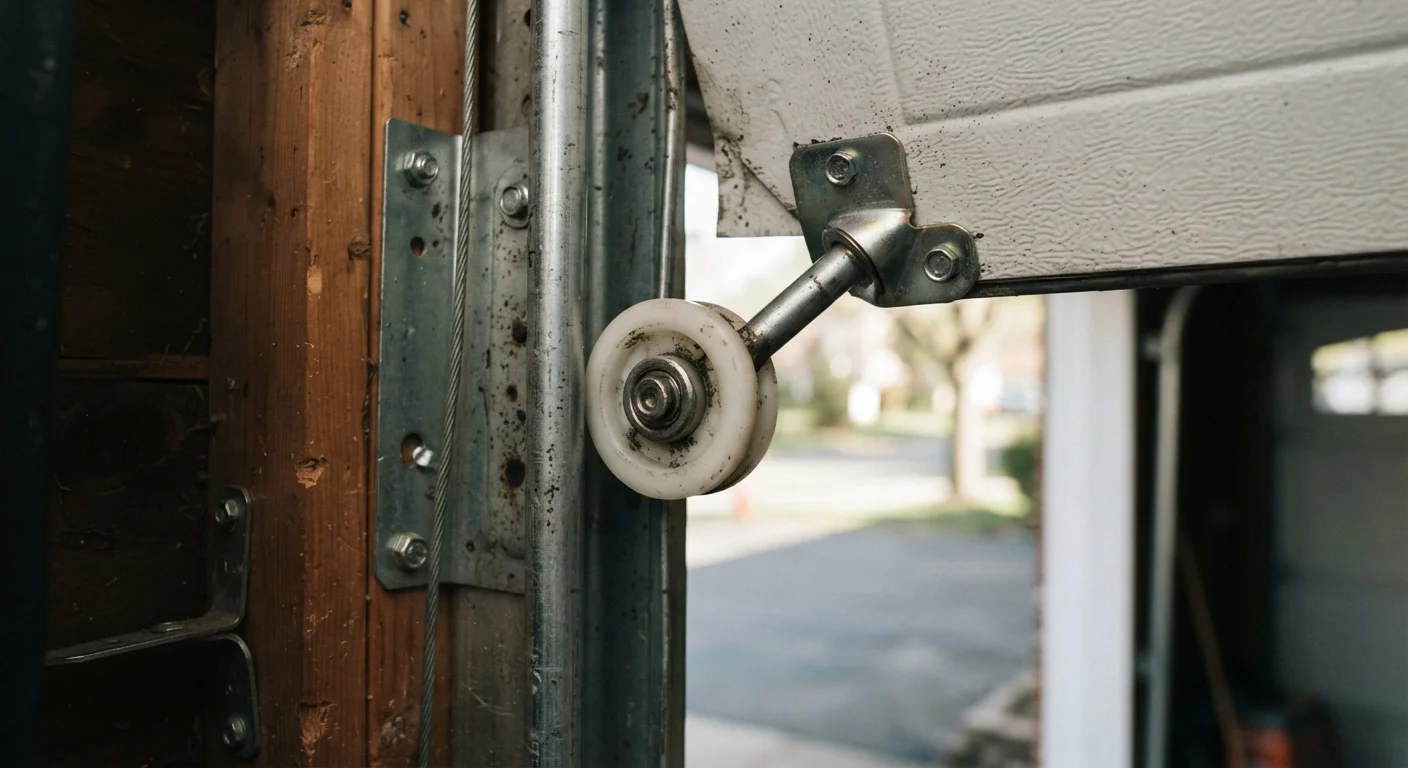
A garage door goes "off track" when one or more of its rollers slip out of the metal rails that guide the door up and down. This disrupts the door's movement, often causing it to jam, tilt, or hang at an angle. The issue can range from a minor roller misalignment to a bent track or damaged hardware.
Garage doors operate under significant spring tension - either torsion springs above the door or extension springs along the side tracks. Both types store substantial mechanical energy and pose a serious injury risk if disturbed without proper training.
Common Causes of a Derailed Garage Door
Understanding why a garage door leaves its track is the first step toward knowing what to do next. The most frequent causes include:
- Impact damage: A car bumping the door or a heavy object striking the track can knock a roller loose or bend the rail. Even a low-speed backing incident - see our guide on common backing mistakes - can deliver enough force to displace a roller.
- Worn or broken rollers: Over years of use, plastic or steel rollers degrade and can crack or flatten, making them prone to jumping the track.
- Loose track hardware: Bolts and brackets holding the track to the wall can loosen over time. When the track shifts even slightly, the rollers lose their guided path.
- Bent or misaligned track: A track that is crimped, warped, or pulled out of vertical alignment will eventually force rollers out of position.
- Broken lift cables: The cables that connect the door to the spring system help distribute weight evenly. A snapped cable causes the door to drop or tilt on one side, pulling rollers free.
- Spring failure: When a torsion or extension spring breaks, the sudden weight shift can yank one side of the door off course.
Know Before You Inspect
Before examining a door that has come off track, make sure the automatic opener is disconnected and the door is in a stable position. Never stand directly beneath a tilted or partially open door while inspecting it. If the door appears to be held up only on one side, treat it as a professional repair immediately.
What You Can Safely Handle Yourself
Not every off-track garage door demands an immediate service call. If your inspection reveals a single roller that has simply popped out of an otherwise straight, undamaged track, a careful homeowner may be able to address it.
Safe DIY steps for a simple roller misalignment:
- Disconnect the automatic opener using the red emergency cord so the door cannot be triggered remotely.
- Carefully examine the entire track length for bends, cracks, or sections that have pulled away from the wall mounting. If you see any of these, stop and call a professional.
- Use locking pliers (also called vise-grips) to hold the door in place before attempting any adjustment - this prevents it from moving unexpectedly.
- Loosen the screws on the track bracket nearest to where the roller exited. Gently widen the track opening just enough to guide the roller back in, then re-tighten the bracket firmly.
- Manually roll the door slowly through its full range of motion to confirm the roller stays seated.
Check All Rollers, Not Just the One That Slipped
When one roller exits the track, it often signals that neighboring rollers are also worn or that the track has shifted slightly. Take a few minutes to inspect the full length of both tracks and all rollers before closing the door back up. Catching worn rollers early prevents a repeat incident.
Even a successful DIY fix warrants a close look at the remaining rollers and hardware. Replacing worn rollers proactively is far less disruptive than a second derailment. As a broader principle, delays and skipped steps are among the most common reasons simple repairs escalate in cost.
When to Call a Professional - and Why
Several situations place a garage door repair firmly outside DIY territory:
~30,000
Garage door injuries reported annually in the US
According to U.S. Consumer Product Safety Commission data, tens of thousands of garage door-related injuries are treated each year, with spring and cable failures among the more serious causes.
200+ lbs
Typical weight of a residential garage door
Most standard single-car garage doors weigh between 130 and 350 pounds, making unsupported movement during repairs a significant physical hazard.
- Bent or heavily damaged track: A track that is kinked or significantly out of plumb cannot be reliably hammered straight. Improper fixes create recurring derailment points.
- Broken springs: Torsion and extension springs are under extreme tension. Releasing or adjusting them without specialized tools and training has caused serious injuries. This work should always go to a qualified technician.
- Snapped lift cables: Cable replacement requires releasing spring tension in a controlled way - same safety concern as spring repair.
- Door panel damage: If panels are buckled or folded, the structural integrity of the door is compromised. In some cases, full garage door replacement is the more cost-effective path.
If you are uncertain at any point during your inspection, treating the repair as professional-required is the right default. A licensed garage door technician can assess the full system - springs, cables, rollers, tracks, and opener - in a single visit, giving you a complete picture of the door's condition.
Preventing Future Derailments
Routine maintenance goes a long way toward keeping garage door rollers in their tracks. A few habits that help:
- Lubricate rollers and tracks twice a year using a silicone-based or lithium-grease spray. Avoid WD-40 on rollers - it attracts dust and degrades over time.
- Check track mounting brackets every season and tighten any loose bolts before they allow the track to drift.
- Listen for changes in sound. Grinding, scraping, or popping during operation are early warnings worth investigating before a full derailment occurs.
- Test door balance periodically. Disconnect the opener and manually lift the door to waist height. A properly balanced door stays in place; one that drops or flies up has a spring tension issue that should be professionally assessed.
Keeping up with these checks is far simpler than managing an emergency repair - and it's the same logic that applies to plumbing maintenance. Our guide on diagnosing and fixing a running toilet shows how understanding the mechanics behind a system makes repairs faster and cheaper when they do arise.