

Key Takeaways
- Blackout window treatments are one of the most impactful and affordable sleep-focused bedroom upgrades.
- Lighting layers-ambient, task, and dim-give you control over how the room signals sleep or wakefulness.
- Closet and storage organization reduces morning friction and keeps the bedroom a dedicated rest space.
- Mattress and bedding choices significantly affect sleep quality, and understanding your options helps you choose wisely.
- Sound management, including white noise or acoustic softening, addresses one of the most common sleep disruptors.
Your Bedroom Should Work for Sleep First
The primary bedroom is the most personal room in a home, yet it's often upgraded last-and usually for looks rather than function. But a bedroom that supports genuine rest has a measurable effect on daily life. Before focusing on furniture styles or accent walls, consider what the space is actually doing for your sleep.
If you're working through your home room by room, the bedroom deserves serious attention. Our guide to room-by-room upgrade priorities can help you sequence projects in a way that builds comfort and value over time. For a deeper look at what actually drives sleep quality, see our companion piece on the complete picture of sleep.
The upgrades below target the physical environment: light, sound, temperature, bedding, and organization. None require a full renovation. Most can be done in stages, room by room, weekend by weekend.
Install blackout window treatments
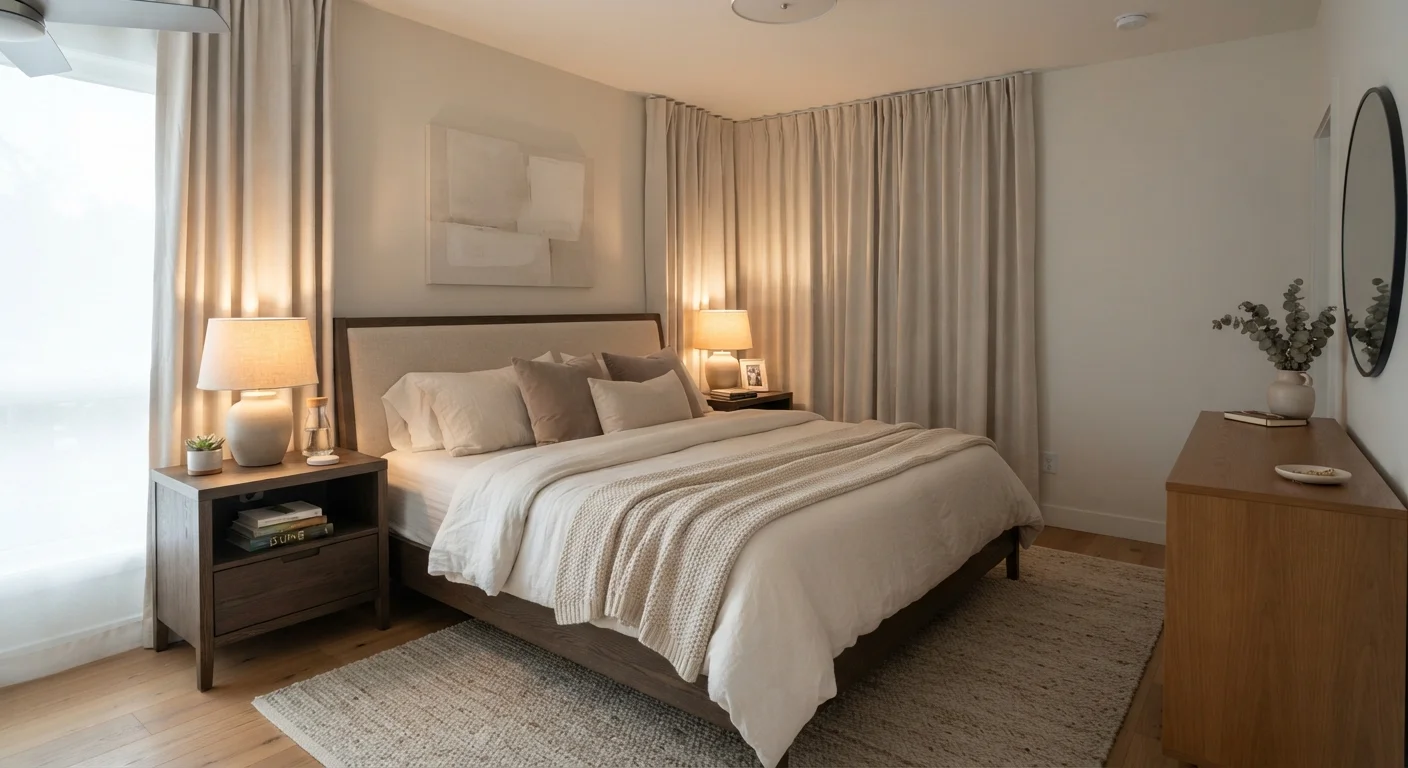
Light is one of the most powerful regulators of the human sleep-wake cycle. Even low ambient light from streetlamps, early sunrises, or neighboring homes can disrupt the body's natural cues for sleep. Blackout curtains or cellular shades that mount inside the window frame-reducing light gaps at the edges-are among the most effective single upgrades a bedroom can get.
Look for treatments rated for full light blockage rather than just "room darkening," which can still allow significant light penetration. For rooms facing east or south, this upgrade pays dividends year-round, especially in summer when daylight arrives well before most people want to wake.
Even low ambient light from outside can disrupt your body's natural sleep cues throughout the night.
Create layered, controllable lighting
A single overhead fixture controlled by one switch is one of the least sleep-friendly lighting setups possible. Bright, cool-toned overhead light in the evening suppresses melatonin-the hormone that signals your body it's time to wind down.
Replace or supplement with layered lighting: a warm-toned bedside lamp for reading, a dimmable overhead if needed, and potentially a smart bulb that shifts to warmer color temperatures in the evening. The goal is to move from high-intensity functional lighting to low, warm light as the evening progresses. This simple shift in how you use light can meaningfully support the transition into sleep.
Bright overhead lighting in the evening suppresses the hormone that signals your body it's time to sleep.
Address sound with soft materials or white noise
Sound is a significant and often underestimated sleep disruptor. Hard flooring, bare walls, and minimal furnishings create rooms that amplify rather than absorb noise. Adding an area rug, upholstered headboard, or soft window treatments all contribute to acoustic softening without requiring structural changes.
For persistent exterior noise-traffic, neighbors, HVAC systems-a white noise machine or fan creates a consistent sound masking layer that reduces the brain's sensitivity to unpredictable sounds during sleep. These are low-cost solutions that many sleepers find effective, particularly in urban environments or homes near busy streets.
Hard, bare surfaces amplify sound; soft materials and white noise together create a quieter sleep environment.
Evaluate your mattress and bedding system
Mattress comfort is deeply personal and depends on sleep position, body weight, temperature preferences, and whether you share the bed. General guidance suggests most mattresses have a functional lifespan of seven to ten years, though this varies by construction and use. Signs of wear-sagging, uneven support, increased aches on waking-are clearer signals than age alone.
Beyond the mattress, bedding materials affect temperature regulation significantly. Natural fibers like cotton and wool tend to breathe better than synthetic alternatives. Layering lighter blankets rather than relying on one heavy cover gives you flexibility to adjust through the night without fully waking.
Sagging, uneven support, or increased morning aches are clearer signs of mattress wear than age alone.
Improve closet and storage organization
A cluttered bedroom-even when the clutter is technically contained to a corner or chair-creates visual noise that many people find subtly stressful. The bedroom functions best as a space dedicated to rest, and that means reducing the visual cues that remind the brain of tasks, decisions, or unfinished work.
Improving closet organization through simple additions-adjustable shelving, drawer inserts, over-the-door storage-often frees enough space to remove items from the bedroom floor and surfaces. The goal isn't minimalism for its own sake; it's reducing the cognitive load of the room so it reads as a place to decompress rather than manage.
Visual clutter in a bedroom creates low-level mental stimulation that can interfere with winding down for sleep.
Manage bedroom temperature more precisely
Sleep researchers generally note that cooler room temperatures-roughly in the mid-60s Fahrenheit for many adults-support the body's natural drop in core temperature that accompanies sleep onset. Individual preferences vary, but most people sleep better when the bedroom is meaningfully cooler than the daytime living areas of the home.
Practical adjustments include a programmable or smart thermostat that drops temperature before bedtime, a ceiling fan to improve air circulation, or simply keeping the bedroom door open or closed to modulate airflow. These are low-investment changes that can noticeably affect sleep quality without any structural modification.
Programming your thermostat to cool the bedroom before bedtime requires no renovation and costs very little.
Making It All Come Together
These upgrades work best when approached as a system rather than a checklist. Blackout shades lose half their value if the room stays too warm. A great mattress underperforms in a space cluttered with visual noise. Think of the bedroom as a dedicated environment-every element either supports rest or competes with it.
Start With Light and Sound First
If you're unsure where to begin, prioritize blackout window treatments and sound management before investing in furniture or bedding. These environmental factors affect sleep quality immediately and consistently. Bedding upgrades matter, but they're more personal and often take trial and error to get right-whereas light and sound control deliver reliable results for most people.
If comfort and accessibility are also priorities-now or in the future-see our piece on aging-in-place home upgrades for ideas that blend function with everyday livability. And if you're curious whether sleep quality or total sleep hours matter more, this deep dive on sleep hygiene versus quantity offers useful context for the decisions you make in this room.