

Key Takeaways
- Department store markdowns follow structured internal schedules, not spontaneous decisions.
- Most markdown cycles align with seasonal merchandise transitions - roughly four times per year.
- End-of-season clearance typically produces the deepest discounts, but selection narrows significantly.
- Promotional events like holiday weekends are layered on top of permanent markdown schedules.
- Understanding the general rhythm can help shoppers anticipate when prices on specific categories are likely to drop.
Markdown Calendar
A markdown calendar is an internal retail schedule that determines when specific products will have their prices reduced. Department stores use these planned timelines to systematically clear inventory at predictable intervals throughout the year. The schedule is tied to seasonal merchandise cycles, inventory targets, and vendor agreements - not random promotional decisions.
Retailers often distinguish between 'permanent markdowns' (price reductions that stay) and 'promotional markdowns' (temporary sale prices). These follow separate planning tracks within the same overall calendar framework.
Why Retailers Plan Markdowns in Advance
From a shopper's perspective, a sale sign might look like a spontaneous response to slow traffic. In practice, the opposite is true. Department stores plan price reductions months ahead of time, often before the product hits the floor. Buyers, planners, and merchandising teams coordinate markdown timing as part of the broader inventory management process.
The core driver is sell-through rate - the percentage of purchased inventory that actually sells at full price before the season ends. Retailers set sell-through targets when they place orders with vendors. If a product category is trending below target mid-season, the markdown schedule may be pulled forward. If it's selling well, reductions may be delayed.
This planning discipline is what separates a markdown calendar from an ad-hoc discount. It's a financial tool, not a marketing impulse. See how retailers plan and price markdowns for a closer look at the mechanics behind discounting decisions.
4-6 weeks
Typical interval between markdown steps within a season
Industry retail planning norms suggest most department store categories go through two to three price step-downs before reaching clearance within a single season.
50-70%
Common depth of end-of-season clearance discounts
End-of-season clearance markdowns on apparel and seasonal goods routinely reach this range, though selection at that stage is significantly reduced.
4x per year
Primary merchandise seasons most department stores plan around
Most traditional department store retailers structure their buying, merchandising, and markdown calendars around four seasonal transitions annually.
The Structure of a Seasonal Markdown Cycle
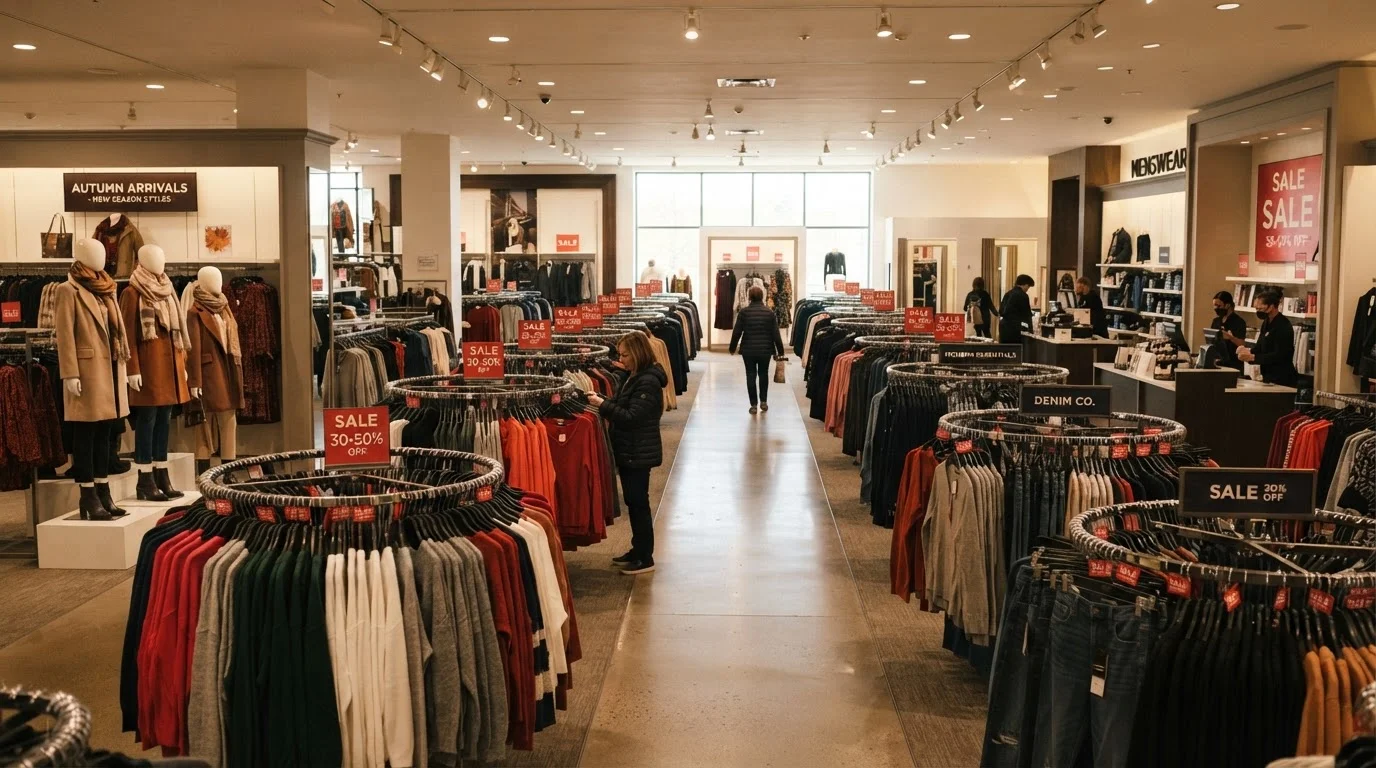
Traditional department stores operate on four primary merchandise seasons - spring, summer, fall, and holiday/winter - with each season having its own markdown cadence. Within a single season, a product's price may step down in stages rather than drop all at once.
A simplified version of how this typically works: A new item arrives at full price. If it doesn't reach its sell-through target after several weeks, it takes an initial markdown - often 20-30 percent. Remaining inventory takes a deeper markdown later in the season. By clearance, reductions can reach 50-70 percent or more on items the retailer simply needs to move before new stock arrives.
This staged approach is why shopping earlier in a season means more selection at higher prices, while shopping later offers lower prices on a shrinking assortment. Neither timing is objectively better - it depends on what the shopper prioritizes. The month-by-month guide to when prices drop breaks this down by category across the full calendar year.
Track Price Patterns Over Multiple Seasons
If you're planning a purchase in a specific category, observe how the retailer prices it at the same time in multiple consecutive years. Markdown calendars tend to repeat with similar timing season over season, making past patterns a reasonable - though not guaranteed - guide to future ones.
Promotional Events vs. Permanent Markdowns
Shoppers often conflate two distinct types of price reductions. A permanent markdown means the price has been officially lowered in the retailer's system and will stay at that level. A promotional markdown is a temporary event-driven price drop - think holiday weekends, friends-and-family events, or clearance sales - that reverts to the previous price afterward.
Both types appear on the markdown calendar, but they serve different purposes. Promotional markdowns drive traffic and create urgency. Permanent markdowns are an inventory management decision. The distinction matters because a product showing a promotional discount one weekend may not carry that same price the following week, while a product that has taken a permanent markdown will stay at the lower price until the next reduction.
For major household purchases - appliances, furniture, televisions - the timing logic follows a somewhat different pattern, generally tied to model year transitions and major retail events. The general timing logic for major purchase categories outlines when these windows tend to open.
Clearance Sections Follow a Separate Logic
Dedicated clearance sections or clearance-only stores operate differently from main-floor markdowns. Inventory in these sections has often gone through multiple markdown stages already and may include end-of-line items or returned merchandise. Pricing in these areas can be more variable and less predictable than standard seasonal cycles.
How Shoppers Can Use This Knowledge
Knowing that markdown calendars exist isn't the same as having access to them - retailers treat these schedules as proprietary. What shoppers can do is observe the general patterns over time and use them to calibrate expectations.
A few practical orientations: If selection matters most, shop earlier in the season and accept closer-to-full pricing. If price is the priority and you're flexible on specific items, wait for end-of-season clearance windows. For planned purchases in categories like bedding, cookware, or seasonal apparel, the retail seasons and annual events calendar can help identify historically lower-price windows.
It's also worth noting that department store markdown logic differs meaningfully from how grocery stores handle weekly specials. Supermarket cycles are tied more directly to supplier promotions and perishable inventory rhythms - a distinctly different dynamic covered in how grocery stores rotate weekly specials.
No external calendar can replicate a retailer's internal schedule precisely. But understanding that prices follow a logic - rather than luck - changes how confidently a shopper can time a purchase.