

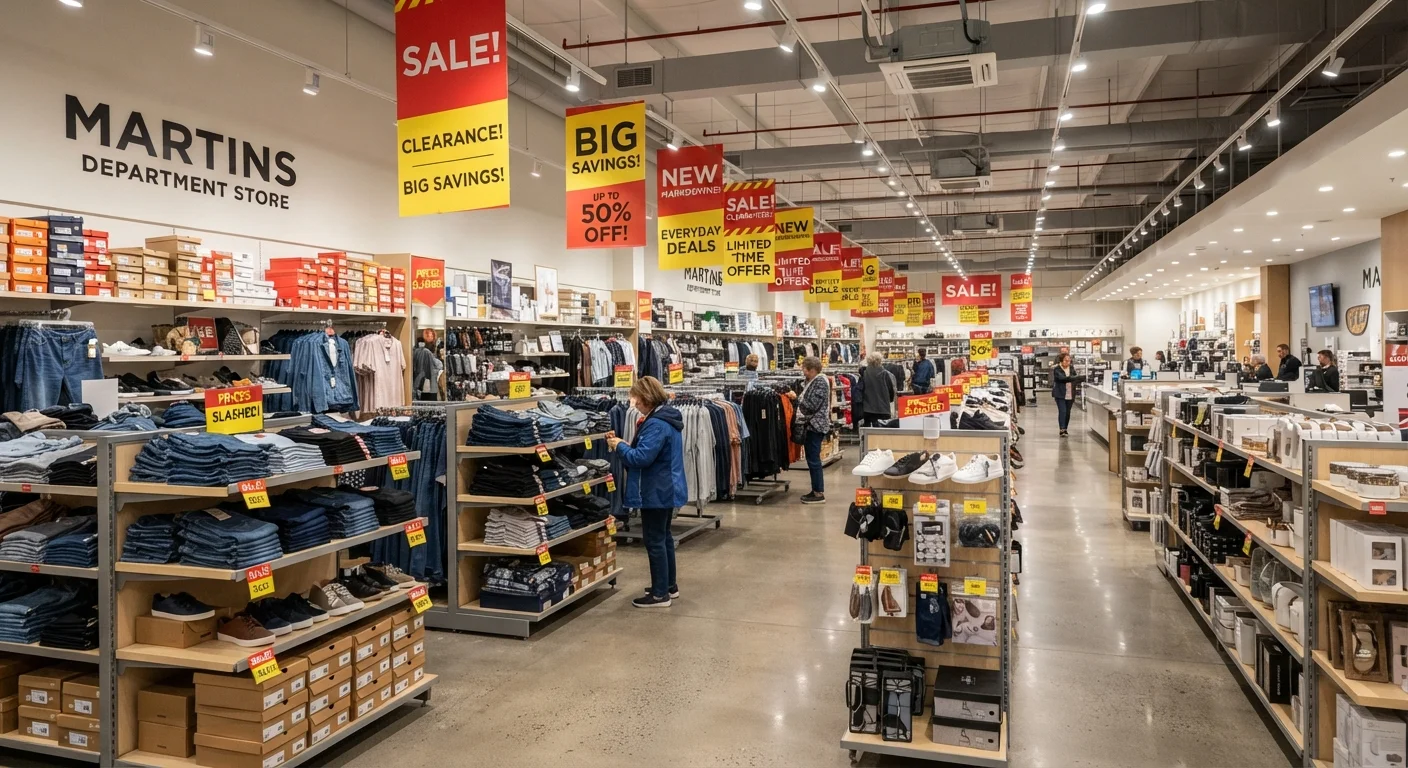
Key Takeaways
- Most retail sales are planned weeks or months in advance based on inventory cycles, not consumer demand.
- The 'original price' shown on a sale tag may not reflect what most shoppers actually paid.
- Clearance and promotional sale markdowns serve different purposes and carry different implications for product availability.
- Understanding markdown timing helps shoppers anticipate when genuine price reductions are likely to occur.
- A lower price doesn't automatically mean better value - context about the reference price matters.
Retail Markdown
A retail markdown is a deliberate reduction from a product's previously set price, executed by the retailer - not the manufacturer - to manage inventory, stimulate demand, or align with a seasonal promotional calendar. Markdowns are planned events, not spontaneous generosity. They reflect the retailer's need to move product more than they reflect a sudden windfall for the shopper.
Retailers distinguish between 'permanent markdowns' (price is reset in the system and won't return to the prior level) and 'promotional markdowns' (temporary, with the original price reinstated afterward).
Where Markdowns Begin: The Inventory Equation
Every markdown starts with a straightforward business problem: a retailer has product on shelves or in a warehouse that needs to move. The discount a shopper sees is the visible output of an internal calculation that weighs the cost of holding inventory against the revenue recovered by selling it at a lower price.
Retailers typically buy merchandise well ahead of when it appears on the floor. A spring clothing line may be purchased the previous fall; holiday electronics might be ordered in midsummer. When that merchandise doesn't sell at the initial price - or when a new season's inventory is already arriving - the retailer reduces the price to accelerate turnover. This is inventory management, not charity.
Department stores follow internal markdown schedules tied to these inventory cycles. The schedules are built into their planning systems long before any sale banner goes up. Shoppers who understand these rhythms can position themselves to take advantage of genuine reductions rather than reacting to promotional noise.
~40%
Share of apparel sold on promotion in the US
Industry research has consistently found that a large share of clothing in the US is sold at a discount rather than at the original ticket price, reflecting how embedded promotional pricing has become in the retail model.
6-8 weeks
Typical lead time for planned promotional events
Major retailers commonly finalize promotional calendars and markdown schedules weeks before events are visible to shoppers, according to supply chain and retail operations reporting.
3x
Price sensitivity increase near season-end
Retail analysts have noted that shopper willingness to pay drops sharply as a season closes, which is why end-of-season markdowns tend to be both deeper and more genuine than mid-season promotions.
How Reference Prices Are Constructed
The 'original price' or 'was' price displayed alongside a sale tag plays a specific psychological role. It establishes an anchor - a reference point that makes the discounted price feel like a significant gain. But that reference price isn't always the neutral benchmark it appears to be.
MSRP and 'original price' labels serve specific purposes in retail and aren't always reliable comparators. An item might be briefly offered at its 'full' price before being systematically marked down - legally satisfying requirements for reference pricing while still creating a skewed impression of savings. Some retailers set initial ticket prices with planned markdowns already in mind.
The practical implication: the size of a discount percentage tells you less than the absolute price relative to what that product typically sells for across the market. Checking prices across multiple channels before a purchase gives you a more grounded reference point than the retailer's own comparison figure. For a deeper look at how anchoring shapes perception of value, see how retailers use anchoring to frame deals.
“Retail pricing is a language. Once you understand what the signs actually say - rather than what they feel like they're saying - you make very different decisions.”
— Phillip Adcock, Consumer behavior researcher and author on retail psychology
Promotional Sales vs. Clearance: Two Different Signals
Not all price reductions mean the same thing. The label on a markdown - whether 'sale,' 'clearance,' or 'special buy' - carries information about why the price dropped and what that implies for the shopper.
A promotional sale is temporary. The price will return to its prior level after the promotional window closes, and the item will remain in the retailer's standard assortment. These events are typically tied to calendar moments: holidays, back-to-school periods, or manufacturer-sponsored events. The inventory is replenished; the item isn't going away.
Clearance is a different signal entirely. It indicates the retailer is exiting that item from its inventory permanently - often because a new model, season, or product line is replacing it. Clearance prices are generally deeper and more likely to represent genuine reductions, but the trade-off is that selection narrows over time and returns or exchanges may carry restrictions. Understanding what each label really means helps set accurate expectations before you commit.
Track Prices Before the Sale Window Opens
If you're planning a significant purchase, note the regular price of the item a few weeks before any expected sale event. This gives you a personal baseline that doesn't depend on the retailer's reference price. Price-tracking tools for major online retailers can automate this for frequently purchased categories.
Putting It Together: Becoming a More Informed Shopper
Recognizing the mechanics behind a retail sale doesn't require suspicion - it requires context. A markdown can represent genuine value if the reference price is accurate, the item suits your actual need, and the timing aligns with when stock is genuinely transitioning. The goal isn't to avoid sales; it's to evaluate them on something other than the retailer's framing.
A few practical habits reinforce this: track the regular price of items you plan to buy before a promotional window opens; distinguish between promotional and clearance signals when you're in-store; and treat percentage discounts as a starting point for evaluation rather than a conclusion. Discounts from inflated reference prices aren't always real savings - the final price and its relationship to market value is where genuine value lives.
For broader context on making confident purchases across categories, the practical buying strategies hub covers the full range of considerations from pricing to timing to evaluating what you actually need.
Reference Price Regulations Vary by State
Rules governing how retailers must substantiate 'original' or 'regular' prices differ across US states. Some states require that an item must have been sold at the reference price for a minimum period before it can be used in a comparison. Checking whether a retailer operates nationally or regionally can give you a rough sense of which standards apply - though consumers don't typically have easy access to the underlying data retailers use to set those figures.