

Key Takeaways
- Stockpiling works best when limited to non-perishables and items your household genuinely uses regularly.
- Knowing retail sales cycles helps you buy at predictable low points rather than reacting to any sale.
- Setting a physical storage limit prevents overbuying and keeps your stockpile functional, not chaotic.
- Tracking what you use prevents duplicate purchases and expired goods taking up space.
- Emotional buying during sales events is the biggest threat to an otherwise sound stockpiling strategy.
Why Stockpiling Can Make Financial Sense
Buying household staples in larger quantities when prices are low is a straightforward way to reduce routine spending over time. Laundry detergent, canned goods, paper products, and personal care items all follow predictable retail pricing cycles - prices drop, then recover. Shoppers who understand those cycles can reduce what they pay per unit over a year without spending more overall.
That said, stockpiling only delivers savings when it's disciplined. Buying more than your household will use before expiry, or purchasing items at a "sale" price that isn't actually a low point, turns a savings strategy into unnecessary spending. The goal is a working inventory, not a warehouse. For a broader framework on managing discretionary spending, see the budgeting hub.
Core Practices for Smarter Stockpiling
These practices address the most common failure points - buying the wrong things, buying too much, and losing track of what you already have.
Restrict your stockpile to items your household uses on a reliable, recurring basis.
Buying something just because it's on sale only saves money if you would have bought it anyway. Stockpiling unfamiliar or rarely-used items ties up cash and storage space without producing any real savings.
Learn the typical sale cycle for your most-purchased categories before buying in bulk.
Most consumer goods follow repeating markdown patterns - tied to seasons, retailer promotions, or manufacturer cycles. Buying at a random "sale" price may still be above the category's periodic low point.
Set a firm maximum quantity before you buy, based on realistic consumption rates.
Without a pre-set limit, the perceived value of a sale price can justify unlimited buying. A cap keeps the purchase proportionate to actual need and prevents the stockpile from expanding beyond what you can practically use.
Keep a simple running inventory of what you have on hand.
Duplicate purchases are a common stockpiling mistake. Without a clear picture of current stock, it's easy to buy more of something you already have plenty of, which defeats the purpose of the strategy.
Account for storage conditions, not just storage space.
Some products degrade faster than their printed expiry date if stored improperly - in high heat, humidity, or direct sunlight. A stockpile that deteriorates before use wastes both money and space.
Start Here: Quick Actions You Can Take Today
You don't need a full system in place before you start. A few targeted steps can prevent the most common stockpiling mistakes right away.
Stockpiling also intersects with how shopping psychology works against you. Urgency messaging, bulk packaging, and limited-time framing are all designed to bypass deliberate decision-making. If you notice yourself rationalizing a purchase because "it's a good deal," it's worth reading about emotional spending triggers before acting. Pair this with deal-hunting habits worth building to keep your approach systematic rather than reactive.
Staying Disciplined Over Time
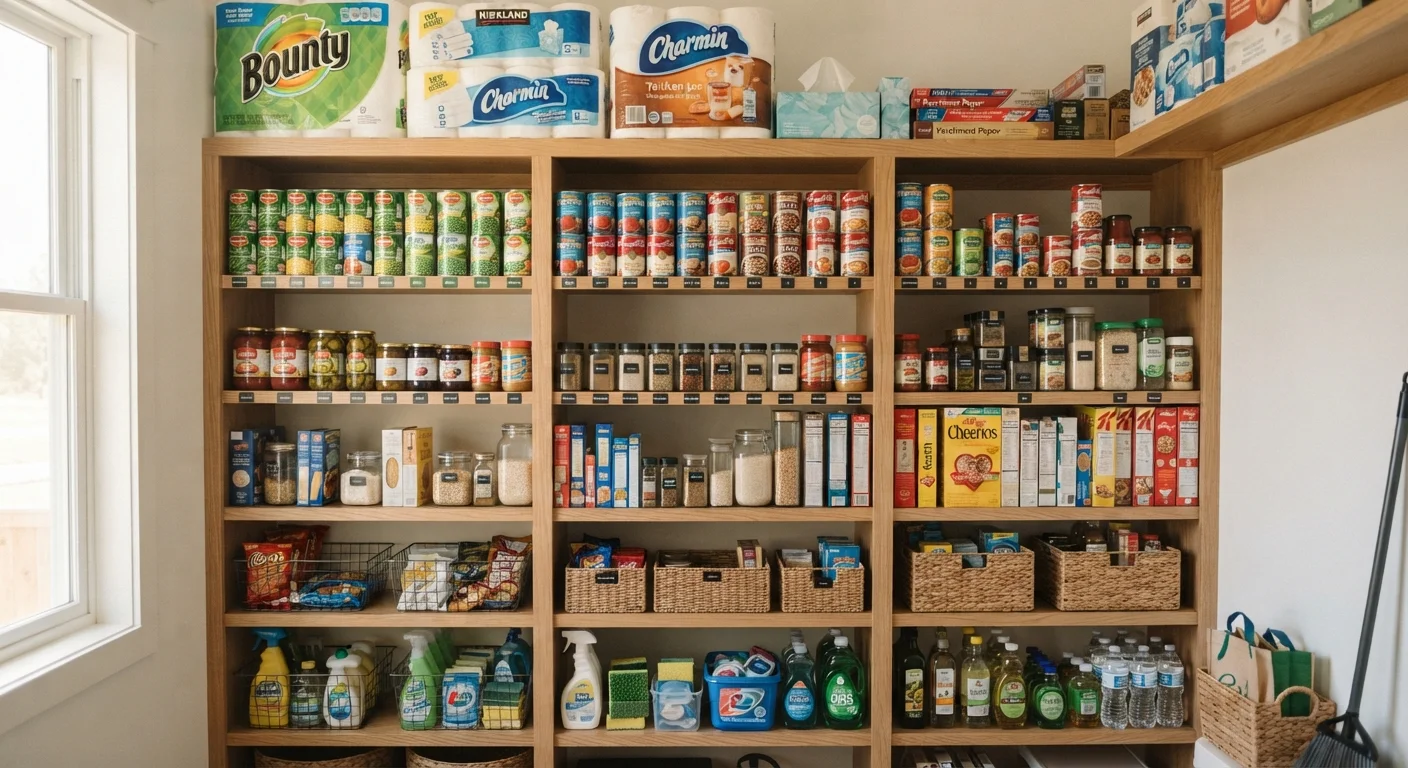
A stockpile is only useful if it's maintained. Set a storage boundary - a single shelf, cabinet, or designated area - and treat that physical limit as a hard cap. When the space is full, you don't buy more until you've worked through what's there.
Expiry Dates Vary More Than You Think
Printed dates on packaged goods range from manufacturer-recommended "best by" windows to actual safety cutoffs, and they vary significantly by product type. Before stockpiling any item in large quantities, verify a realistic usable shelf life under your actual storage conditions - not the theoretical maximum. This is especially relevant for food, medications, and some cleaning products.
Review your stockpile monthly. Rotate items so older stock gets used first, and note any categories where you consistently overbuy or underbuy. Adjust your quantities accordingly. For households making larger-scale purchasing decisions together, navigating shared buying decisions covers how to align on priorities without friction.
Done well, a household stockpile functions like a small buffer against price volatility - you're buying time and reducing urgency shopping. Done poorly, it's just clutter with a financial justification. The difference is almost entirely in the discipline of the system, not the size of the stockpile.