

Key Takeaways
- Emotional spending is driven by feelings like stress, boredom, and loneliness rather than genuine need.
- Identifying your personal emotional triggers is the first step toward changing spending behavior.
- A brief pause before purchasing can interrupt the emotional impulse and restore rational decision-making.
- Budgeting strategies alone often fail unless the emotional root cause is also addressed.
- Building healthier coping habits reduces reliance on spending as emotional relief.
Emotional Spending
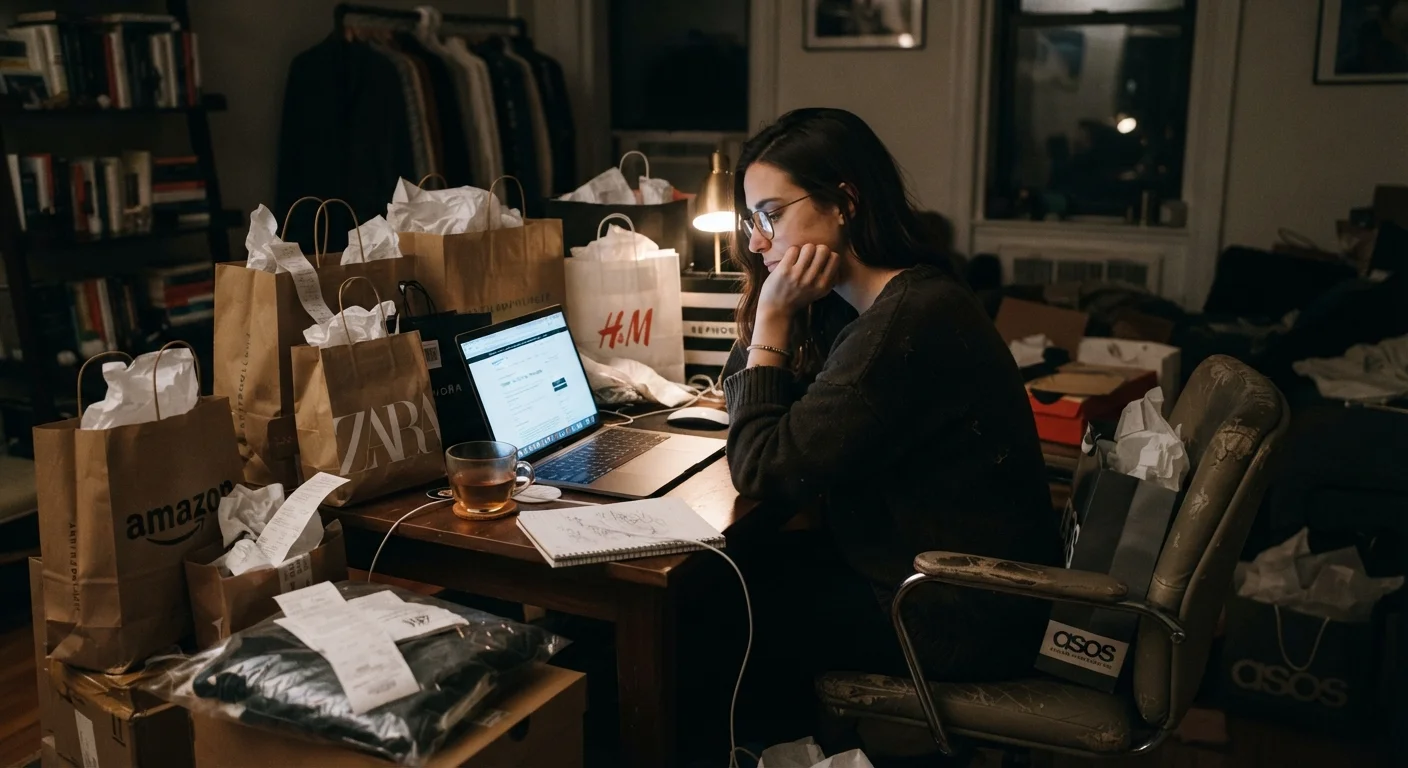
Emotional spending refers to purchasing goods or services in response to a feeling - such as stress, boredom, loneliness, or excitement - rather than a genuine need or deliberate plan. It's sometimes called "retail therapy." The purchase temporarily soothes an uncomfortable emotion, but the financial consequence is real and lasting.
In behavioral economics, emotional spending is linked to present bias - the tendency to prioritize immediate emotional relief over longer-term financial goals. It is distinct from impulsive buying driven purely by environmental cues, though the two often overlap.
What Drives Us to Shop When We Feel Something
Spending money to feel better is one of the most common financial behaviors - and one of the least examined. When a difficult day triggers an online shopping session, or loneliness leads to a cart full of things you didn't plan to buy, that's emotional spending at work. The purchase isn't really about the product; it's an attempt to regulate a feeling.
Research in behavioral economics suggests that emotions disrupt the rational calculus people apply to financial decisions. When emotional arousal is high, the brain's reward system takes the wheel, favoring immediate relief over future stability. This is why a tight budget can hold firm for weeks, then collapse in a single evening after a frustrating event at work.
Understanding this pattern is the foundation. For more on how psychology shapes unplanned purchases, see the mental triggers behind impulse buying.
~5 in 10
Americans who say they have made an emotional purchase
Various consumer behavior surveys consistently find that roughly half of adults report making at least one purchase primarily to improve their mood.
$182
Average monthly spend attributed to impulse purchases
A Slickdeals survey found that US consumers estimated spending an average of $182 per month on unplanned purchases, with emotional and environmental triggers frequently cited.
Common Emotional Triggers Behind Unplanned Purchases
No single emotion owns emotional spending. Several distinct states tend to activate it:
- Stress and anxiety: Buying can feel like regaining control when life feels chaotic. The act of choosing and acquiring something provides a sense of agency - even if it's temporary.
- Boredom: Shopping fills time and provides stimulation. Online retail environments are especially good at exploiting boredom with endless scrolling and easy checkout flows. Certain digital shopping habits quietly inflate spending in ways many consumers don't notice.
- Loneliness: Purchasing can mimic the positive feeling of social connection - receiving a package creates a moment of anticipation and reward.
- Celebration and self-reward: Not all emotional spending comes from negative emotions. Treating yourself after an accomplishment can escalate beyond what was intended.
- Social pressure: Fear of missing out, keeping pace with peers, or responding to trends can feel emotionally urgent, blurring the line between a want and a social obligation.
Identifying which of these triggers most affect you personally is more useful than any generic spending rule. Distinguishing genuine needs from wants becomes significantly easier once you know your emotional patterns.
Why Budgets Alone Don't Solve the Problem
A spreadsheet can tell you exactly how much you've overspent. It cannot tell you why - and it cannot stop you the next time stress hits. This is the central limitation of purely numerical approaches to budgeting.
Emotional spending bypasses the logical framework that a budget operates within. The decision to spend doesn't pass through the part of the brain asking "does this fit my plan?" - it passes through the part looking for relief. Behavioral economics describes this as a failure of self-regulation under emotional load.
“Willpower is not a reliable resource - it depletes under stress, which is precisely when emotional spending is most likely. The smarter strategy is to design your environment so that the impulsive choice is harder to make.”
— Dan Ariely, Behavioral economist and author of 'Predictably Irrational'
This doesn't mean budgets are useless. They provide essential awareness and accountability. But they work best when paired with strategies that address the emotional layer. Building the right behavioral habits - not just better spreadsheets - is what creates lasting financial consistency. The same emotional dynamics that drive overspending also affect larger financial decisions; emotions shape investing behavior in equally predictable ways.
Practical Ways to Interrupt the Spending Impulse
The goal isn't to suppress all spontaneous spending. It's to create enough space between the emotional trigger and the purchase decision to make the choice consciously rather than reactively.
Try the "Name It to Tame It" Method
Before making an unplanned purchase, pause and write down exactly what you're feeling in that moment. Research in affective labeling suggests that naming an emotion reduces its intensity and restores access to more deliberate thinking. It takes less than a minute and can significantly reduce emotionally driven spending.
Several approaches can help:
- Name the feeling first. Before opening an app or website, ask what you're actually feeling. Simply labeling an emotion - "I'm anxious" or "I'm bored" - activates the brain's prefrontal cortex and can reduce emotional intensity.
- Use a waiting rule. Commit to a 24- to 48-hour pause on any unplanned purchase above a threshold you set. Most emotionally driven urges fade within that window.
- Track mood alongside spending. Reviewing your bank statement alongside notes about how you felt on those days can surface patterns that are invisible in numbers alone.
- Build alternative coping habits. Physical activity, calling someone, or going outside can fulfill the same need for stimulation or relief that shopping temporarily provides - without the financial consequence.
- Reconsider payment friction. Research suggests payment method affects spending behavior. Introducing any friction into the payment process - even removing saved card details - can slow impulsive checkout.
This article is for general informational and educational purposes only and does not constitute personalized financial advice. For guidance specific to your financial situation, consider consulting a qualified financial professional.