

Key Takeaways
- Career-threatening setbacks have been overcome by athletes across nearly every major sport.
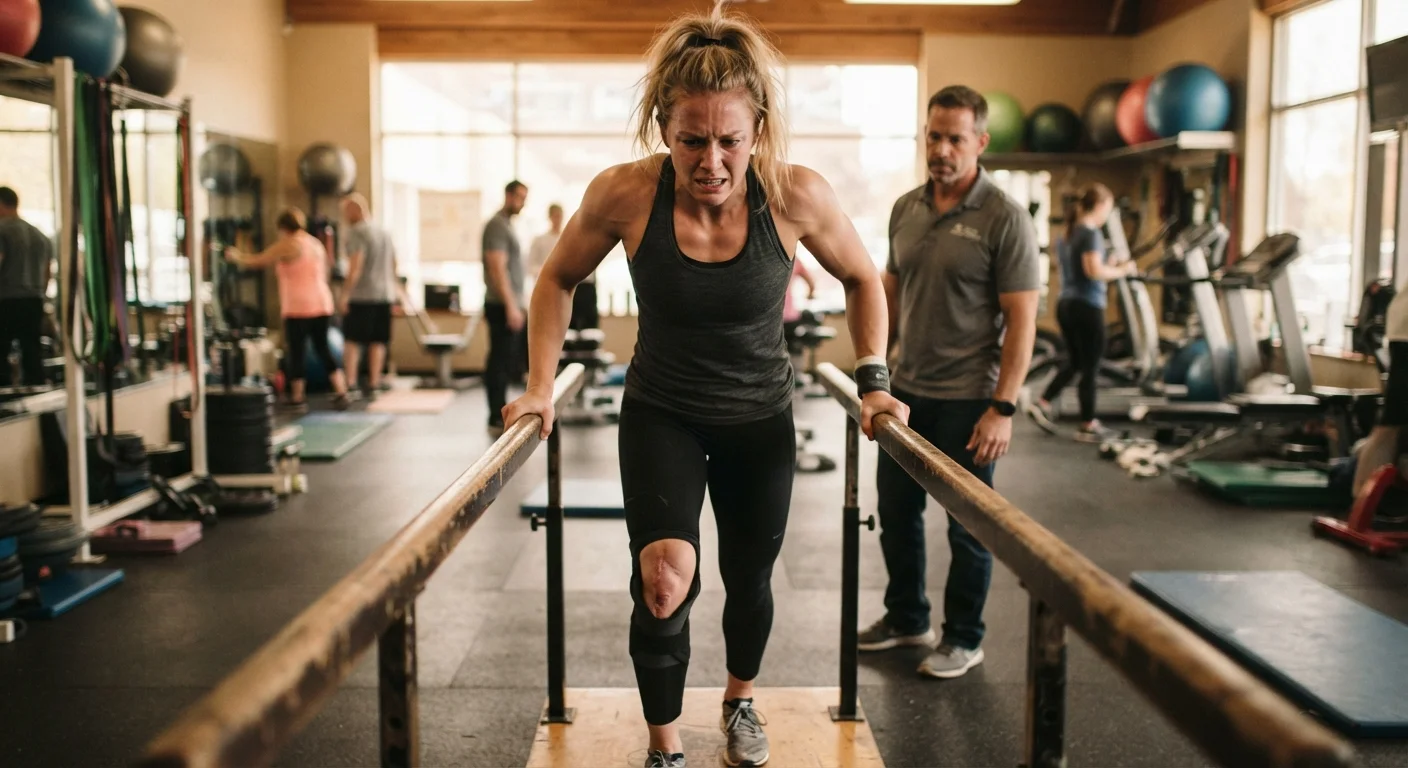
- Physical rehabilitation, mental resilience, and support systems all contribute to successful returns.
- Some athletes have returned from injuries or illness to perform at or above their pre-setback level.
- These stories reflect broader truths about perseverance that resonate well beyond professional sport.
When the Career Looks Over
For elite athletes, a career-threatening setback isn't just a physical crisis - it dismantles the identity, routine, and purpose that professional sport provides. Injury, illness, or trauma can arrive without warning and transform the question from How do I compete? to Will I ever compete again?
The stories collected here span multiple sports and decades, but share a common thread: athletes who faced genuinely uncertain futures and navigated a path back to professional competition. These aren't feel-good myths - they're documented sporting histories, and they sit alongside a far larger, quieter population of athletes for whom comeback attempts did not reach the same conclusions. That context matters.
For fans who follow sport for its human dimension, comeback narratives occupy a unique place. They remind us that the athletes we watch are navigating the same fragility that defines all human lives - just under stadium lights. Explore more stories of athletes defying expectations in our feature on walk-ons who became starters.
Tiger Woods - Multiple Spinal Surgeries to Masters Victory
Few sports comebacks have commanded the world's attention like Tiger Woods's return to the top of professional golf. Between 2014 and 2017, Woods underwent four back surgeries, including a spinal fusion in 2017 that many observers believed would end his career at the elite level. He missed the majority of competition during that stretch and fell to No. 1,199 in the world rankings.
His return culminated in the 2019 Masters, where he claimed his fifth Masters title and 15th major championship - his first major in 11 years. The victory was widely described as one of the most emotionally resonant moments in golf history, not because of the trophy, but because of what it represented: a sustained, painful, uncertain climb back from the edge of professional irrelevance.
Woods fell to No. 1,199 in the world before winning the 2019 Masters.
Monica Seles - Returning to the Court After a Stabbing
Monica Seles was the world's No. 1 ranked women's tennis player when, in April 1993, she was stabbed on-court during a tournament in Hamburg by a spectator. The physical wound healed faster than the psychological aftermath - Seles did not return to professional tennis for more than two years, during which she privately battled trauma and depression.
She returned to the WTA Tour in 1995 and reached the US Open final that year, eventually winning the Australian Open in 1996. Her return required confronting not just physical recovery but the psychological weight of an unprecedented and violent intrusion into competition. Seles's story stands as one of the most demanding comeback narratives in sport history.
Seles overcame a traumatic on-court stabbing to win a Grand Slam upon her return.
Adrian Peterson - ACL Tear to MVP Season
In December 2011, Minnesota Vikings running back Adrian Peterson suffered a torn ACL and MCL - an injury that routinely ends or significantly diminishes careers in the NFL. The surgery required extensive rehabilitation, and many analysts were uncertain whether Peterson could return to elite production.
He came back for the 2012 season and rushed for 2,097 yards - falling just nine yards short of Eric Dickerson's single-season rushing record - earning him the NFL's Most Valuable Player award. Peterson's comeback is frequently cited in discussions of athletic rehabilitation timelines, though medical experts caution that outcomes vary significantly between individuals.
Peterson rushed for 2,097 yards in the season following his ACL and MCL reconstruction.
Bethany Hamilton - Surfing at Elite Level After a Shark Attack
In October 2003, professional surfer Bethany Hamilton lost her left arm in a shark attack at age 13. She returned to competitive surfing just one month later. Hamilton went on to win national titles and compete on the World Surf League Championship Tour, developing an entirely adapted surfing technique.
Her return required not only extraordinary physical adaptation but a complete reimagining of how competitive surfing could be performed. Hamilton has spoken publicly about the role of personal faith and community in her recovery - elements distinct from conventional athletic rehabilitation frameworks but central to her own experience.
Hamilton returned to competitive surfing within a month of losing her arm.
Cyclist Lance Armstrong's Era - A Complicated Return Narrative
Lance Armstrong was diagnosed with testicular cancer in 1996 - a diagnosis that had spread to his brain and lungs - and returned to win the Tour de France seven consecutive times between 1999 and 2005. That narrative was substantially reframed after 2012, when Armstrong was stripped of all seven titles following findings of systematic doping violations by the United States Anti-Doping Agency.
His story remains in the public record as both a medically significant cancer survival and a cautionary chapter in sport's ongoing struggle with performance enhancement. It reflects the complexity of comeback narratives: the human medical story and the competitive record are now understood separately. The cancer survival itself - documented by oncologists - was genuine and statistically remarkable.
Armstrong's cancer survival remained medically documented even as his competitive titles were stripped.
Serena Williams - Pulmonary Embolism to Grand Slam Champion
Following the 2011 US Open, Serena Williams was hospitalized with a pulmonary embolism - a life-threatening blood clot in the lungs - compounding an earlier foot injury. The combination of conditions placed her career in genuine jeopardy, and she required ongoing medical management during her recovery.
Williams returned to win Wimbledon in 2012 and went on to accumulate additional Grand Slam titles in the years that followed. Her experience with a serious cardiovascular event while at the peak of professional sport adds a medical dimension to comeback stories that extends beyond musculoskeletal injury - a reminder that elite athletes face health challenges well outside the typical injury narrative.
Williams returned from a pulmonary embolism to win Wimbledon the following year.
What These Stories Have in Common
Across each of the comebacks documented above, a few consistent themes emerge - even when the specific sports and injuries vary enormously. Access to elite rehabilitation resources plays a clear role. So does a support system: coaches, medical professionals, family, and in several cases, mental health practitioners who treated the psychological aftermath alongside the physical.
Mental Resilience Is Part of the Story
Physical recovery often captures the headlines, but sports psychologists consistently note that the psychological dimension of injury rehabilitation - fear of re-injury, identity disruption, sustained motivation - is equally demanding. Athletes frequently credit structured mental health support alongside physical therapy as central to successful returns.
What's also notable is that not every return looked identical to what came before. Some athletes adapted their technique, adjusted their event selection, or competed in a changed physical condition. The comeback, in many cases, wasn't a return to an exact prior state - it was the construction of a new competitive identity from the materials available after the setback.
Rehabilitation Timelines Vary Widely
The recoveries described in this article represent exceptional outcomes, not typical ones. Recovery from serious injury, illness, or trauma depends on many individual factors, including the nature of the condition, access to medical care, and each person's unique physiology and circumstances. These stories are documented for editorial purposes and should not be interpreted as predictive of outcomes for others facing similar conditions. Always consult a qualified healthcare professional regarding any health concern.
These narratives sit in a broader conversation about what sport asks of the people who compete in it - and what it gives back when they fight their way through. For a contrasting perspective on how athletic careers conclude, see our piece on how athletes navigate retirement. And for stories of athletes who redefined what's possible in competition, our feature on record-breaking performances provides additional context.