

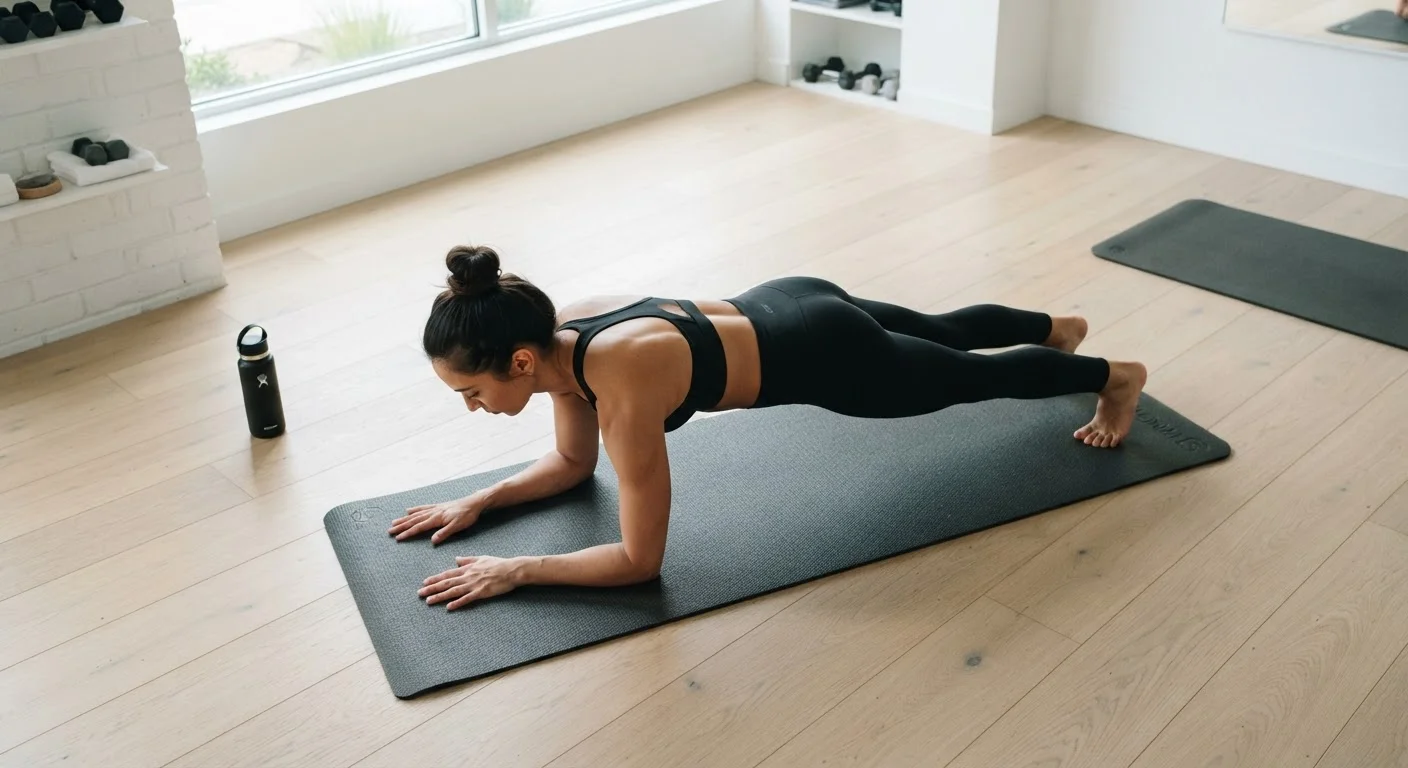
Key Takeaways
- Core strength refers to functional stability and muscle endurance, not visible definition.
- Visible abs depend primarily on body fat percentage, which is largely a nutritional outcome.
- Strong core muscles support posture, spinal health, and athletic performance regardless of appearance.
- Most people benefit more from prioritizing core function over core aesthetics.
- Both goals can coexist, but they require different - and sometimes competing - training and lifestyle strategies.
Option A
Core Strength
The functional foundation that powers everyday movement.
Best for: Anyone seeking better posture, injury resilience, athletic performance, and long-term physical health.
Option B
Core Aesthetics
The visible result of low body fat and developed abdominal muscles.
Best for: Those pursuing a specific physique goal, typically tied to both training consistency and nutritional habits.
If you want to reduce back pain and improve daily movement
Core Strength
Functional core training builds the stability muscles that protect your spine and improve posture. Visible definition offers no direct benefit here.
If you're training for athletic performance
Core Strength
Power transfer, rotational control, and balance all depend on a strong, stable core - not on how it looks in the mirror.
If your primary goal is a specific physique
Core Aesthetics
Visible definition requires a sustained caloric approach alongside training. Understanding this distinction helps set realistic expectations.
If you're building a sustainable long-term fitness routine
Core Strength
Functional strength compounds over time and supports virtually every other fitness goal, making it the more durable investment.
Two Goals, One Muscle Group
When most people say they want to "work on their core," they're often picturing one thing: a defined, visible midsection. But that image blurs two distinctly different goals - and confusing them can send your training in the wrong direction.
Core strength refers to the functional capacity of the muscles that stabilize your spine, pelvis, and hips. These include not just the rectus abdominis (the "six-pack" muscle), but also the transverse abdominis, obliques, multifidus, and diaphragm. Together, they control how your body generates and transfers force during movement.
Core aesthetics - the visible, chiseled look - is a product of two separate variables: muscle development and body fat percentage. You can have an exceptionally strong core that's never visible, and a highly defined midsection that offers surprisingly little functional stability.
Understanding this distinction isn't just academic. It changes how you train, what you prioritize, and what results you can realistically expect.
What Core Strength Actually Builds
Functional core training targets the deep and superficial muscles that keep your body mechanically sound. Exercises like dead bugs, pallof presses, farmer carries, and anti-rotation movements train the core to resist force - which is closer to how it actually works in real life.
A well-developed functional core supports:
- Spinal health: Adequate core stability reduces compressive load on the lumbar spine during daily tasks and exercise.
- Posture: The endurance of deep stabilizer muscles directly affects how you hold your body upright over long periods.
- Athletic performance: Rotational power, balance, and force transfer all depend on core stability - relevant whether you're sprinting, lifting, or swinging a racket.
- Injury prevention: A stable midsection helps protect the hips, knees, and lower back from compensatory stress.
This is why functional fitness approaches place such emphasis on core stability as a prerequisite for most other movements. The core isn't just another muscle group - it's the structural hub of the entire body.
| Criterion | Core Strength | Core Aesthetics |
|---|---|---|
| Primary goal | Stability, endurance, force transfer | Visible muscle definition |
| Key variables | Muscle function and endurance | Body fat % + muscle development |
| Muscles targeted | Deep stabilizers + superficial muscles | Rectus abdominis + obliques primarily |
| Best exercises | Planks, carries, anti-rotation drills | Crunches, leg raises, cable work |
| Nutritional role | Supports energy for training | Critical - determines visibility |
| Injury prevention benefit | High - protects spine and hips | Minimal - cosmetic outcome |
| Measurable via appearance? | No - function isn't always visible | Yes - by definition |
The Honest Truth About Visible Abs
Here's what's often left unsaid in fitness content: visible abdominal definition is primarily a function of body fat percentage, not training volume. Most fitness professionals estimate that the abdominal muscles become visible for most people when body fat drops below roughly 14-17% for women and 10-12% for men - though individual anatomy varies considerably.
That means crunches alone won't produce a visible six-pack if caloric intake and overall body composition aren't also addressed. It's a nutrition-and-training equation, not simply a workout one.
80%
Adults who experience low back pain
The American Chiropractic Association estimates that around 80% of Americans will experience back pain at some point - a condition closely tied to core stability deficits.
~10-17%
Body fat range where abs typically become visible
General fitness guidelines suggest visible abdominal definition typically requires body fat below roughly 17% for women and 10-12% for men, though individual anatomy varies.
This doesn't mean aesthetics-focused training is pointless. Developing the rectus abdominis and obliques does create more defined muscle bellies - which become more visible as body fat decreases. But it does mean that someone who does zero direct ab work but maintains lower body fat may appear to have a stronger core than someone who trains abs daily but carries more fat tissue.
For those interested in how different training types affect body composition broadly, understanding what cardio and strength training each do is a useful place to start.
How to Train Smarter for Your Actual Goal
The most effective approach depends on what you actually want - and being honest with yourself about that.
If functional strength is your priority: Focus on compound, multi-joint movements that demand core engagement under load - squats, deadlifts, overhead presses - alongside targeted stability exercises. Compound movements naturally recruit core musculature as a stabilizer. Supplement with planks, carries, and rotational control drills for direct core work.
If aesthetics are your priority: Direct abdominal training (crunches, leg raises, cable crunches) can build muscle mass in the midsection, but the visible result depends heavily on overall body composition. That means nutrition, sleep, and consistency across your full program matter as much as any individual exercise choice.
If both matter to you: The good news is functional core work and aesthetic-focused training aren't mutually exclusive. A well-rounded program that includes stability training, compound lifts, and some direct abdominal work will serve both goals simultaneously - especially if paired with sustainable nutritional habits.
New to resistance training overall? A beginner strength framework offers a solid starting point before getting deep into core-specific programming.
Core Training Is for Every Fitness Level
You don't need to be an athlete or gym regular to benefit from core training. Basic stability exercises like modified planks or seated abdominal bracing are accessible to most people and can be scaled significantly. If you have an existing back condition or injury, work with a physical therapist or qualified trainer before starting any new core program.
This article is for general informational and educational purposes only and does not constitute medical or fitness advice. Consult a qualified healthcare or fitness professional before beginning any new exercise program, particularly if you have existing health conditions or injuries.