
Key Takeaways
- The pitch clock reduced average MLB game times by roughly 25 minutes starting in 2023.
- Pitchers face a 15-second clock with bases empty and 20 seconds with runners on base.
- Defensive shift restrictions now require two infielders on each side of second base.
- Bases were enlarged from 15 to 18 square inches to reduce collisions and encourage stolen bases.
- Violations of pitch clock or pickoff rules result in automatic balls or strikes.
MLB Rule Changes (2023-Present)
Major League Baseball has introduced a set of structural rule changes designed to speed up games, increase on-field action, and improve competitive balance. The most prominent of these is the pitch clock, which limits how long pitchers and batters have between pitches. Other changes address defensive shifts, base sizes, and pickoff attempts.
These rules were phased in after testing in the minor leagues. MLB's Competition Committee, which includes club representatives and players, formally approved each change under the league's collective bargaining framework.
The Pitch Clock: Baseball's Biggest Overhaul in Years
For generations, baseball carried a reputation for unhurried pacing - a quality fans either loved or found frustrating. Beginning with the 2023 season, MLB moved decisively to address pace of play with a mandatory pitch clock, and the results were immediate. Average nine-inning game times dropped from roughly 3 hours 3 minutes in 2022 to around 2 hours 38 minutes in 2023, according to MLB's own tracking data.
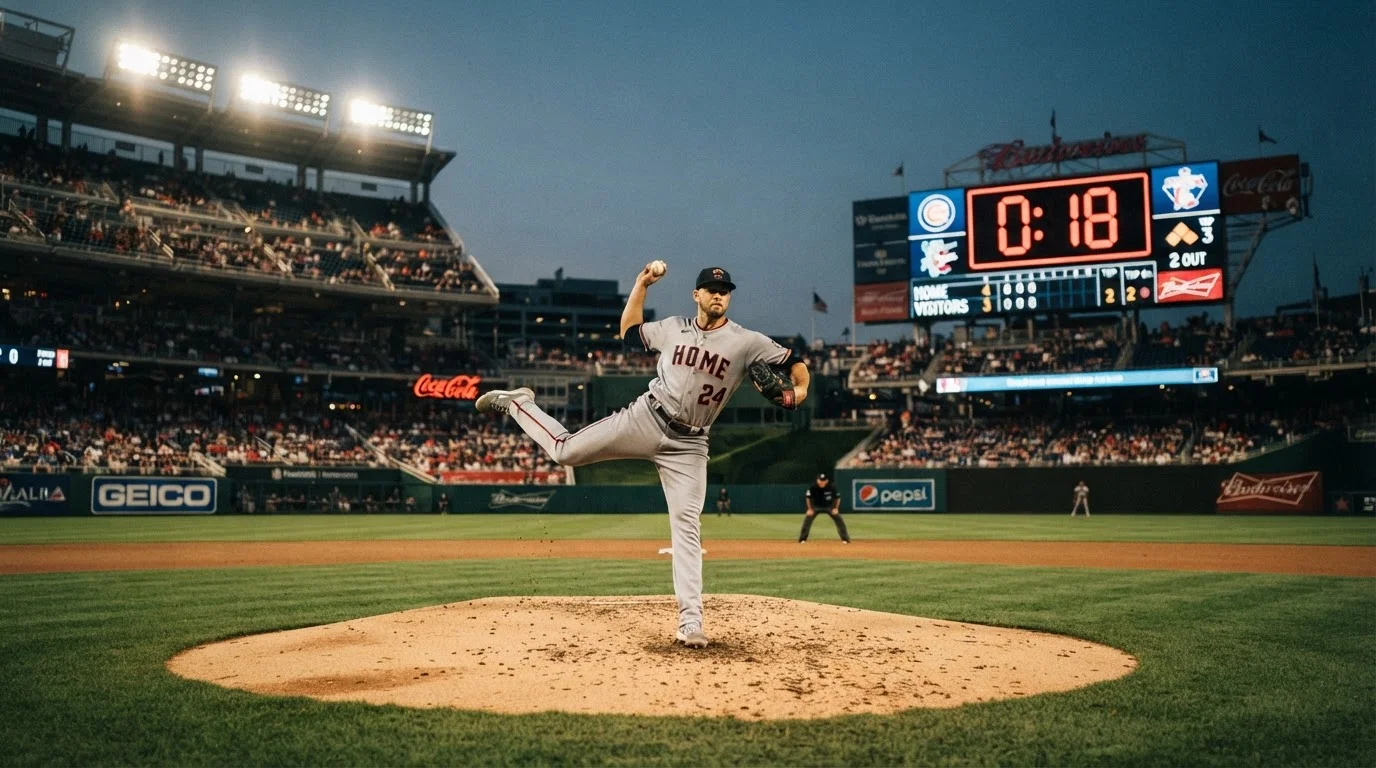
Here's how it works: with no runners on base, a pitcher has 15 seconds to begin his delivery after receiving the ball. With at least one runner on, that window extends to 20 seconds. Batters, for their part, must be in the box and looking at the pitcher with at least 8 seconds remaining. Pitchers who run out of time are assessed an automatic ball; batters who fail to comply receive an automatic strike.
The adjustment required real acclimation. Some veteran pitchers with elaborate pre-pitch routines had to restructure their habits entirely. Catchers and pitching coaches also faced new constraints on mound visits, which were already limited in prior seasons.
Watching Games With the Clock in Mind
If you're watching an MLB game live or on broadcast, most stadium scoreboards and TV feeds display the pitch clock in real time. Keeping an eye on it gives you a feel for how pitchers and batters manage pressure - some use nearly every second, while others work quickly by habit. It adds a subtle but engaging layer to the viewing experience.
Shift Restrictions: Leveling the Defensive Playing Field
The defensive shift - a strategy where teams repositioned infielders heavily to one side of the diamond against pull-heavy hitters - became ubiquitous across MLB over the past decade. By 2022, shifts were being deployed on more than half of all plate appearances league-wide. Critics argued shifts suppressed batting averages and reduced the value of left-handed hitters who pounded grounders into the shift.
MLB's response: a firm rule requiring four infielders on the infield at the time of each pitch, with at least two on each side of second base. Outfielders remain unrestricted in their positioning, but the extreme infield overloads that defined the shift era are no longer permitted.
Batting averages on grounders and short line drives ticked upward following the change, though analysts note the effect interacts with several other variables. The rule aims to restore more traditional hit distribution and reward opposite-field hitting skills. For a deeper look at how teams adapt their strategies to rule environments, see how teams shift tactics from regular season to postseason.
Shift Rule Applies Only to Infielders
MLB's shift restriction specifically governs infielder positioning - outfielders can still shade toward any part of the field without restriction. Teams continue to use data-driven outfield positioning aggressively, which means pull hitters may still see coordinated defensive alignment in the gaps and corners. The rule change targets infield extremes, not overall defensive strategy.
Larger Bases and Pickoff Limits: Rewarding Speed
Two additional changes work in tandem to make baserunning a more rewarding part of the game. First, the physical bases themselves grew from 15-inch squares to 18-inch squares. The extra surface area shortens the effective distance between first and second base by a few inches - enough to matter at the margins - and reduces collisions between fielders and baserunners at the bag.
Second, pitchers are now limited to two disengagements per plate appearance, meaning two combined pickoff attempts or step-offs. A third attempt is only permitted if it results in an out; otherwise, it is ruled an automatic balk, advancing any runners. This change directly limits a pitcher's ability to neutralize a baserunner's lead through repeated throws or fakes.
Stolen base numbers rebounded sharply in 2023, with league-wide attempts reaching levels not seen in many years. The combination of limited pickoff attempts and marginally shorter base paths shifted the risk-reward calculation in favor of running. These structural decisions also ripple into late-season implications - learn more about how standings and tiebreakers work with MLB's Wild Card tiebreaker rules.
~25 min
Average game time reduction in 2023
Per MLB's tracking data, the average nine-inning game dropped from about 3 hours 3 minutes in 2022 to approximately 2 hours 38 minutes in 2023.
18 sq in
New base size since 2023
Bases were enlarged from 15-inch squares to 18-inch squares to reduce collisions and shorten the effective distance between bags.
2
Maximum pickoff/step-off attempts per at-bat
A third disengagement without recording an out results in an automatic balk under MLB's current rules.
The Bigger Picture: Why MLB Made These Changes
The rule package reflects a calculated effort to attract and retain younger fans. Research commissioned or cited by MLB pointed to pace of play and low-action stretches as barriers for casual viewers. Faster games with more stolen bases and hits represent a more television- and streaming-friendly product.
These changes also fit into a broader era of officiating modernization. Automated ball-strike systems are being tested in the minor leagues, and replay review - already a staple of the game - continues to evolve. For context on how review technology shapes outcomes, the piece on instant replay and officiating reviews is worth reading alongside this one.
It's also worth noting that rule-making in MLB doesn't happen in isolation. The universal designated hitter, adopted league-wide in 2022, was itself a landmark structural change that reshaped roster construction and strategy - a debate that continues. See the ongoing DH debate for the full argument on both sides.
Whether all of these changes endure, get refined, or spark further adjustments will depend on how players, managers, and fans respond over multiple seasons. What's clear is that MLB is in one of its most active periods of structural evolution in modern history.