
Key Takeaways
- Leagues divide teams into conferences and divisions, each with their own standings and playoff implications.
- Division winners can earn automatic playoff berths even with worse records than teams in other divisions.
- Scheduling is often weighted toward divisional opponents, making those games especially high-stakes.
- Wild card rules exist in several leagues to give strong teams a second path into the postseason.
- Understanding structure helps fans interpret standings that can seem counterintuitive at first glance.
Conferences and Divisions
In professional and college sports, leagues are split into conferences - large groupings of teams - which are further divided into smaller divisions. Each tier uses its own standings to determine playoff eligibility, seeding, and scheduling. A team's position within its division can matter just as much as its overall record.
Playoff qualification rules vary by league: some guarantee division winners automatic berths regardless of record, while others use a pure conference-wide points or win-percentage ranking to fill postseason spots.
The Basic Architecture: Leagues, Conferences, Divisions
Every major American sports league organizes its teams in layers. At the top sits the league itself - the NFL, NBA, MLB, or NHL. Below that are conferences, typically two per league (though college sports can have many more). Inside each conference sit divisions, usually grouping teams by geography or historical rivalry.
This layered structure isn't just administrative tidiness. It shapes schedules, standings, and postseason access in ways that can feel surprising to casual fans. A team near the bottom of the league in overall record might still be celebrating a division title - while a team with far more wins sits at home watching the playoffs. Understanding why requires looking at how each layer works independently.
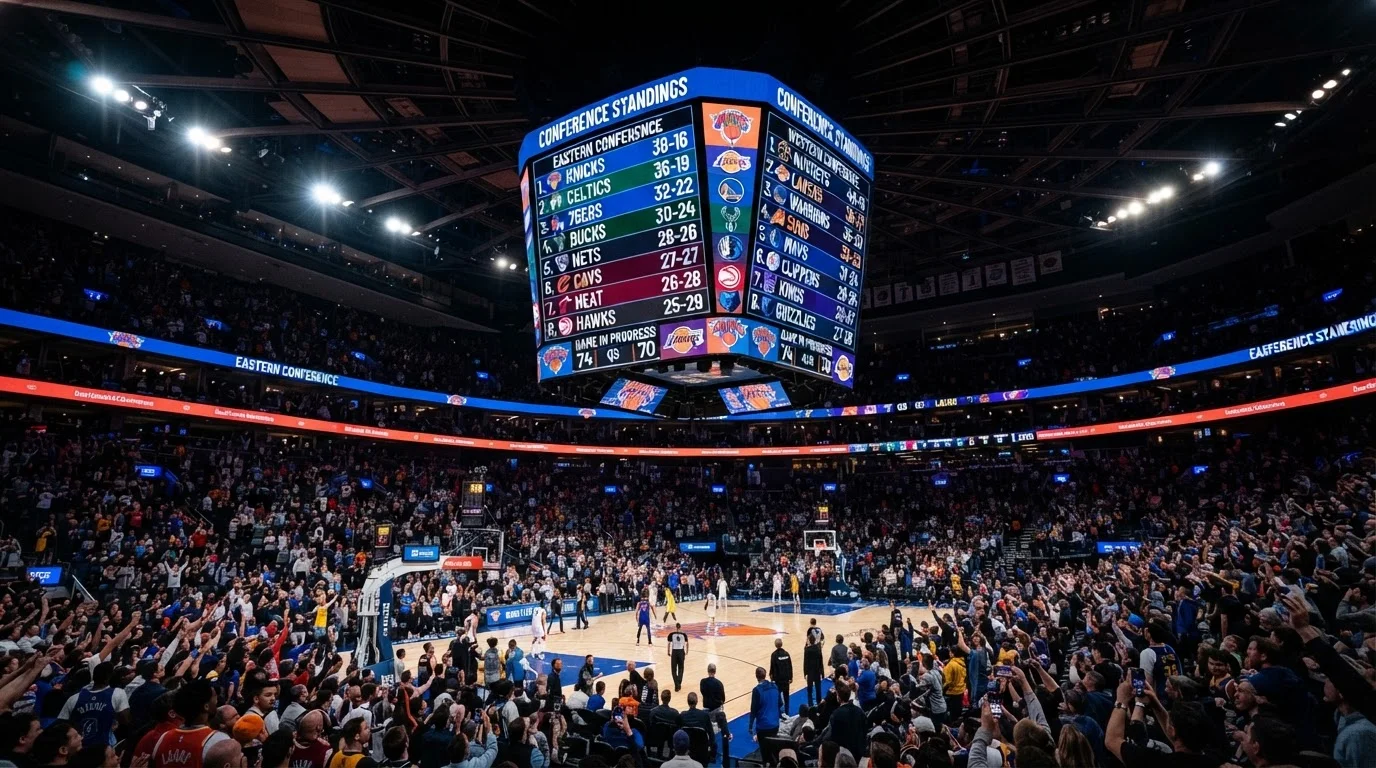
For a closer look at how one league's standings function in practice, see NBA Conference Standings: What the Numbers Actually Mean.
8
NFL divisions sending guaranteed playoff teams
Each of the NFL's eight divisions automatically qualifies its winner for the postseason, regardless of record.
3
MLB wild card spots per league (since 2022)
MLB expanded from two to three wild card berths per league in 2022, creating a new three-game wild card series format.
6
Guaranteed divisional matchups per NFL team per season
Every NFL team plays each of its three division rivals twice - home and away - before any non-division scheduling applies.
How Division Titles Create Unequal Playoff Access
The most striking quirk of divisional structures is the automatic berth. In the NFL, for example, each of the league's eight divisions sends its winner directly to the playoffs regardless of record. A division winner at 8-9 will advance while a wild-card-chasing team at 10-7 in a tougher division might be watching from home.
The logic behind this design is competitive balance across regions. Without guaranteed division spots, powerhouse conferences could dominate the postseason field year after year, marginalizing entire geographic markets. Division titles also preserve meaningful late-season games in weaker divisions - every contest still matters for local bragging rights and postseason access.
MLB expanded its wild card format in 2022 partly to address concerns that strict divisional rules were penalizing strong teams in deep divisions. MLB's Wild Card Race: How Tiebreakers Are Decided covers exactly what happens when teams finish level on wins - a situation that divisional structures make more likely.
Watch Division Races Early in the Season
Division standings often tighten dramatically in the final weeks when teams play head-to-head matchups against their closest rivals. Following division races from early on - rather than only monitoring overall conference standings - gives fans a sharper picture of who actually controls their own playoff destiny.
Scheduling Weight and the Divisional Advantage
Conference and division membership also drives scheduling. NFL teams play each divisional opponent twice per season - home and away - guaranteeing six high-stakes divisional matchups before a single wild card tiebreaker becomes relevant. NBA teams similarly face division rivals more frequently than they face teams across conferences.
This scheduling weight has a compounding effect: division standings shift quickly over those head-to-head games, and because strength of schedule varies so dramatically between divisions, identical win totals can represent very different levels of competition. A 10-win NFL team from the NFC East - historically one of the toughest divisions - may have beaten markedly stronger opponents than a 10-win team from a weaker division.
Once the postseason begins, team strategies shift considerably. Regular Season vs. Postseason: How Teams Shift Their Strategies explores how coaches adjust game plans once divisional seeds are locked in.
College Sports: A More Complex Web
College sports take the conference-and-division model to another level of complexity. Major conferences like the SEC, Big Ten, and ACC each contain divisions (or pod-based groupings), govern their own championship games, and negotiate separate television deals. A team's conference affiliation can affect recruiting pipelines, revenue, and national perception as much as wins and losses.
The pace of conference realignment in recent years has scrambled traditional divisional geography. Conference Realignment in College Sports: What's Actually Driving It examines the financial and competitive forces reshaping those boundaries. Meanwhile, College Football's Playoff System Through the Years shows how selection criteria have evolved as conference structures changed around them.
Conference Rules Change More Often Than Fans Realize
Playoff formats, wild card counts, and divisional structures are adjusted by leagues more frequently than most fans track. MLB, the NFL, and college football have all made meaningful structural changes within the last several years. Checking each league's official rules at the start of a season is always worthwhile before interpreting standings.