Key Takeaways
- Guaranteed money is the only portion of a contract a player is certain to receive regardless of injury or release.
- Signing bonuses are paid upfront but are spread across cap accounting over the contract's length.
- NFL contracts are generally the least guaranteed of the four major leagues; MLB contracts are fully guaranteed.
- Incentives can be 'likely' or 'unlikely' to be earned, and each category is treated differently under cap rules.
- Understanding contract structure helps fans interpret offseason moves and trade decisions more accurately.
Player Contract Structure
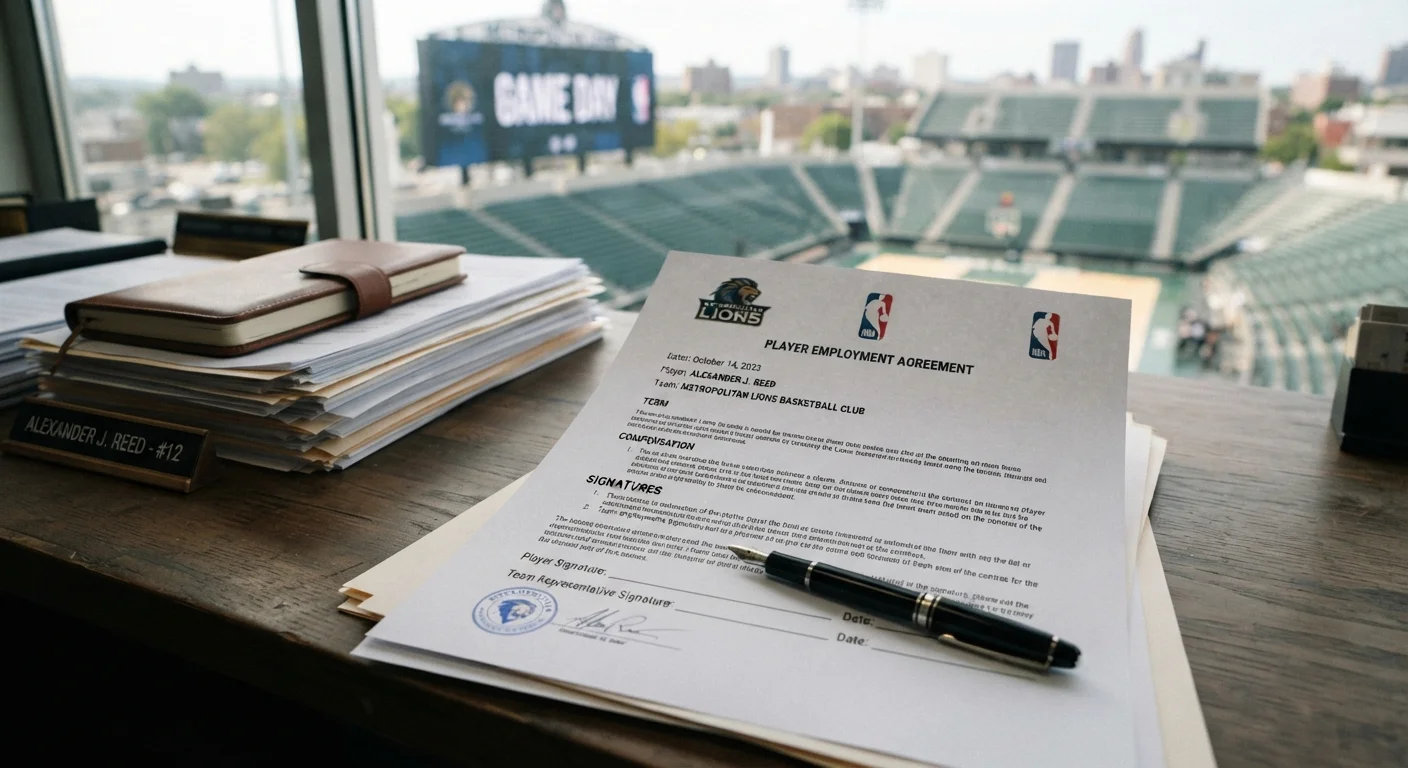
A professional sports contract is more than a single salary number. It is a legal agreement that breaks compensation into distinct categories - guaranteed money, signing bonuses, base salary, and performance incentives - each governed by different rules about when and whether a player actually receives payment.
Contract structures vary significantly by league, governed by each sport's Collective Bargaining Agreement (CBA), which determines what can be guaranteed, how bonuses count against the salary cap, and how incentives are classified.
Why Contract Structure Matters to Fans
When a team announces a five-year, $200 million deal, that number almost never tells the whole story. Front offices, players, and agents all negotiate intricate structures that determine actual risk and reward on both sides. Understanding the building blocks of a contract helps fans make sense of trades, cap crunches, and roster decisions throughout the season.
Contract language is shaped heavily by each league's labor agreement. The Collective Bargaining Agreement sets the rules for what teams and players can negotiate - including what must be guaranteed, how bonuses are structured, and what triggers an incentive payment.
~57%
Share of NFL contract value typically guaranteed
Analyses of NFL deals consistently show that fully guaranteed money represents a fraction of the total contract figure - often less than half for veteran players.
100%
MLB player contracts that are fully guaranteed
Major League Baseball's CBA structure means nearly all player contracts are fully guaranteed once signed, a stark contrast to NFL norms.
Dead cap
Cap space lost when a signed player is cut
When an NFL team releases a player before a contract ends, any prorated signing bonus money remaining on the books becomes dead cap space, still counting against league limits.
Guaranteed Money: The Only Number That's Certain
Guaranteed money is the foundation of any contract discussion. It represents the dollars a player will receive no matter what - even if they suffer a career-ending injury or are cut before the contract expires. The amount and type of guarantee varies dramatically by league.
In Major League Baseball (MLB), contracts are almost universally fully guaranteed. A ten-year deal means ten years of full salary, regardless of performance decline or injury. In the NBA, player contracts are also largely guaranteed, which is why buyouts - rather than simple releases - are needed when teams and players part ways.
The NFL is the outlier. Most NFL contracts carry only partial guarantees, often limited to the signing bonus and the first season or two of base salary. The remaining years act more as team options than firm commitments, which is why veteran players are often released before their stated contract ends. The full breakdown of how guarantees and clauses work illustrates just how complex these protections can get.
Reading Contract Headlines Smartly
When you see a reported contract total, immediately look for the guaranteed money figure - that's the real number. A five-year deal with only one year guaranteed is effectively a one-year deal with options. Sports business reporters typically note the guaranteed amount alongside the total value for exactly this reason.
Signing Bonuses and How They Hit the Cap
A signing bonus is cash paid to a player at (or shortly after) signing - and it is almost always fully guaranteed. From the player's perspective, it is the most secure money on the table. From the team's perspective, it creates a long-term cap obligation regardless of what happens next.
Under NFL and NBA cap rules, signing bonus money is prorated - divided evenly across every year of the contract for accounting purposes. If a team cuts the player before the deal ends, the remaining prorated bonus money doesn't disappear; it becomes dead cap space, still counting against the team's limit even though the player is gone.
This mechanic is central to understanding why the salary cap creates such difficult roster decisions every offseason. Teams can't simply erase a mistake - the financial echo of a bad signing can linger for years.
Incentives: Earning Extra Through Performance
Incentive clauses reward players for hitting statistical benchmarks, playing-time milestones, or postseason achievements. A wide receiver might earn a bonus for reaching 1,000 receiving yards; a pitcher for accumulating 200 innings. These clauses align team and player interests, especially in contracts with lower guarantees.
In the NFL, incentives are classified into two types: Likely To Be Earned (LTBE) and Not Likely To Be Earned (NLTBE). LTBE incentives - based on what the player achieved the prior season - count against the cap immediately. NLTBE incentives only affect the following year's cap if the player actually reaches them. This distinction matters enormously for teams managing tight cap situations.
Other leagues use similar mechanics. MLB contracts often include award bonuses (Cy Young, MVP) and playing-time triggers. Understanding these layers is also key to interpreting how free agency negotiations unfold, since incentive structures are frequently the sticking point between a player's ask and a team's offer.
Roster and Option Bonuses: The Other Fine Print
Beyond signing bonuses and incentives, contracts often include roster bonuses - payments triggered when a player is on the active roster by a specific date. Teams use these strategically: if a player is going to be released, cutting them before the roster bonus date saves money. This is why so many NFL transactions happen in the days before the new league year opens.
Option bonuses function similarly to signing bonuses for cap purposes but are tied to a team's decision to retain a player into a subsequent year. They give teams flexibility while creating guaranteed obligations the moment the option is exercised. Fans following how athletes move between teams will recognize these as key levers in trade and release timing.
Taken together, these contract elements explain why sports business headlines can be misleading. The total value of a deal is a ceiling - what actually gets paid, and when, depends entirely on the guarantees, bonuses, and performance clauses hidden inside the fine print.
This article is for general informational purposes only and does not constitute legal or financial advice.