

Key Takeaways
- The draft gives teams structured access to new amateur talent, with weaker teams typically selecting first.
- Free agency allows players who have fulfilled contract obligations to negotiate with any interested team.
- Trades let teams exchange players, draft picks, and other assets to address immediate roster needs.
- Salary cap rules in most leagues directly shape which moves are financially feasible for a franchise.
- Each mechanism involves player agents, general managers, and league-level oversight.
- International players enter through both the draft and international signing periods depending on the sport.
Player Movement in Pro Sports
Player movement describes the three main mechanisms by which athletes join, leave, or change teams in professional sports: the draft, free agency, and trades. Each process follows league-specific rules and timelines, and each carries different implications for the player and the franchise. Together, they form the machinery of roster-building that fans follow just as closely as the games themselves.
The specifics - eligibility requirements, salary cap implications, and compensation rules - vary significantly across the NFL, NBA, MLB, and NHL, governed by each league's collective bargaining agreement (CBA).
The Draft: Building Through Selection
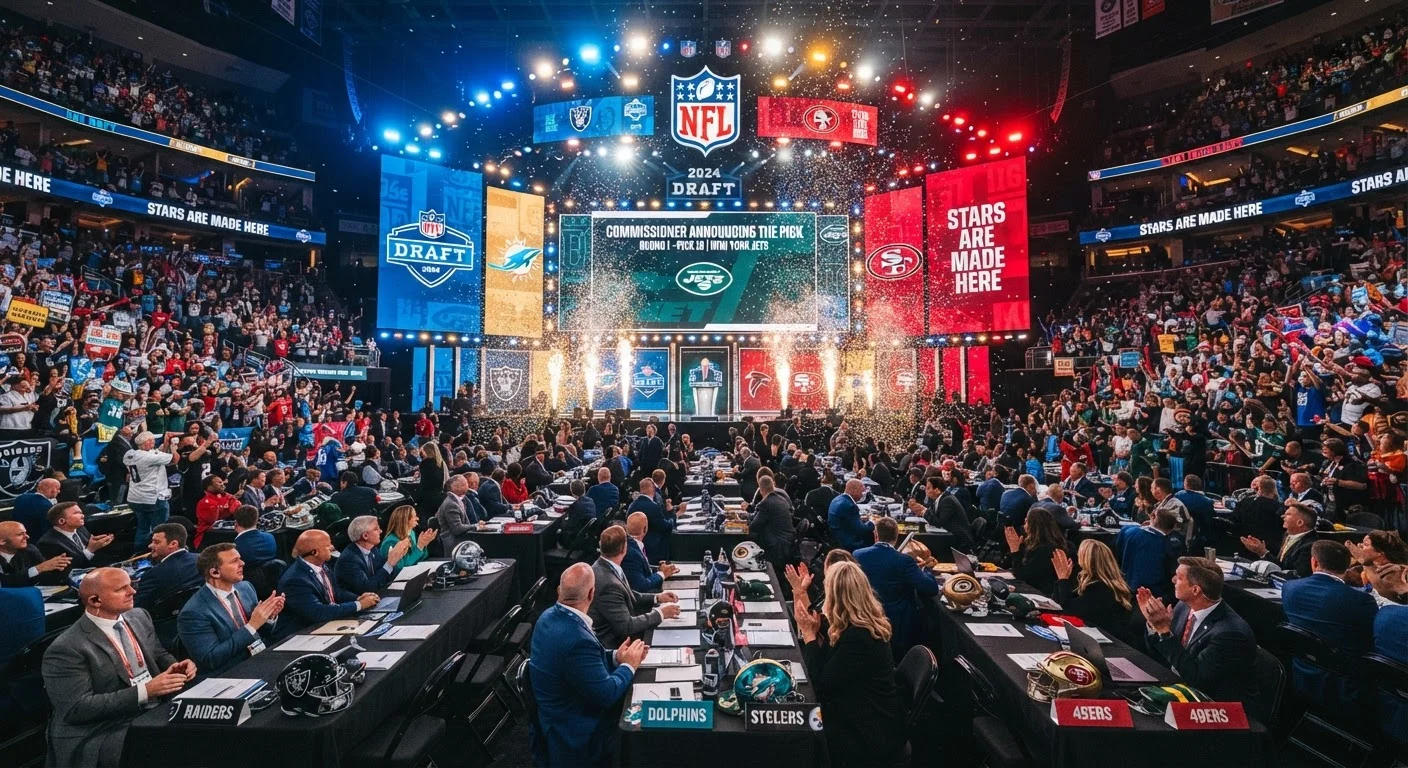
The draft is where futures are made - and debated endlessly at sports bars across the country. Each major American professional league holds an annual draft that allows teams to select eligible amateur athletes and, in some cases, international prospects. The process is structured so that teams finishing with worse records generally receive earlier picks, creating a built-in pathway for struggling franchises to improve.
In the NFL and NBA, the draft is the primary gateway for college players entering the pros. MLB drafts domestic amateur talent but runs separate international signing periods for players from countries like the Dominican Republic and Venezuela - a pathway explored in depth in our guide to international player pipelines. The NHL drafts players as young as 18, with many spending additional years in development leagues before reaching the NHL roster.
Teams invest enormous resources in scouting and analytics to evaluate prospects. Sports analytics have transformed how athletes are evaluated, shifting draft decisions far beyond gut instinct and highlight reels.
7 rounds
Length of the NFL Draft
The NFL Draft spans seven rounds and typically includes over 250 selections, making it the longest draft among the four major North American professional sports leagues.
~$200M+
Typical max NBA free agent contract
Supermax extensions in the NBA can exceed $200 million over five years for eligible players, illustrating the financial scale of unrestricted free agency in basketball.
Trade deadline
Annual roster reset window
Every major US professional sports league maintains a trade deadline - a cutoff date after which in-season trades are prohibited until the following offseason.
Free Agency: When Players Hold the Power
Free agency is the moment when many athletes - after fulfilling their contractual obligations - get to choose where they play rather than simply being told. It is among the most consequential forces in modern sports, capable of instantly reshaping a franchise's competitive outlook and fan expectations.
Players typically become free agents after their rookie contract expires or after a set number of years of professional service. Unrestricted free agents can sign with any team that makes an offer. Restricted free agents can receive outside offers, but their current team retains the right to match and keep them.
The salary cap looms over every negotiation. Teams must manage total payroll carefully, which is why understanding how athlete contracts actually work - including guaranteed money, signing bonuses, and incentive clauses - is essential context for following free agency moves. The player's agent is central to this process, negotiating terms and often orchestrating meetings with multiple franchises simultaneously.
Follow the Cap, Not Just the Headlines
When a blockbuster free-agency signing is announced, check the team's salary cap situation before assuming it signals a dynasty in the making. Teams often restructure existing deals or release veteran players to create room for a new signing. The mechanics of player contracts explain why the headline number and the actual financial reality can look very different.
Trades: The Art of the Deal
Trades are the chess moves of professional sports - calculated exchanges of players, draft picks, cash considerations, or combinations of all three. Unlike the draft or free agency, trades can happen at almost any point in the calendar, from the offseason through to each league's trade deadline during the regular season.
A general manager evaluates dozens of variables before pulling the trigger on a trade: salary cap impact, positional need, contract length, chemistry, and long-term team-building strategy. For a deeper look at how those decisions get made, see what a general manager actually does.
For players, a trade can be exhilarating or jarring. Being moved mid-season - when a player is suddenly relocating their family, adjusting to a new locker room, and learning a new playbook - carries human weight that statistics alone don't capture. Our feature on mid-season trades unpacks that experience in full.
“A trade is never just about two teams. It's about a person who built a life somewhere being told, overnight, that their life is somewhere else now.”
— An NFL Players Association representative, Spokesperson for professional athlete labor interests
How These Systems Shape Sports Culture
Draft nights, free-agency frenzies, and trade deadline days have become events in their own right - generating as much fan engagement as many regular-season games. They are the mechanisms through which franchise players are built, retained, or lost, and through which expansion franchises begin to establish their identities.
Each system reflects a balance of power that has evolved through decades of labor negotiations between players' unions and league ownership. The result is a set of rules that attempts to balance competitive fairness with athlete rights - and that continues to evolve with every new collective bargaining agreement. For fans, understanding these three pathways transforms how you watch and interpret roster news, front-office moves, and the stories behind every jersey change.