

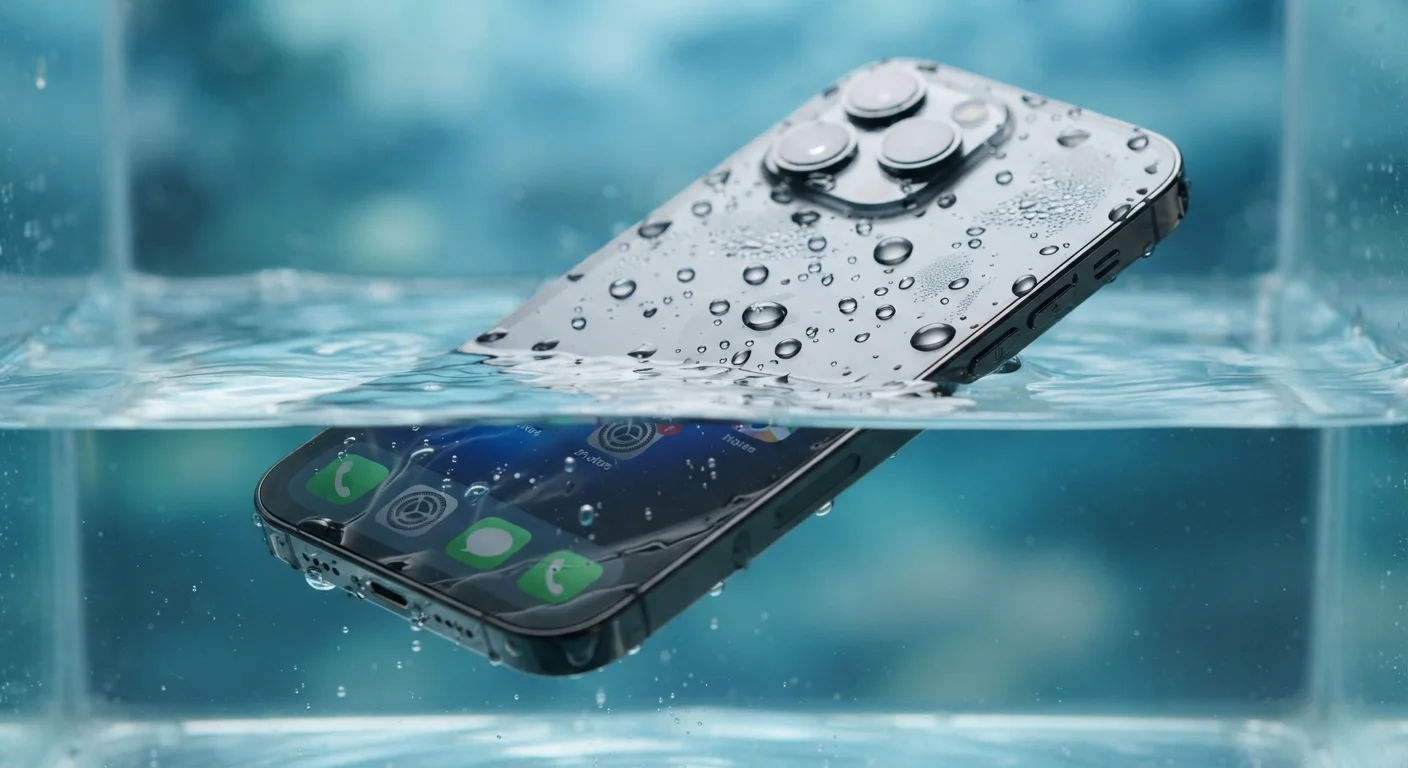
Key Takeaways
- IP ratings use two digits: the first rates dust resistance (0-6), the second rates water resistance (0-9).
- An 'X' in place of a digit means that aspect was not tested - not that it has zero protection.
- IP67 means dust-tight and submersion to 1 meter for 30 minutes; IP68 allows deeper or longer immersion per manufacturer specs.
- Lab test conditions rarely match real-world use - saltwater, pressure, and repeated exposure can degrade protection over time.
- IP ratings do not cover damage from high-pressure jets unless specifically rated IP69K.
IP Rating
An IP (Ingress Protection) rating is a standardized code defined by the International Electrotechnical Commission (IEC) that tells you how well an electronic device resists the entry of solid particles like dust and liquids like water. The code always follows the format 'IP' followed by two digits - the first covers dust protection, the second covers liquid protection. Knowing what each digit means helps you judge whether a device suits your real-world needs.
The standard governing these ratings is IEC 62368-1 (replacing 60529 for many devices), and testing is conducted under controlled lab conditions - not the variable environments consumers actually encounter.
Breaking Down the Two-Digit Code
Every IP rating follows a simple structure: the letters 'IP' followed by two digits. The first digit (0-6) rates protection against solid particles, including dust. The second digit (0-9) rates protection against liquids, primarily water. A higher number always means stronger protection within that category.
Here's what the dust-protection digit (first) means at key levels:
- 0: No protection
- 4: Protected against solid objects larger than 1mm (most small tools and wires)
- 5: Dust-protected - some ingress permitted but not enough to harm function
- 6: Fully dust-tight - no ingress whatsoever
And the water-protection digit (second):
- 4: Splashing water from any direction
- 5: Water jets from a nozzle
- 7: Immersion up to 1 meter for 30 minutes
- 8: Continuous immersion beyond 1 meter (exact depth specified by the manufacturer)
- 9K: High-pressure, high-temperature water jets - rare in consumer electronics
When you see an 'X' in place of a digit - like IPX8 - it means that particular attribute was simply not tested, not that it offers zero protection. This is a common misreading that leads to confusion. For a broader look at how specs like these translate to real-world value, see The Consumer's Field Guide to Gadget Specifications.
IP68
Most common top-tier rating on flagship smartphones
IP68 has become the de facto standard for premium consumer smartphones from most major manufacturers, though the exact depth and duration each brand tests to varies.
1m / 30min
IP67 fresh water immersion threshold
Under IEC standard testing, an IP67 rating certifies the device survives immersion in up to 1 meter of still, fresh water for 30 minutes - a controlled lab condition, not an everyday guarantee.
0
Warranty claims typically covered for water damage
Most major manufacturers exclude water damage from standard warranties even on IP-rated devices, meaning water ingress is a consumer risk regardless of the rating level.
Common Ratings You'll Actually See on Devices
Most consumer electronics cluster around a handful of IP ratings. Understanding the practical meaning of each helps you decide what level of protection genuinely fits your lifestyle.
IP54 - Common on budget earbuds and fitness trackers. Dust-protected (not dust-tight) and resistant to splashing water. Fine for sweaty workouts, not fine for rain exposure or submersion.
IP67 - The standard for mid-to-high-end smartphones and many true wireless earbuds. Fully dust-tight and immersion-rated to 1 meter for 30 minutes in still, fresh water.
IP68 - Found on flagship phones and premium wearables. Dust-tight and rated for deeper or longer submersion, but the threshold varies by manufacturer - one brand's IP68 may be rated to 1.5 meters while another's covers 6 meters. Always check the published spec sheet.
IPX4 - Frequently seen on wireless speakers. No dust rating tested, but adequate splash protection from any direction. Suitable for poolside use, not submersion.
What IP Ratings Don't Cover
Marketing language often stretches further than the ratings justify. 'Waterproof' is a term with no universal regulatory definition - it is not synonymous with any IP level. 'Water-resistant' is more accurate for most consumer devices, yet even that framing glosses over important caveats.
Lab Tests vs. Real Life
IEC ingress protection tests are conducted under tightly controlled conditions - specific water temperature, pressure, and duration. These conditions represent a baseline, not a simulation of everyday accidents. A device rated IP67 has passed a defined lab procedure, not a test of long-term durability or resistance to all water types.
IP tests are conducted in controlled lab conditions using still, fresh water at standard atmospheric pressure and temperature. Real-world exposure often differs significantly:
- Saltwater and chlorine are chemically corrosive and can degrade seals faster than fresh water.
- Pressure dynamics from swimming strokes or dropping a device in water can exceed what lab submersion tests replicate.
- Temperature changes (like a cold device in a hot shower) cause materials to expand and contract, potentially compromising seals.
- Repeated exposure gradually wears down gaskets, meaning a day-one IP68 rating may not reflect the device's protection a year later after drops and wear.
Importantly, most manufacturers explicitly exclude water damage from standard warranties - even for IP-rated devices. This means an IP68 phone that stops working after a swim may not be covered for repair or replacement. IP ratings are about defining tested thresholds, not about making financial promises to consumers. This is similar to how other product certifications work - as explored in Decoding Product Labels, certification language rarely tells the whole story.
Check the Fine Print on IP68 Claims
Because IP68 allows manufacturers to set their own submersion depth and duration parameters, two IP68-rated devices may have very different real-world water resistance. Before relying on a rating for demanding use, look up the device's specific published depth rating - it's usually in the technical specifications section of the manufacturer's website.
Using IP Ratings to Make Smarter Decisions
Rather than treating an IP rating as a guarantee, use it as one data point alongside your actual usage patterns. Someone who runs outdoors in light rain needs different protection than a diver, a construction worker, or a parent of toddlers.
A few practical principles worth keeping in mind:
- Match the rating to your most demanding scenario - not your average day.
- If a device will face repeated water exposure, treat IP67 as the minimum useful threshold.
- For smart home or outdoor devices that may face dust or humidity over years of use, a dust rating of 5 or 6 meaningfully extends longevity.
- Don't assume a rating covers accessories - the device rating rarely extends to charging ports, cases, or connected cables.
IP ratings are one of several specifications worth understanding when evaluating any gadget. For more on reading device specs with confidence, The Consumer's Field Guide to Gadget Specifications covers the full range - from battery capacity to display brightness - in plain language.