

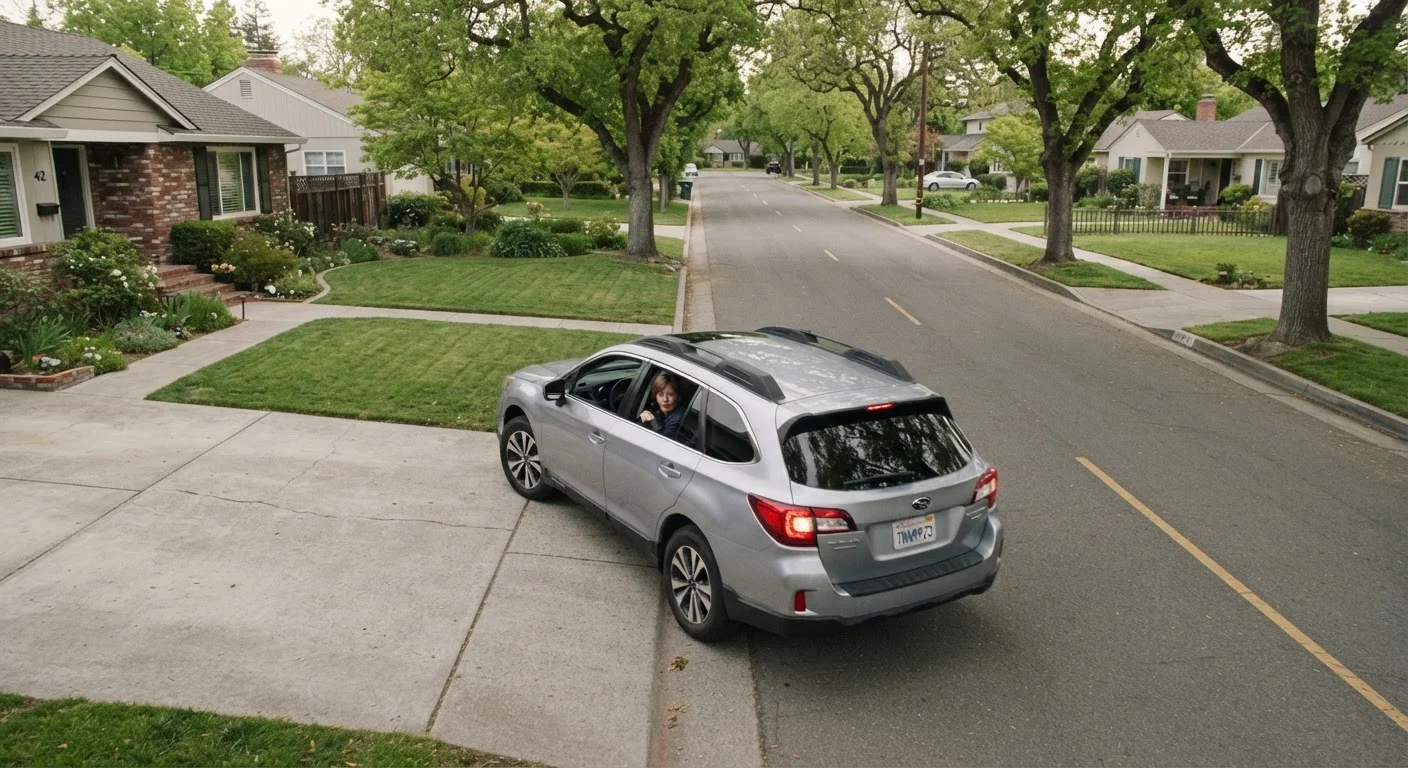
Key Takeaways
- Most reversing crashes occur at low speeds in driveways and parking lots, not on open roads.
- Drivers routinely over-rely on backup cameras and miss hazards outside the camera's field of view.
- Turning your head and using mirrors together gives a more complete picture than any single method.
- Slow, deliberate movements are the most effective way to prevent reversing collisions.
Why Reversing Is Harder Than It Looks
Backing up feels routine - most drivers do it dozens of times a week. But reversing removes many of the visual advantages drivers rely on when moving forward: a broad windshield view, the natural instinct to scan ahead, and a clear sense of where the vehicle's nose is relative to obstacles. When moving in reverse, spatial judgment shifts dramatically, and the consequences of misjudging a few inches can mean a dented bumper, a damaged garage door, or worse.
The maneuver is especially unforgiving in tight spaces. Driveways, parking structures, and curbside spots all compress the margin for error. Understanding the specific mistakes that cause the most trouble - and why they're so common - is the first step toward correcting them. For a broader framework on reading your environment while driving, see our article on how defensive driving actually works.
~17,000
Annual US backing-up injury crashes
The National Highway Traffic Safety Administration has estimated that backup crashes injure roughly 17,000 people in the US each year, with fatalities disproportionately involving children and older adults.
25%
Parking lot share of all crashes
Research from the National Safety Council suggests that roughly one in four vehicle crashes in the US occurs in parking lots and garages, where low-speed reversing is common.
Common Mistakes Drivers Make When Reversing
The errors below aren't signs of careless driving - most stem from habits that feel natural but don't account for the unique demands of reversing. Recognizing them is the first step toward correcting them.
Relying exclusively on the backup camera without checking mirrors or looking over the shoulder.
Why it happens: Backup cameras are prominent on modern dashboards and feel authoritative. Drivers naturally focus on the screen because it's in their direct line of sight.
Reversing too quickly, leaving no time to react to unexpected obstacles.
Why it happens: Drivers underestimate how fast hazards can enter a reversing path, especially pedestrians in parking lots moving between parked cars.
Failing to account for the vehicle's front swing when reversing from a tight spot.
Why it happens: Attention stays fixed on what's directly behind the car. When the steering wheel turns during a reversing arc, the front corner of the vehicle swings outward - often into a neighboring car or post.
Not adjusting mirrors before reversing, leaving blind spots unaddressed.
Why it happens: Mirrors are set for forward driving. Many drivers don't realize that tilting the side mirrors slightly downward when reversing can reveal curb edges, parking stops, and low obstacles.
Starting to reverse before fully checking that the path is clear.
Why it happens: Impatience or the assumption that because the area was clear moments ago, it still is. Parking lot and driveway environments change rapidly.
Children and Pedestrians in Driveways
Young children can move quickly and silently into a vehicle's path, and they are often below the sight line of a backup camera. Before reversing from a driveway, verify the area behind the vehicle is clear by walking behind it if any children are nearby. Do not rely solely on audio or visual alerts from in-vehicle systems in these situations.
Building Better Reversing Habits
Improving your reversing technique doesn't require advanced training - it requires deliberate attention to a few consistent practices. Before shifting into reverse, take a moment to physically walk behind your vehicle if you're in a driveway and children or pets may be present. In parking lots, pause before reversing to let any foot traffic pass.
When backing out, move slowly enough that you can stop within the distance you can see. Use all available tools - mirrors, backup camera, and a direct look over your shoulder - rather than defaulting to just one. If your vehicle has parking sensors, treat their alerts as a prompt to stop immediately, not a warning to inch forward a little more.
Reversing at an angle, such as when pulling out of an angled parking space, introduces extra complexity. Steering direction feels counterintuitive: turning the wheel left moves the rear of the car right. Practicing this in an empty lot can help build the muscle memory that makes the motion feel natural. For a related skill that also involves tight-space maneuvering, our parallel parking step-by-step guide covers reference points and steering angles in detail.
Ultimately, the drivers who reverse most safely share one habit: they treat it as a maneuver that deserves full attention every single time, not a routine motion on autopilot.