

Key Takeaways
- Defensive driving means anticipating hazards before they develop, not just reacting to them.
- Maintaining adequate following distance is one of the highest-impact defensive habits a driver can build.
- Scanning far ahead - not just the car in front - dramatically expands your response time.
- Eliminating distractions is a core component of defensive driving, not a separate issue.
- ADAS technology assists but does not replace attentive, skilled driving judgment.
Defensive Driving
Defensive driving is a set of skills and habits that help a driver anticipate hazards, manage risk, and respond safely - even when other drivers make mistakes. It goes beyond knowing traffic laws to actively reading the road environment and adjusting behavior before problems arise. The goal is to reduce the likelihood of a collision by staying prepared rather than simply reacting.
Defensive driving is formally defined by the National Safety Council as driving to save lives, time, and money despite the conditions around you and the actions of others.
The Core Idea: Anticipation Over Reaction
Most drivers think of safety as reacting quickly - hitting the brakes when something goes wrong. Defensive driving inverts that logic. Its foundation is anticipating hazards early enough that sudden reactions become unnecessary.
This requires a mental shift: instead of processing what's happening right now, a defensive driver is constantly asking what could happen in the next few seconds. That question-asking posture is what separates defensive driving from simply obeying traffic laws.
The approach covers three interconnected skills: scanning effectively, managing the space around your vehicle, and eliminating the factors - like distraction - that degrade both. Understanding what experienced drivers actually scan for is a useful complement to the principles below.
“The goal of defensive driving is not to assume that other drivers will do the right thing - it's to drive as if they might not.”
— National Safety Council, US nonprofit organization focused on road safety and injury prevention
Scanning: Looking Beyond the Car in Front of You
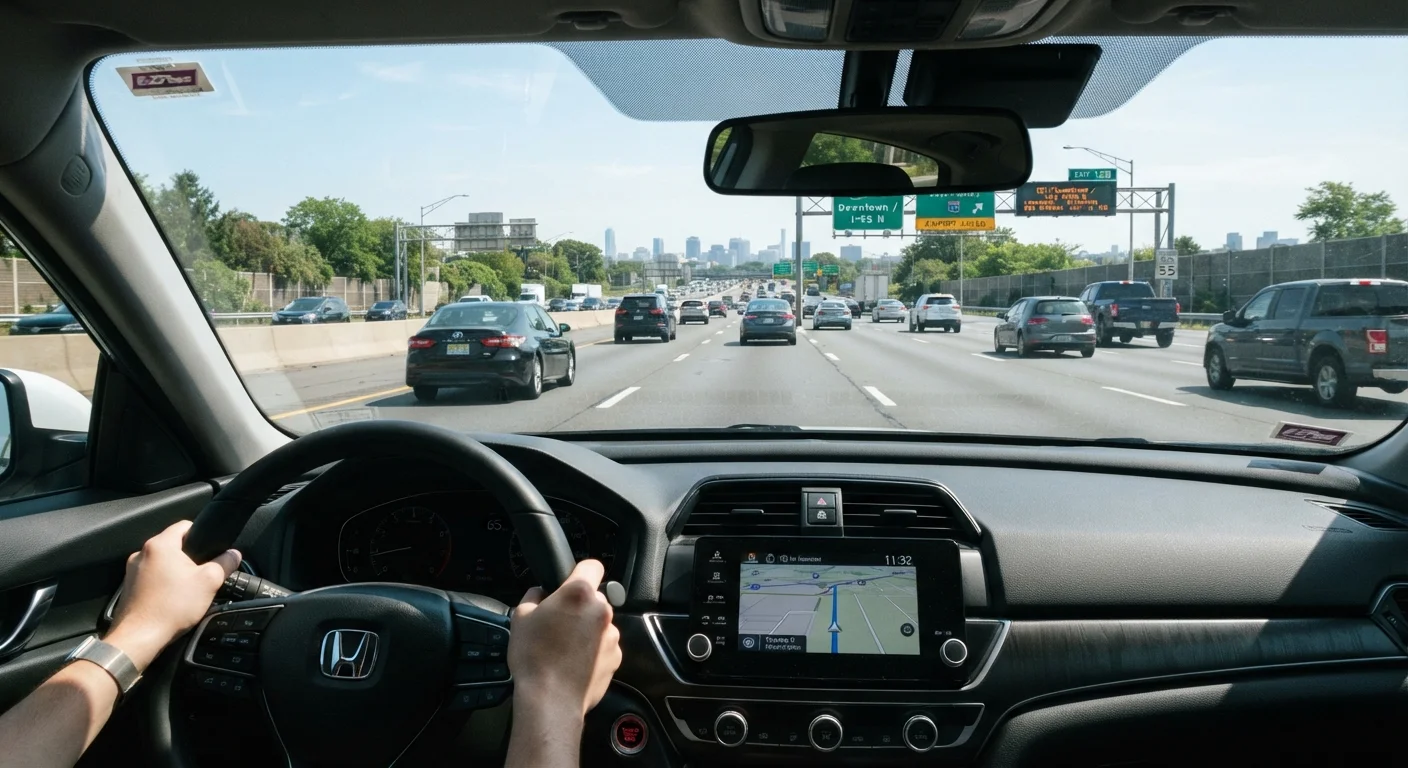
Novice drivers tend to fixate on the vehicle directly ahead. Skilled defensive drivers scan much farther - traffic safety educators commonly recommend targeting 12 to 15 seconds ahead at highway speeds, which translates to roughly a quarter mile at 60 mph.
Extended scanning accomplishes two things. First, it gives the driver time to process multiple developing situations - a merging truck, a car braking two vehicles ahead, a pedestrian approaching an intersection. Second, it prevents the tunnel vision that makes sudden hazards feel unavoidable.
Peripheral vision also matters. Regularly checking mirrors - side and rearview - every five to eight seconds creates an ongoing mental map of traffic in all directions, not just ahead. This awareness is especially important before changing lanes or slowing unexpectedly.
94%
Crashes attributable to human choice or error
According to NHTSA research, approximately 94% of serious crashes involve human error as a critical contributing factor.
3 sec
Minimum recommended following gap in normal conditions
Traffic safety educators widely recommend a three-second following gap as a baseline for adequate stopping time in dry, clear conditions.
~40%
Reduction in fatal crash risk with defensive course training
Studies cited by the National Safety Council suggest trained defensive drivers show meaningfully lower collision rates than untrained counterparts, though individual results vary.
Space Management: The Buffer Zone Principle
Physical distance is time. The more space a driver maintains around their vehicle, the more seconds are available to perceive a hazard and respond before contact. This is why following distance is one of the most consistently emphasized elements of defensive driving.
The commonly cited guideline is a three-second following gap in normal conditions - measured by picking a fixed point and counting the seconds between when the car ahead passes it and when you do. In adverse weather or at highway speeds, that gap should increase. Understanding how stopping distance is calculated clarifies exactly why speed amplifies the space required.
Space management isn't limited to the gap ahead. Avoiding sustained positions in other drivers' blind spots, creating room on at least one side of the vehicle when possible, and not tailgating all contribute to a buffer that absorbs mistakes - yours or someone else's.
Build the Three-Second Habit
Pick a fixed roadside marker - a sign, overpass, or shadow line - and count how many seconds pass between when the car ahead clears it and when you do. In normal conditions, aim for at least three seconds. If you're consistently under that, you're following closer than is safe. Increase the gap on wet roads or at highway speeds.
Distraction and the Attention Cost of Modern Driving
No amount of scanning skill compensates for a driver whose attention is elsewhere. Distraction is the direct enemy of defensive driving - and its scope is broader than most drivers assume. Phone use is the most discussed form, but eating, adjusting climate controls, and even engaged conversation all impose cognitive load that reduces road awareness.
Research consistently shows that the brain cannot fully multitask while driving. The science behind inattention blindness explains why even hands-free calls are less safe than they feel. Defensive driving demands sustained, deliberate attention - which means treating distraction management as a skill, not just a preference.
Conditions, Confidence, and Technology
Defensive driving adapts to conditions. Wet pavement, fog, ice, and heavy traffic all shift the risk profile of any given trip, requiring adjustments to speed, following distance, and scanning frequency. The principles remain the same; the margins simply tighten. Adapting to changing weather conditions walks through those specific adjustments in detail.
Modern vehicles increasingly include driver-assistance systems - automatic emergency braking, lane-keeping alerts, adaptive cruise control - that can reduce the consequences of lapses in attention. But these systems are aids, not substitutes. What ADAS technology actually does makes clear that current systems have significant limitations and still depend on an engaged driver behind the wheel.
Defensive driving, at its core, remains a human skill - one built through awareness, consistent habits, and an honest understanding of one's own limitations as a driver.
Defensive Driving Courses Are Widely Available
Many US states accept approved defensive driving courses for traffic violation point reduction or insurance discount eligibility. Courses are offered through community organizations, online platforms, and driving schools. Requirements and accepted providers vary by state, so check with your state DMV or insurer for specifics.