

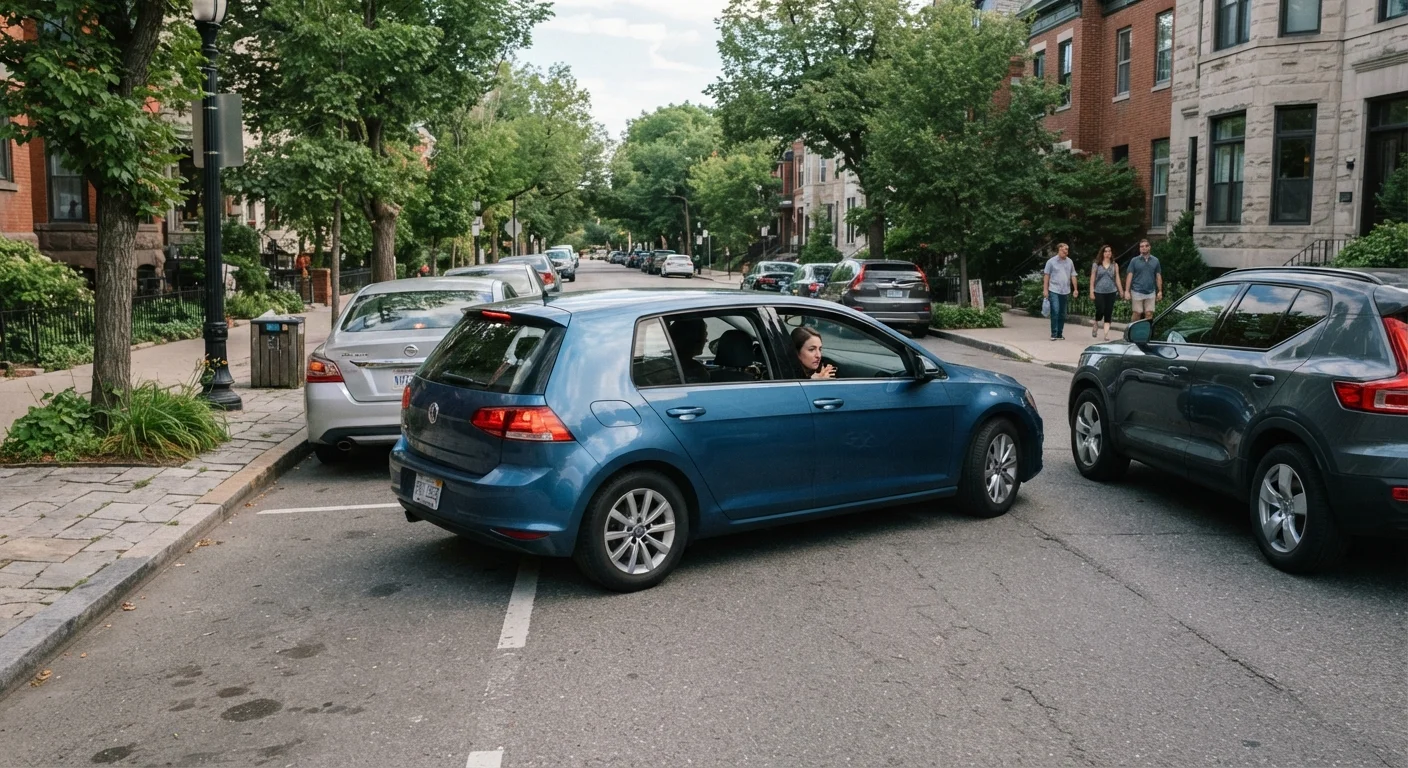
Key Takeaways
- Choosing a space at least 1.5 times your vehicle's length gives you adequate room to maneuver.
- Steering angles and reference points - not speed - determine whether you fit cleanly.
- Checking mirrors frequently throughout the maneuver helps you avoid contact with surrounding vehicles.
- Slow, deliberate movements allow you to pause and correct at any point.
- Practice in a low-traffic area builds the spatial judgment needed for busy urban streets.
What you will need
Why Parallel Parking Feels Difficult
Parallel parking is one of the few driving tasks that requires reversing in a curved path while monitoring multiple reference points simultaneously. Unlike most driving, which is forward-facing and instinctive, parking in reverse demands that drivers mentally translate mirror images into real-world spatial positioning - a skill that takes deliberate practice to internalize.
The geometry is consistent, which is the good news. Every successful parallel park follows the same basic arc: angle in, straighten, counter-steer out. Once you understand those three phases and recognize what they look like in your mirrors, the maneuver becomes predictable rather than stressful. Spatial confidence developed here also carries over to other low-speed situations - for more on that, see backing up safely.
What you will need
What You'll Need
The physical tools required are minimal. What matters most is that your mirrors are properly adjusted before you begin - a mirror aimed too high or too low removes the curb reference you depend on. If your vehicle includes a rear camera or parking sensors, treat those as supplementary aids rather than primary guides; mirrors and your own spatial judgment remain foundational.
Properly Adjusted Side and Rearview Mirrors
Provide visual reference points for your vehicle's rear corners and the curb throughout the maneuver.
Rear Camera or Parking Sensors
Supplement mirror checks with additional spatial feedback, especially useful when learning distance judgment.
Practice With Traffic Cones First
If parallel parking feels unfamiliar, set up two traffic cones in an empty lot to simulate a parked car at each end. This lets you rehearse steering angles and reference points without the pressure of real traffic. A few deliberate practice sessions build the muscle memory that makes urban parking feel routine.
Step-by-Step Instructions
Follow these steps at a slow, consistent pace. You can pause at any point during a parallel park - doing so is a sign of control, not hesitation. For broader context on managing your vehicle in demanding situations, defensive driving principles apply even at low speeds.
Always Check for Pedestrians and Cyclists
Before reversing, physically check your mirrors and blind spots for pedestrians, cyclists, and other road users approaching from behind. Low-speed parking maneuvers are among the most common scenarios for striking vulnerable road users. Never rely solely on cameras or sensors - use your own eyes to confirm the path is clear.
Identify a suitable space
Look for a gap that is at least 1.5 times - and ideally twice - the length of your vehicle. Smaller gaps are possible with experience, but a larger space allows more margin for error while you build confidence. Signal your intention early so drivers behind you understand you are about to stop.
Position alongside the front vehicle
Pull up parallel to the vehicle in front of the empty space, leaving roughly two to three feet of lateral distance between the two cars. Align your rear bumper approximately with the rear bumper of the vehicle beside you. Come to a complete stop before reversing.
Begin reversing with the wheel turned toward the curb
Shift into reverse and, while checking mirrors and blind spots, slowly begin rolling backward. Turn your steering wheel firmly toward the curb (right in a standard right-side space). Aim to angle the rear of your vehicle into the space at roughly 45 degrees. Move at a slow, walking pace throughout.
Straighten the wheel and continue reversing
When your vehicle reaches approximately a 45-degree angle and your front bumper has cleared the rear of the front vehicle, begin turning the wheel back toward the center. Continue reversing slowly. Your vehicle should now be tracking more directly toward the curb.
Counter-steer to align with the curb
As the rear of your car approaches the curb, turn the wheel in the opposite direction - away from the curb - to swing the front of the vehicle into the space. Watch your front bumper's clearance from the vehicle ahead and your rear distance from the vehicle behind simultaneously. Stop when your car is roughly parallel and close to the curb.
Adjust fore and aft and set the parking brake
Pull forward or reverse gently to center yourself in the space, leaving roughly equal gaps to the vehicles ahead and behind. Once satisfied with your position, shift into park (or engage gear on a manual transmission) and apply the parking brake. Turn off your signal if it is still active.
Don't Rush to Fill a Tight Space
If the available gap is barely longer than your vehicle, it is better to wait for a more suitable space. Forcing entry into a space that is too small increases the risk of contact with surrounding vehicles and can create a difficult exit situation.
Common Mistakes and How to Avoid Them
The most frequent error is beginning the reverse arc too early - before the rear bumper has aligned with the front vehicle's rear bumper. This compresses the available arc and makes it difficult to fit cleanly. The second common mistake is moving too quickly: speed removes your ability to pause, reassess, and correct mid-maneuver.
Drivers also tend to neglect the final counter-steer step, leaving the front of the vehicle angled away from the curb. If you finish the maneuver and notice your car is at an angle, simply pull forward slightly while turning toward the curb, then reverse straight. Small corrections are normal. Being part of everyday car ownership - alongside registration, insurance, and maintenance decisions - parking skill is worth refining; the comprehensive car ownership guide covers the broader picture of managing your vehicle confidently.