

Key Takeaways
- Continuous braking on long descents heats brake components until they lose stopping effectiveness.
- Brake fade is temporary but can leave drivers with severely reduced stopping power at critical moments.
- Engine braking - using a lower gear to slow the vehicle - is the standard technique for managing long descents.
- Modern vehicles with automatic transmissions offer manual or sport modes that enable engine braking.
- Recognizing early warning signs of overheating can help drivers pause and let brakes cool before continuing.
Brake Fade
Brake fade is a temporary reduction in braking effectiveness caused by excessive heat buildup in the braking system. It most commonly occurs when a driver applies the brakes repeatedly or continuously on a long downhill stretch. As brake components overheat, their ability to generate the friction needed to slow the vehicle diminishes significantly.
There are two primary types: pad fade, where overheated brake pads lose friction coefficient, and fluid fade (also called vapor lock), where boiling brake fluid compresses instead of transmitting hydraulic pressure to the calipers.
Why Long Descents Are Hard on Brakes
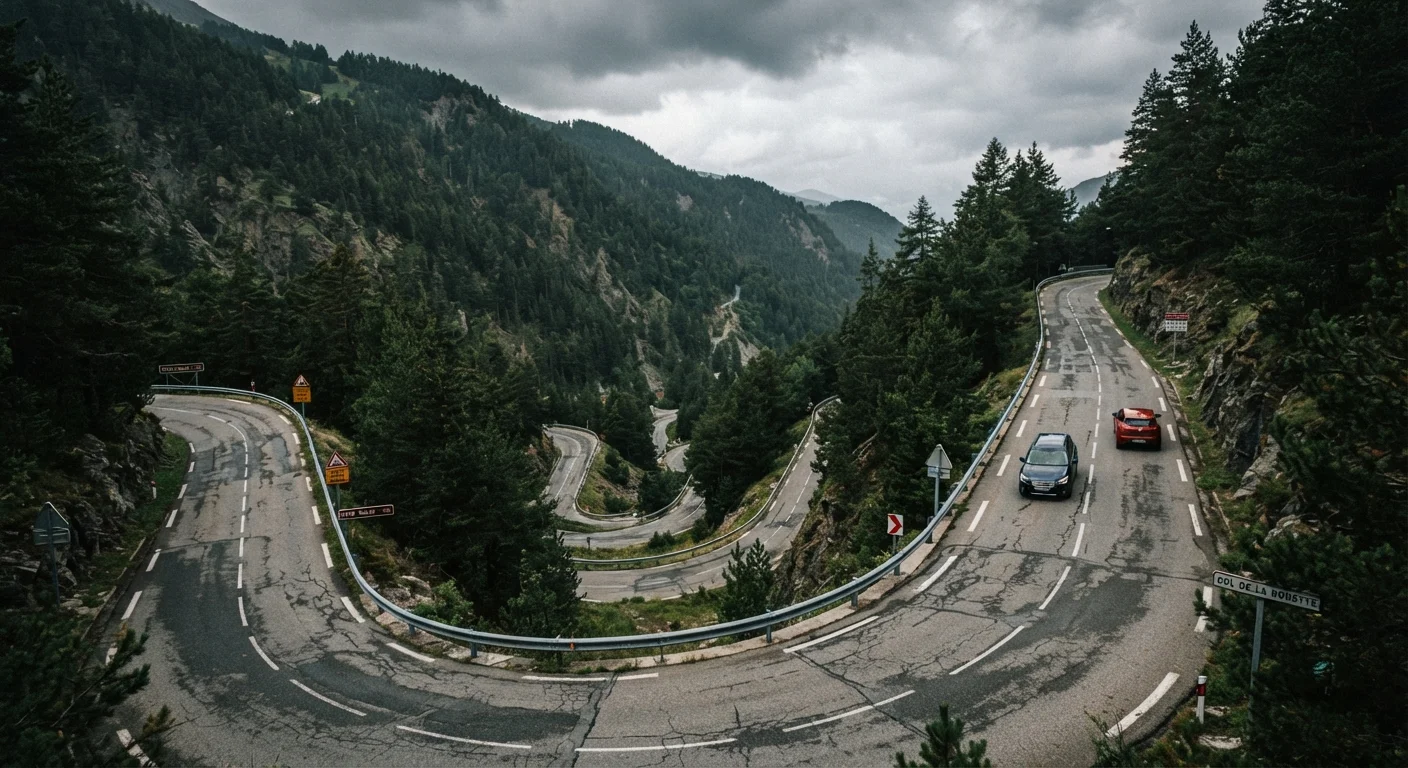
On flat ground, braking converts a vehicle's kinetic energy into heat through friction. That heat dissipates quickly because brake applications are brief and spread out over time. On a long downhill stretch, the physics change considerably. Gravity continuously accelerates the vehicle, meaning drivers must apply the brakes repeatedly - or hold them - just to maintain a safe speed.
Each brake application generates heat. When those applications come in rapid succession, the brakes can't shed heat fast enough between uses. Temperatures in the brake rotors and pads climb steadily, and once they exceed the design thresholds for the brake pad material or hydraulic fluid, braking performance begins to drop. The result is brake fade: you press the pedal, but the car keeps going.
This isn't a sign of defective brakes. It's a physics problem that can affect any conventional friction-based braking system - well-maintained or not - when subjected to prolonged thermal stress. Understanding what affects stopping distance helps put this in context.
~300°F
Normal brake operating temperature range
Typical street driving generates rotor temperatures in this range; sustained downhill braking can push temperatures well above 500°F, where many standard brake pads begin to lose effectiveness.
6-7%
Grade that triggers brake check requirements for trucks
Many US state transportation departments require commercial truck drivers to test brakes and use low gears on grades of 6% or steeper - the same grades that create fade risk for passenger vehicles.
Engine Braking: The Primary Defense
The standard technique for managing long descents is engine braking - using a lower gear to harness the engine's internal resistance as a supplemental braking force. When you downshift before a descent, the drivetrain slows the vehicle continuously, reducing how often you need to engage the friction brakes. Heat buildup stays manageable because the brakes are used only to fine-tune speed, not to fight gravity the entire way down.
In a manual transmission, this means selecting a gear one or two steps lower than you'd normally use at that speed before the descent begins. In an automatic, look for a sport or manual mode, or gear position labels like L, 2, or 3. Many newer vehicles also have a dedicated hill descent control mode. The key is to select the lower range before the steep section begins, not after you've already picked up speed.
Downshift Before the Descent Begins
Waiting until you've already gained speed on a steep grade to engage a lower gear is less effective and can cause abrupt deceleration. Select your lower gear at the top of the descent, when the vehicle is still moving at a manageable speed. This lets engine braking work smoothly from the start rather than as a reactive correction.
Drivers in mountainous regions - the Rockies, the Appalachians, the Cascades - are often familiar with posted advisory signs recommending low-gear use on specific grades. Those signs exist for good reason and apply to all vehicles, not just commercial trucks.
Warning Signs and What to Do
Brake fade rarely appears without some early signals. A burning smell - similar to scorched rubber or hot metal - is often the first sign that brake temperatures are climbing into problematic territory. Some drivers notice the pedal gradually requiring more pressure to achieve the same deceleration, or a slight sponginess in feel. These are cues to act before the situation worsens.
If you suspect your brakes are overheating on a descent, the practical response is straightforward: find a safe place to pull off, shift to park or apply the parking brake gently, and allow the system to cool for several minutes. Avoid holding the brakes stationary while the rotors are extremely hot - this can cause uneven wear called brake disc hot spots, which leads to pedal pulsation later.
Parking Brakes and Hot Rotors
Applying a traditional drum-style parking brake while rotors are extremely hot can be useful for holding the vehicle stationary during a cooling stop, but avoid using the main friction brakes in a sustained hold. On some vehicles, the parking brake engages separate rear drums, which provides a cleaner way to hold the car without adding heat to already-stressed rotors.
Once you resume driving, use engine braking as described and apply the friction brakes sparingly. If the pedal continues to feel soft or unresponsive after cooling, have the braking system inspected by a qualified mechanic before driving further.
For drivers navigating varied road conditions beyond just hills, adapting braking behavior to weather conditions is an equally important skill to develop.
How This Differs from Other Loss-of-Control Situations
Brake fade is distinct from other braking emergencies because the vehicle's steering and stability systems remain fully functional - only the ability to slow down is compromised. This sets it apart from situations like hydroplaning, where tire contact with the road is disrupted and steering becomes unreliable simultaneously.
That distinction matters for the response. With brake fade, you still have full directional control and can use engine braking to manage speed. The focus is on reducing velocity gradually through gear selection and strategic, brief brake applications rather than sustained pressure. Staying calm and thinking a few seconds ahead - scanning for pullouts, monitoring closing speed on curves - gives drivers meaningful time to respond effectively.
Routine brake maintenance also plays a role in resilience: fresh brake fluid with a high boiling point, brake pads appropriate for the vehicle's weight and typical terrain, and rotors in good condition all raise the threshold at which fade begins. A qualified mechanic can assess whether your system is appropriate for the driving you do regularly.