

Key Takeaways
- Reduce speed and increase following distance in any adverse weather condition.
- Hydroplaning risk peaks between 35-55 mph on wet roads with worn tires.
- Black ice is nearly invisible - treat any below-freezing pavement as potentially icy.
- In dense fog, low-beam headlights outperform high beams; fog lights add further improvement.
- Tires and brakes are the most safety-critical systems to inspect before winter driving.
Why Weather Changes the Physics of Driving
Every adverse weather condition shares a common denominator: reduced friction between your tires and the road surface. Friction is what allows you to accelerate, steer, and stop. When rain, snow, ice, or fog enters the equation, that margin shrinks - sometimes dramatically.
Rain introduces a thin film of water that reduces tire grip. Snow compresses into a lower-friction layer. Ice creates an almost frictionless surface. Fog doesn't change the road itself, but it collapses the time you have to react to what's ahead. Understanding these physics helps drivers make deliberate, calm adjustments rather than reactive ones.
The principles of defensive driving - scanning ahead, managing space, anticipating hazards - become especially valuable when conditions deteriorate. The goal isn't to avoid driving in bad weather altogether, but to match your inputs to what the road can actually support.
21%
Weather-related crash share on US roads
According to the Federal Highway Administration, approximately 21% of all vehicle crashes in the US are weather-related annually.
8-10×
Stopping distance increase on glare ice
Ice can increase stopping distances by eight to ten times compared to dry pavement at equivalent speeds, per transportation safety research.
35-55 mph
Speed range where hydroplaning risk peaks
Tire engineers note that hydroplaning onset typically occurs between 35 and 55 mph on wet roads with insufficient tread depth.
Driving in Rain
Rain is the most frequently encountered adverse condition for US drivers. Light rain is manageable; heavy rain introduces real risk, particularly hydroplaning - when tires ride up on a layer of water and lose contact with the pavement entirely.
Speed and Following Distance
Slow down progressively as rainfall intensifies. A general guideline is to reduce highway speed by at least 5-10 mph in moderate rain and more in heavy rain. Increase your following distance to a minimum of four seconds from the vehicle ahead (versus the standard two to three seconds in dry conditions).
Hydroplaning
If you feel the steering go light or the car drift, ease off the accelerator gradually - do not brake hard. Steer gently in the direction you want to go. Proper tire tread is your primary defense; the fundamentals of tire care directly affect how quickly water clears from beneath the contact patch.
Headlights and Wipers
Turn on headlights whenever wipers are running - it's legally required in many states and makes your car visible to others. Ensure wiper blades are in good condition before the rainy season. Cruise control should be avoided on wet roads; it can apply throttle at an inopportune moment if a wheel loses traction.
Cruise Control in Rain: Turn It Off
Cruise control is designed for dry, steady-speed highway driving. On wet roads, if a wheel hydroplanes and the system tries to maintain speed, it can apply throttle at exactly the wrong moment. Disable it whenever precipitation is present and maintain speed manually instead.
Driving in Snow
Snow dramatically reduces available traction and requires smooth, gradual inputs across all controls. Abrupt steering, acceleration, or braking can break the tires loose from the compressed snow surface.
Speed Adjustments
Post speed limits are set for dry conditions. On packed snow, posted speeds can be significantly too fast for safe stopping. A useful mental model: your stopping distance can increase by two to three times compared to dry pavement, depending on tire type and compaction.
Braking on Snow
Modern vehicles with ABS allow drivers to apply firm, steady brake pressure - the system pulses automatically to prevent lockup. Without ABS, threshold braking (pressing to just before lockup) is the appropriate technique. Understanding understeer versus oversteer skids helps you recognize and correct a slide quickly.
Hills and Intersections
Gain momentum before a hill when safe - losing speed on an incline can leave you stranded. Approach intersections slowly enough to stop well before the line. Snow-covered intersections frequently have ice underneath from compaction and vehicle traffic.
Before winter arrives, review the seasonal vehicle preparation checklist to confirm your tires, battery, and brakes are ready for cold-weather demands.
Driving on Ice
Ice is the most hazardous road surface a driver is likely to encounter. Black ice - a thin, transparent layer that makes pavement appear merely wet - is especially dangerous because it offers almost no visual warning. It forms most often on bridges, overpasses, shaded roadways, and intersections where traffic repeatedly melts and refreezes snow.
Black Ice Requires Maximum Caution
Black ice often appears as a slightly darker, shiny patch on otherwise normal-looking pavement. Bridges and overpasses freeze before road surfaces because air circulates underneath them. If the temperature is at or below 32°F and the road surface looks wet, assume ice may be present and reduce speed accordingly.
Speed and Stopping Distance
On glare ice, stopping distances can increase by eight to ten times compared to dry pavement at the same speed. If temperatures are at or below freezing and the road looks wet, treat it as potentially icy. Slow down well in advance of turns and stops.
Steering and Control
Keep steering inputs small and deliberate. If the car begins to slide, look and steer toward where you want to go - this is the same principle that applies to any skid recovery. Avoid overcorrecting; small corrections are more effective than large ones on low-friction surfaces.
When to Pull Over
If conditions are severe enough that you cannot maintain safe control at a very low speed, pulling over in a safe location and waiting for conditions to improve is a legitimate choice. Turn on hazard lights and stay in the vehicle if stopped on a roadway shoulder.
Driving in Fog
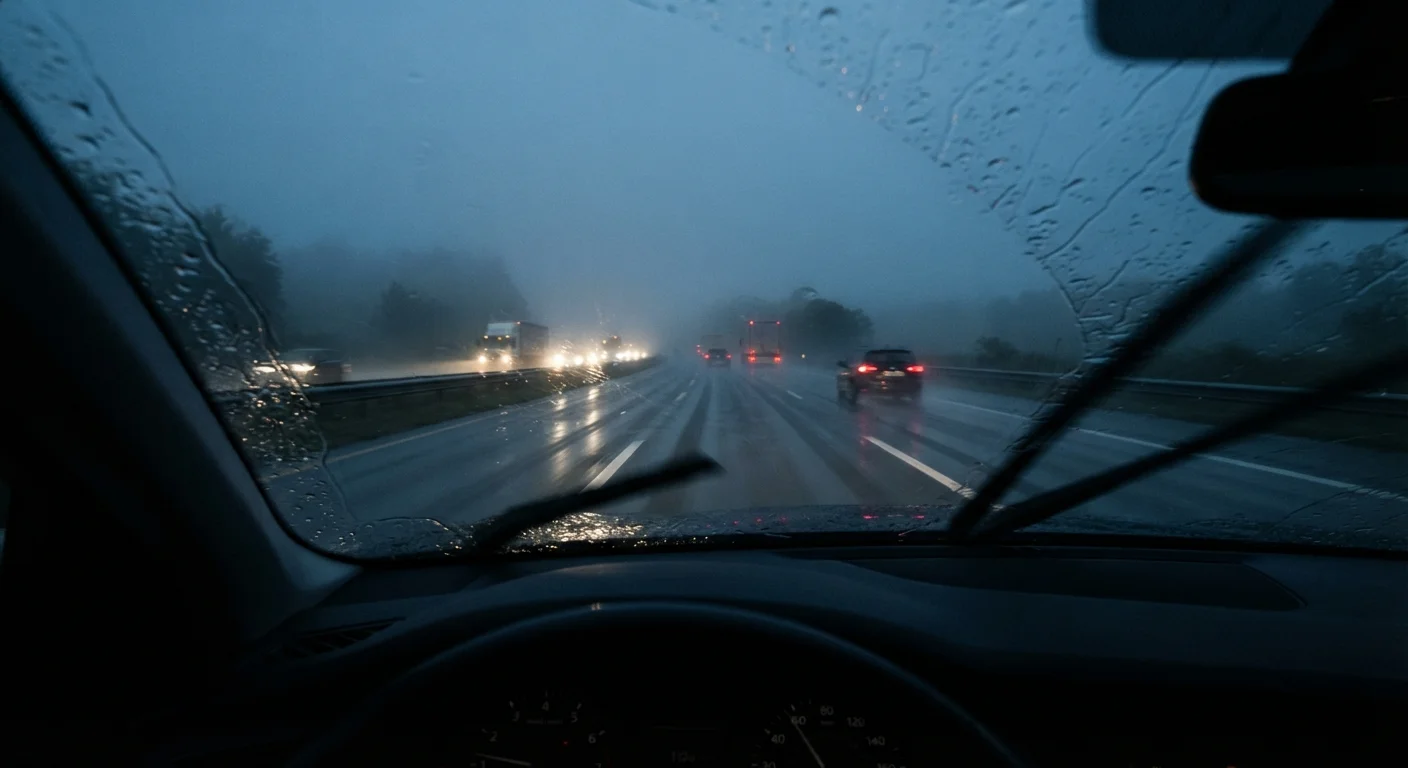
Fog reduces visibility without changing road surface friction, which can create a false sense of security - the car handles normally, but the time available to react to obstacles ahead collapses sharply.
Headlight Selection
Use low-beam headlights in fog, not high beams. High beams reflect off water droplets and scatter back toward the driver, reducing visibility further. If your vehicle has dedicated fog lights (usually positioned low on the front bumper), use them in addition to low beams. Rear fog lights, if equipped, help following drivers see you.
Speed Calibration
The core principle in fog is to drive at a speed that allows you to stop within the distance you can see. If visibility is 100 feet, you must be able to stop in 100 feet or less. At highway speeds, this often means slowing dramatically - well below the posted limit. See our notes on advisory versus regulatory speed limits for how to interpret posted signs in changing conditions.
Following Distance and Positioning
Increase following distance significantly. Avoid the temptation to follow taillights closely - if the driver ahead brakes suddenly, you'll have no margin. Many multi-vehicle fog pileups involve drivers following too closely while relying on the vehicle ahead as a reference point.
Fog shares characteristics with night driving in terms of reduced reaction time; night driving techniques apply directly to dense fog situations as well.
In fog, crack your window slightly so you can hear traffic you can't yet see - auditory cues often precede visual ones when visibility is severely limited.
When sight distance drops to a few car lengths, sound becomes an additional input for situational awareness, particularly at intersections.
On icy roads, test traction gently at the start of every drive by braking softly at low speed in a safe area - this tells you what the surface is actually offering before you need that information urgently.
Surface conditions vary significantly by location and time of day; a quick low-speed brake test gives real data rather than assumptions.
Vehicle Preparation and Technology
No driving technique compensates for a vehicle that isn't mechanically ready for adverse conditions. A few systems are especially consequential.
Tires
All-season tires cover most conditions adequately. Dedicated winter tires - made from a different rubber compound that stays pliable in cold - provide meaningfully better grip on snow and ice. Regardless of tire type, tread depth below 4/32 of an inch is inadequate for snow; the standard legal minimum of 2/32 is insufficient for winter conditions.
Brakes and Wipers
Worn brake pads extend stopping distances in any condition; in adverse weather, the margin for error is already reduced. Replace wiper blades before the rainy season and consider winter-specific wiper blades in snow-prone regions.
Driver Assistance Systems
ABS, traction control, and electronic stability control (ESC) are now standard on nearly all new US vehicles and provide meaningful safety benefits in slippery conditions. However, they have limits - particularly on ice. Understanding what ADAS systems actually do helps set realistic expectations. These systems assist the driver; they don't replace the need for adjusted speed and increased following distance.
For a structured approach to getting your vehicle ready before conditions change, the seasonal car prep guide covers the key inspection points in detail.
All-Wheel Drive Doesn't Help You Stop
AWD and 4WD improve traction during acceleration, which helps on snow - but they provide no additional braking advantage over two-wheel-drive vehicles on the same tires. Drivers of AWD vehicles sometimes carry excessive speed into turns or stops, assuming the system will compensate. It won't. Braking performance depends on tires and weight, not drivetrain.