

Key Takeaways
- Construction zone speed limits are strictly enforced, and fines in most states are doubled compared to normal roads.
- Merge early using the zipper method - last-second lane changes increase crash risk significantly.
- Workers on foot, uneven pavement, and sudden lane shifts are the most common hazards drivers underestimate.
- Stay at least three seconds behind the vehicle ahead to account for abrupt stops.
- Distracted driving in a work zone is one of the leading causes of worker fatalities in the US.
What you will need
Why Construction Zones Carry Extra Risk - and Extra Consequences
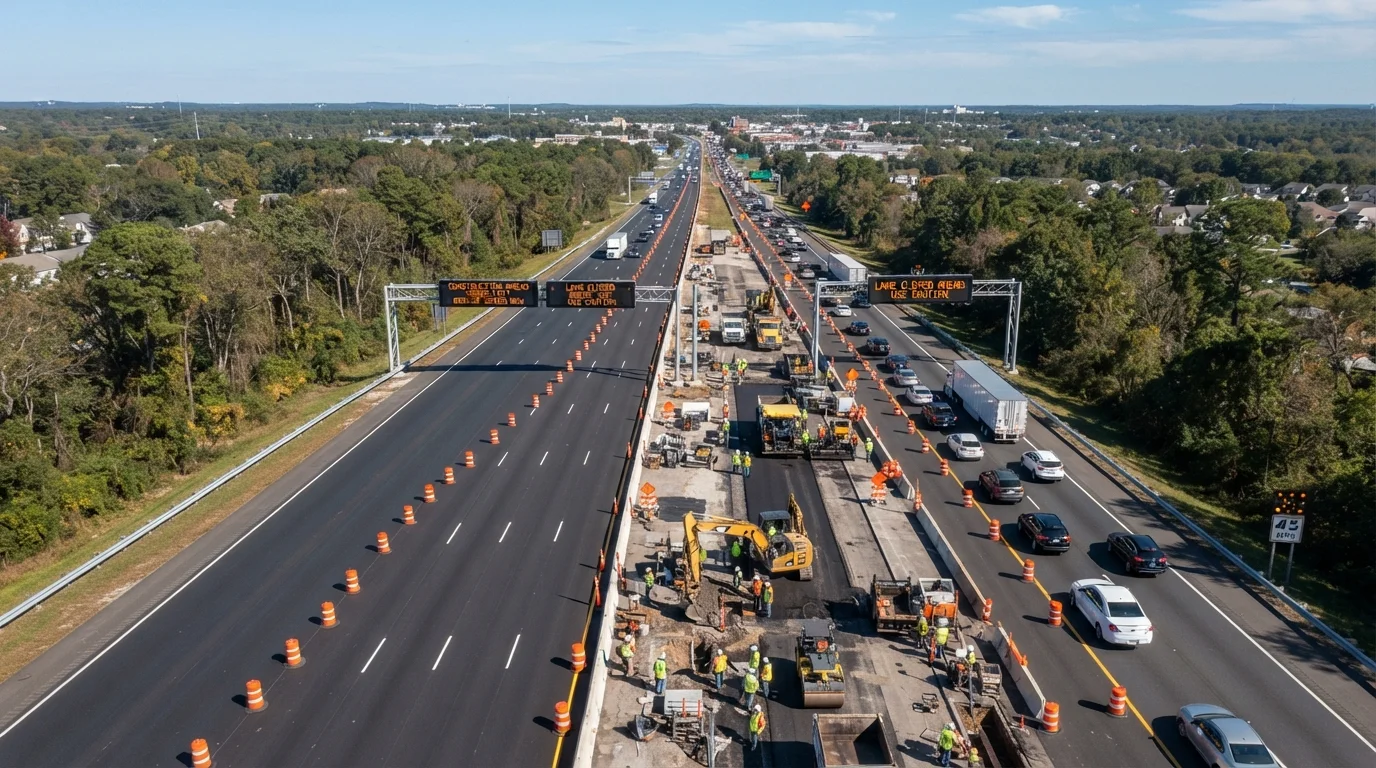
Construction zones on US roads present a distinct combination of reduced lanes, lower speed limits, unpredictable worker movement, and loose debris. According to the Federal Highway Administration, thousands of crashes occur in work zones each year, injuring both motorists and road workers. The stakes aren't just physical - nearly every state doubles fines for moving violations committed in active construction zones, and some add license points or mandatory court appearances.
Many drivers assume construction zone rules only apply when workers are visibly present. That's a common misconception worth correcting. Posted work zone speed limits are legally enforceable whether crews are on-site or not. For a broader look at how this compares to other regulated driving environments, see school zone speed enforcement by state.
What you will need
How to Navigate a Construction Zone Step by Step
The steps below apply to both highway and surface-street work zones. Following them in sequence reduces your risk of a fine, a collision, or a near-miss with a road worker.
Spot the work zone signs early
Orange diamond-shaped warning signs typically appear 1,500 feet or more before a work zone begins on highways. As soon as you see them, begin reducing speed gradually - not abruptly. Early awareness gives you time to check mirrors, signal intent, and adjust position before the lane configuration changes.
Merge early using the zipper method
When a lane is closed ahead, traffic should merge in alternating turns - one vehicle from each lane - at the merge point. Do not race ahead to cut in at the last moment; this creates dangerous speed differentials and causes the accordion-effect backups that increase rear-end crash risk. Move into the correct lane as soon as it's safe to do so.
Maintain a minimum three-second following distance
Choose a fixed point ahead - a cone, a sign post - and count how many seconds pass between the vehicle in front of you passing it and you reaching it. In construction zones, aim for at least three seconds, more if the road surface is rough or wet. Construction zone traffic can stop suddenly due to equipment crossing, flaggers, or accidents ahead.
Eliminate distractions completely
Distracted driving is one of the primary causes of work zone fatalities. Put your phone in do-not-disturb mode before entering. Adjust music, GPS, and climate controls before the zone begins. The cognitive load of navigating shifting lanes, flaggers, and debris leaves no margin for divided attention. This isn't general driving advice - it's a documented contributor to worker deaths.
Obey flaggers and temporary signals immediately
Flaggers have the same legal authority as a traffic signal. A stop signal from a flagger requires a full stop - not a slow roll. Temporary traffic lights in work zones also carry full enforcement weight. Treat an unexpected stop signal the way you'd treat a red light appearing out of nowhere: respond immediately and completely.
Exit the zone at a controlled speed
Speed limits return to normal only when a posted sign explicitly says so - not when the cones end or when the road surface improves. Gradually return to the standard speed limit after the posted end-of-work-zone sign. This also protects drivers who are still within the zone behind you.
Check Traffic Apps Before You Leave
Navigation apps typically flag active construction zones with current delay estimates. Checking your route before departure - not while driving - lets you choose alternate roads if the disruption is significant. Some state DOT websites also publish construction schedules for major highway corridors.
Hazards Drivers Consistently Underestimate
Even experienced drivers tend to misjudge a few specific construction zone dangers:
- Uneven pavement transitions: Asphalt drop-offs between old and new road surfaces can cause sudden vehicle instability, especially at higher speeds or with low-profile tires.
- Flaggers: Human flaggers can stop traffic with almost no advance warning. Treat a flagger's signal the same as a red light - legally and practically.
- Narrowed lanes: Standard lanes are typically 12 feet wide; work zone lanes are often 10 feet or less. Wide vehicles and trucks require extra mirror awareness.
- Stopped traffic ahead: Construction zones can transition from moving to fully stopped within seconds. Maintaining following distance is not optional.
If you're new to navigating high-speed or complex road environments more broadly, interstate driving guidance for first-timers covers merging and lane discipline that applies equally to work zone freeway segments.
Phone Use in Work Zones Carries Steeper Penalties
Several states have enacted enhanced penalties specifically for handheld phone use inside active construction zones. Fines can reach several hundred dollars for a first offense, separate from any general distracted driving statute. Check your state's current work zone laws - the rules are not uniform. For context on how traffic violations can compound, common driving myths that lead to real violations is worth reviewing.