

Key Takeaways
- GDL systems divide teen licensing into three stages: learner's permit, restricted license, and full license.
- Each stage imposes specific restrictions, such as limits on nighttime driving and passenger numbers.
- All 50 US states have adopted some version of a graduated licensing system.
- Violating GDL restrictions can delay a teen's progression to full licensure.
- Requirements vary by state - always verify your state's specific rules with the local DMV.
Graduated Driver Licensing (GDL)
Graduated Driver Licensing is a structured, multi-stage system that introduces new teen drivers to road privileges gradually. Rather than issuing a full license all at once, states require young drivers to progress through defined phases - each with its own restrictions and requirements. The goal is to build skills and experience before teens face higher-risk driving conditions.
All 50 states and the District of Columbia have adopted some form of GDL, though the specific age thresholds, hour requirements, and restrictions vary by state.
Why Graduated Licensing Exists
Driving is one of the most complex tasks most people perform daily, and the risk is highest for new drivers - particularly teenagers. Crash rates among 16- and 17-year-olds are substantially higher than for older, more experienced drivers. Graduated Driver Licensing was developed in response to this reality, giving teens a structured path to build skills before facing the full range of road conditions.
The GDL concept took hold in the US through the 1990s and 2000s, with states progressively adopting and strengthening their programs. Today, GDL is standard across all 50 states, though the details - minimum ages, supervised hours, and specific restrictions - differ from state to state.
50
US states with a GDL system
All 50 states and Washington D.C. have adopted some form of graduated driver licensing for teen drivers.
~3x
Crash rate: 16-year-olds vs. adults
According to the Insurance Institute for Highway Safety, crash rates per mile driven are roughly three times higher for 16-year-olds than for drivers 20 and older.
30-65
Supervised hours typically required
State requirements for supervised practice driving during the learner's permit phase range widely, from 30 hours to 65 or more.
Stage One: The Learner's Permit
The first stage begins when a teen obtains a learner's permit, typically available starting at age 15 or 16 depending on the state. To get a permit, applicants must pass a written knowledge test covering traffic laws and road signs.
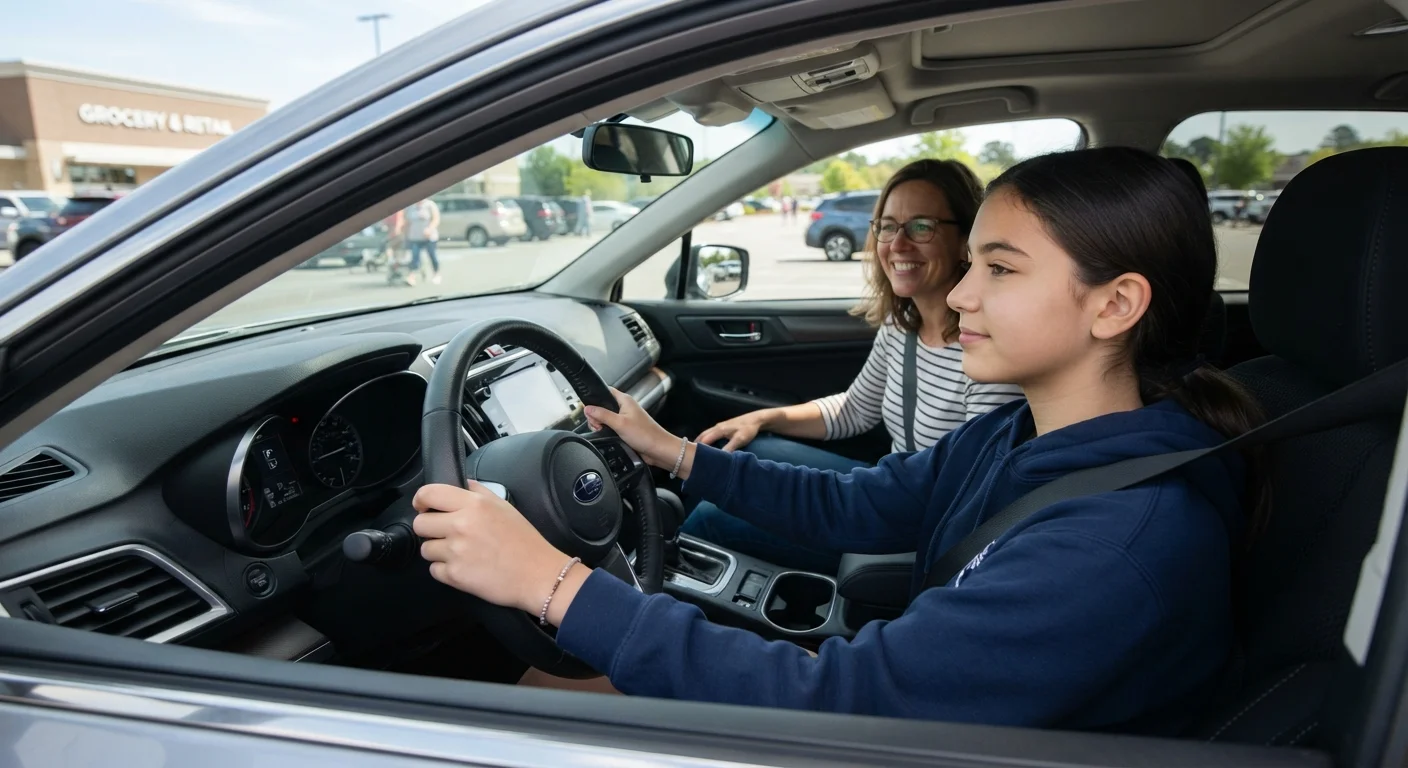
During the permit phase, a teen may only drive with a licensed adult supervisor - usually age 21 or older - in the vehicle. Most states require a minimum number of supervised practice hours (commonly 40 to 65) before the teen can advance. Some states mandate that a portion of those hours take place after dark.
The permit stage is intentionally foundational. Teens are expected to practice a wide range of conditions - city streets, rural roads, parking, and basic highway driving - under close adult guidance. Once they're ready, see our guide to driving on the interstate for the first time for practical preparation before attempting high-speed highway travel.
Stage Two: The Restricted (Provisional) License
After meeting permit-phase requirements and passing a road skills test, a teen advances to a restricted or provisional license. This allows independent driving - but within specific limits intended to reduce exposure to high-risk situations.
Common restrictions at this stage include:
- Nighttime driving limits: Many states prohibit driving after 9, 10, or 11 p.m. without a supervising adult.
- Passenger restrictions: Carrying multiple teen passengers is a documented risk factor. States often limit the number of non-family passengers a provisional driver may carry.
- Mobile device bans: Most states prohibit any handheld or hands-free phone use for drivers under 18.
- Zero or near-zero alcohol tolerance: Blood alcohol content limits for teen drivers are stricter than the standard 0.08% threshold.
The restricted phase typically lasts six months to a year. Violations or traffic citations during this period can extend the waiting time before advancing.
Track Supervised Hours from Day One
Many states require a driving log signed by a supervising adult as proof of completed hours. Start recording each session - date, time of day, duration, and road conditions - from the very first drive. Recreating a log from memory at the end of the permit phase is difficult and may create problems at the DMV.
Stage Three: Full Licensure
Once a teen completes the restricted phase without disqualifying violations - and reaches the minimum age set by their state, commonly 17 or 18 - they become eligible for a full, unrestricted driver's license. At this point, the nighttime, passenger, and other GDL-specific restrictions are lifted.
Full licensure doesn't mean the learning stops. New drivers of any age benefit from continued practice in unfamiliar conditions, adverse weather, and high-traffic environments. It's also worth understanding other aspects of vehicle ownership that come with this milestone - such as the state-by-state requirements for vehicle registration, which vary considerably across the country.
How GDL Requirements Vary by State
While the three-stage structure is universal, the specifics differ considerably. A teen in one state may need 65 hours of supervised practice; in another, just 30. Nighttime curfews can range from 9 p.m. to midnight. Some states allow exceptions for school, work, or religious activities.
Because of this variation, the only reliable source for your state's exact rules is its Department of Motor Vehicles or equivalent licensing agency. General summaries - including this one - can provide useful context, but state requirements change and nuances matter. Always verify directly with your state before making licensing decisions.
GDL Rules Are Set at the State Level
There is no single federal GDL standard. Each state sets its own minimum ages, required hours, curfew times, and passenger limits. Federal highway safety agencies have issued recommended guidelines, but states are not required to follow them exactly. Always consult your state's DMV for current, specific requirements.