

| Registration Requirement | Mandatory in all 50 U.S. states |
| Typical Renewal Cycle | Annual (some states offer 2-year terms) |
| Fee Range | Roughly $20-$500+, depending on state and vehicle (Varies significantly by state, vehicle weight, age, and value) |
| Emissions Testing | Required in roughly half of U.S. states (often county-specific) |
| Primary Governing Body | State DMV or equivalent agency |
| EV Registration Fees | Often higher than standard fees in many states (Varies by state; intended to offset road-use funding) |
Why Registration Rules Vary So Much Across States
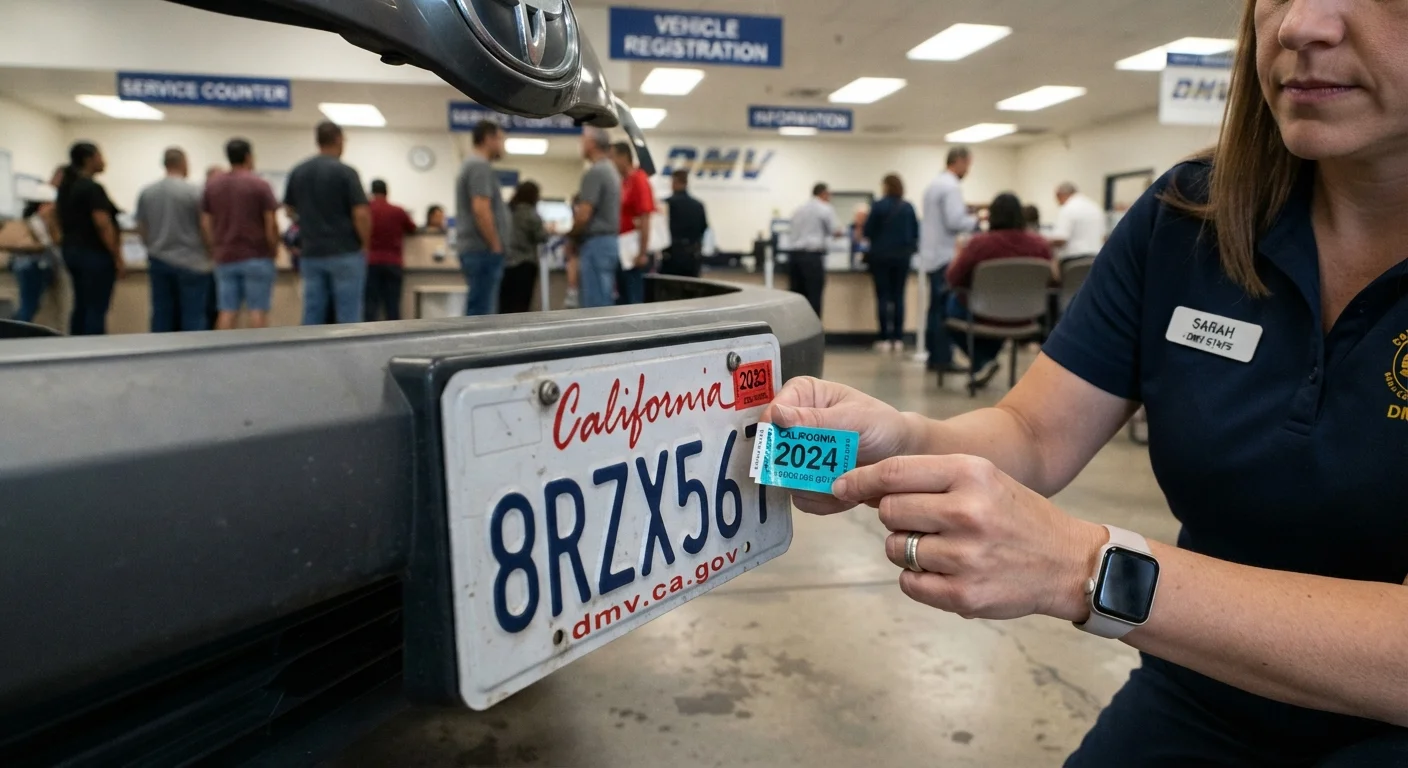
Vehicle registration is mandatory in all 50 U.S. states, but the specifics - fees, documentation, renewal timelines, and emissions requirements - are set at the state level, not federally. That means a driver relocating from Texas to California, for example, faces an entirely different set of obligations. Understanding the framework helps owners avoid penalties and stay compliant without surprises.
Registration links a vehicle to its owner within a state's database and confirms it meets baseline legal standards for road use. It's distinct from the vehicle title, which establishes legal ownership. For a deeper look at how titles work alongside registration, see our guide to vehicle titles.
| Registration Requirement | Mandatory in all 50 U.S. states |
| Typical Renewal Cycle | Annual (some states offer 2-year terms) |
| Fee Range | Roughly $20-$500+, depending on state and vehicle (Varies significantly by state, vehicle weight, age, and value) |
| Emissions Testing | Required in roughly half of U.S. states (often county-specific) |
| Primary Governing Body | State DMV or equivalent agency |
| EV Registration Fees | Often higher than standard fees in many states (Varies by state; intended to offset road-use funding) |
Common Documents Required for Registration
Despite state-by-state variation, most DMVs (Departments of Motor Vehicles) or equivalent agencies share a core list of requirements for initial registration:
- Proof of ownership: A clean vehicle title in the owner's name.
- Proof of insurance: Active liability coverage meeting the state's minimum limits.
- Completed application form: Available at the DMV office or its official website.
- Valid identification: A driver's license or state-issued ID.
- Odometer disclosure: Required for vehicles under a certain age in most states.
- Payment of fees: Registration fees vary widely - from roughly $20 in some states to several hundred dollars in others, often based on vehicle weight, age, or value.
Some states also require a vehicle inspection certificate or emissions test result before registration is approved. Always verify the current checklist directly with your state's motor vehicle agency.
Verify Requirements Directly With Your State
Registration requirements change periodically - fee schedules are adjusted, emissions program counties shift, and new vehicle categories (like EVs) receive updated rules. The most reliable source is always your state's official DMV or motor vehicle agency website. Third-party summaries, including this one, are a starting point for awareness, not a substitute for official guidance.
Emissions Testing: Which States Require It and Why
Not every state mandates emissions testing, and among those that do, not every county within the state is subject to the requirement. Testing is typically concentrated in metropolitan areas where air quality standards require closer monitoring under the federal Clean Air Act framework.
States with historically stringent emissions programs - such as California, New York, and Colorado - require periodic smog or OBD (on-board diagnostics) inspections. Several other states have partial programs applying only to certain counties or vehicle types. Diesel vehicles, older vehicles, and newly purchased cars may be treated differently under local rules. Electric vehicles are generally exempt from tailpipe emissions testing, though registration fees for EVs can sometimes be higher to offset road-funding considerations. For context on EV ownership trends shaping these policies, see the state of EV infrastructure in America.
~30
States with some form of emissions testing program
The number varies as states periodically revise or expand their programs; check your state's DMV for current requirements.
$100+
Average annual registration fee in higher-cost states
States like California and Florida levy fees well above the national median, often tied to vehicle value or weight.
2 years
Maximum registration period offered by some states
Multi-year registration options are available in a subset of states, reducing how often owners need to renew.
Renewal Timelines and What Happens If You Miss Them
Most states issue registrations on an annual basis, though some offer two-year renewals. Renewal notices are typically mailed to the address on file - which is why keeping your address updated with the DMV is important. Many states now offer online renewal portals, making the process faster for owners whose vehicles have already passed any required inspections.
Driving with an expired registration is a traffic violation in every state. Penalties range from small fines to vehicle impoundment, depending on how long the registration has lapsed and local enforcement practices. Some states add late fees that compound over time, making prompt renewal financially practical. Registration renewal is one of the key tasks covered in the annual car ownership checklist that helps drivers stay ahead of lapses.
For a comprehensive view of all vehicle ownership obligations from purchase through sale, the complete car ownership guide provides useful context.
Vehicle Registration
The official process by which a state records a vehicle and its owner in a government database. It typically results in license plates and a registration certificate that must be kept in the vehicle.
DMV
Department of Motor Vehicles (or an equivalent agency name by state, such as BMV or MVD). The government office responsible for vehicle registration, title transfers, and driver licensing.
OBD Inspection
On-Board Diagnostics inspection - a type of emissions test that reads electronic data from a vehicle's own computer system to determine whether it meets environmental standards.
Lien Release
A document from a lender confirming that a vehicle loan has been paid off and the lender no longer holds a claim on the title. Often required to transfer or re-register a vehicle.
Odometer Disclosure
A federally required statement of a vehicle's mileage at the time of sale or transfer, used to prevent odometer fraud. Most states require it for vehicles under ten years old.
Non-Op Status
A declaration filed with some state DMVs indicating a vehicle will not be operated on public roads. This can suspend registration fees and insurance requirements for the period the vehicle is off the road.