

Key Takeaways
- Move to safety first - only exit the vehicle when it is safe to do so.
- Call 911 if anyone is injured; always file a police report when possible.
- Document the scene thoroughly with photos before vehicles are moved.
- Exchange insurance and contact information with all other drivers involved.
- Notify your insurer promptly, even if you believe you were not at fault.
- Avoid admitting fault or making statements about liability at the scene.
What you will need
Why the First Few Minutes Matter
Most drivers will experience at least one collision in their lifetime, yet few rehearse what to do in those first chaotic moments. Having a clear mental checklist reduces panic and helps you protect both your physical safety and your legal standing. Missteps - like remaining in a dangerous lane position or making off-the-cuff liability statements - can compound an already stressful situation.
This guide covers the immediate on-scene actions. If your situation is a mechanical breakdown rather than a crash, the sequence differs; see what to do when your car breaks down for that scenario.
What you will need
Smartphone or camera
Photograph vehicle damage, license plates, the surrounding scene, and any road conditions.
Pen and notepad (or notes app)
Record driver, witness, and insurance information quickly and accurately.
Reflective warning triangles or road flares
Increase scene visibility and alert approaching traffic, particularly useful at night or on high-speed roads.
First-aid kit
Provide basic care for minor injuries while waiting for emergency services.
Step-by-Step: At the Scene
Follow these steps in order. In a serious crash, emergency responders take priority - your documentation and information exchange can wait until everyone's safety is addressed.
Check for safety and move if possible
Immediately after impact, take a breath and assess your surroundings before opening a door. If the vehicle is driveable and it is safe to do so, pull to the shoulder or a nearby parking lot - remaining in a travel lane significantly increases injury risk from secondary collisions. Activate your hazard lights as soon as the vehicle stops.
Call 911 and request help
Call 911 to report the crash. Dispatchers will ask for your location, number of vehicles involved, and whether anyone is injured. Even in a minor collision with no apparent injuries, requesting a police officer to the scene creates an official record - something your insurer will likely ask about. Some states legally require you to report crashes above a certain damage threshold.
Check on all parties for injuries
Once emergency services are on their way, check on everyone involved - your own passengers first, then occupants of other vehicles if it is safe to approach. Do not attempt to move anyone who complains of neck or back pain; wait for paramedics. Adrenaline can mask pain, so encourage everyone to be evaluated even if they feel fine initially.
Document the scene thoroughly
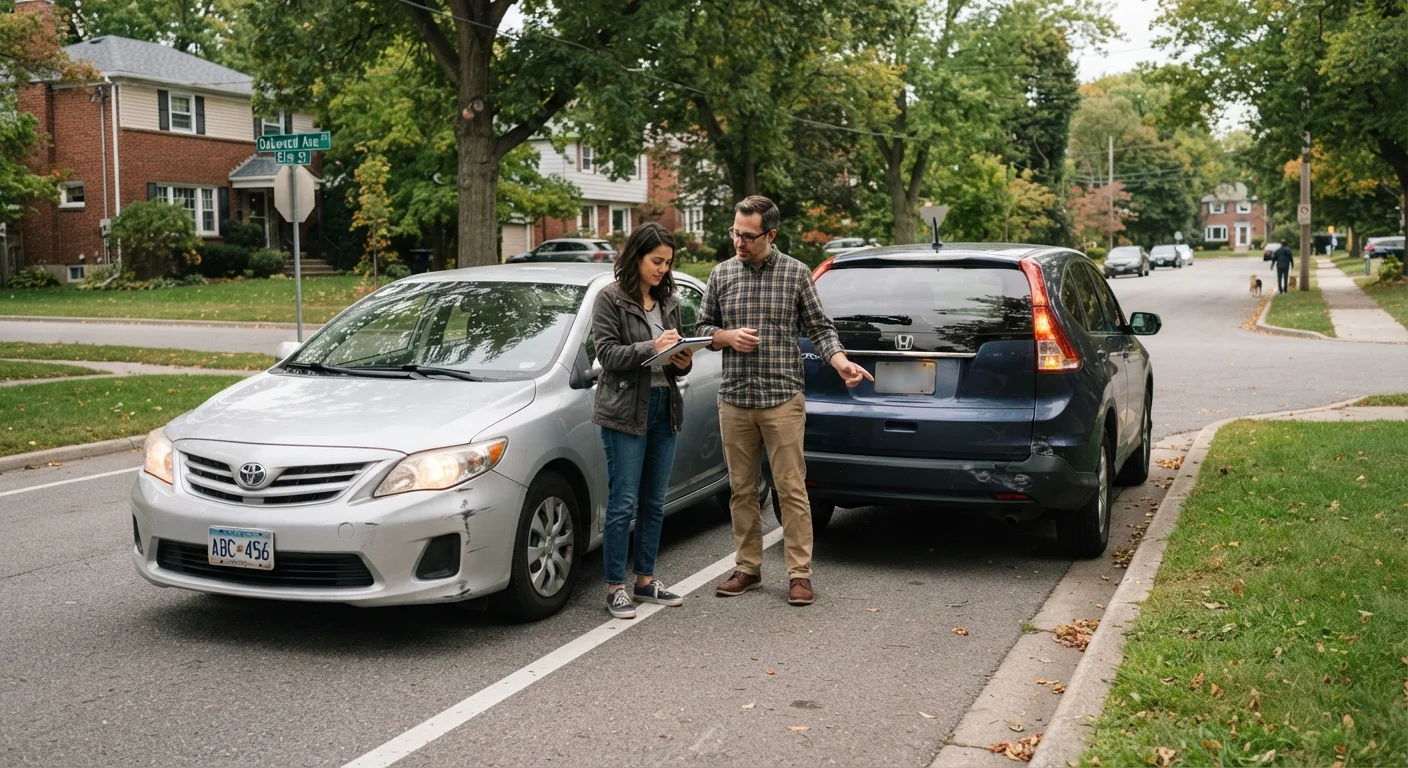
Before any vehicles are moved, photograph the full scene from multiple angles: damage to each vehicle, license plates, the road layout, skid marks, traffic signs, and any visible injuries. Take wide shots and close-ups. More documentation is always better; you can discard duplicates later but cannot recreate the scene.
Exchange information with other drivers
Collect the following from every other driver involved: full legal name, phone number, address, driver's license number and issuing state, license plate number, vehicle make, model, and year, and insurance company name and policy number. If there are witnesses, ask for their contact information as well. Provide your own details in return.
File the police report and get the report number
When the officer arrives, give a factual, calm account of what happened. Ask for the responding officer's name and badge number, and request the incident or report number before they leave. This number lets you obtain the official report later - typically within a few days - which your insurer will need to process a claim.
Notify your insurance company
Contact your insurer as soon as practical - ideally the same day. Most policies require prompt notification of any accident, regardless of fault. Provide the facts and the documentation you gathered. Your insurer can advise on next steps, including vehicle inspection and the claims process. For a full walkthrough of what happens next, see how the auto insurance claims process typically works.
Adrenaline Can Mask Serious Injuries
Symptoms of whiplash, concussion, and internal injury often appear hours or even days after a crash. Even if you feel fine at the scene, consider a medical evaluation - especially after higher-speed impacts. Delaying care can also complicate an insurance claim if injuries surface later.
After You Leave the Scene
Once you are away from the scene, keep all documentation - photos, the police report number, and any written notes - organized in one place. Good record-keeping habits apply well beyond accident situations; the same principles that protect consumers in purchase disputes and consumer rights matters apply here too.
Be aware that fault determinations affect your insurance going forward. What typically happens to your car insurance after an at-fault accident depends on your insurer, your history, and your state - worth understanding before any claim is settled.
Keep a Simple Accident Card in Your Glovebox
Print or write a short checklist - safety, 911, photos, information exchange, insurer number - and store it with your registration and proof of insurance. Under stress, a physical reminder helps you stay methodical and avoid skipping important steps.
This article provides general educational information about post-accident steps and is not legal or insurance advice. Consult a qualified attorney or licensed insurance professional regarding your specific situation.