

Key Takeaways
- Activate hazard lights immediately and steer as far off the road as safely possible.
- Exit the vehicle on the passenger side when stopped on a highway shoulder.
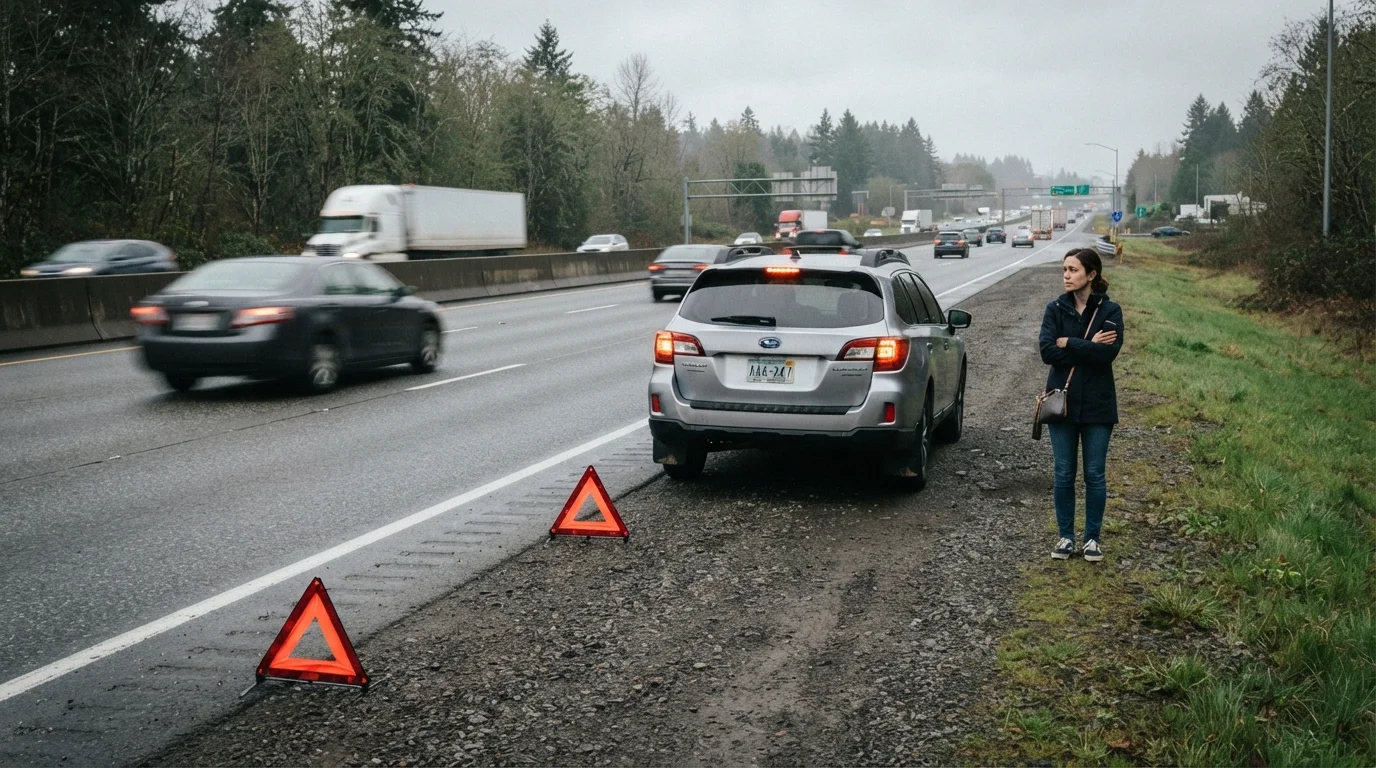
- Place warning triangles or flares at least 200 feet behind your car to alert oncoming traffic.
- Stay behind guardrails or well away from the travel lanes while waiting for help.
- Contact roadside assistance or 911 before attempting any repairs yourself.
- Never stand directly behind your vehicle or in a travel lane at any point.
What you will need
Why Your First 60 Seconds Matter Most
A breakdown on a busy highway can turn dangerous within seconds. Other drivers may not see your stopped vehicle until they are dangerously close, especially at highway speeds. The actions you take in the first minute - before you even think about what caused the problem - determine whether you and your passengers stay safe.
Understanding what to do before a breakdown happens is just as important as the steps themselves. For context on related driving hazards, see our guide on what to do during a tire blowout, which shares many of the same initial safety principles. Dashboard warning lights often precede a breakdown; our companion article on reading warning lights can help you recognize when to pull over before the situation becomes an emergency.
Activate Your Hazard Lights Immediately
The moment you sense something is wrong - a strange noise, loss of power, sudden pulling - press the hazard light button. Do this before anything else, even before you steer toward the shoulder. Hazards alert surrounding drivers that your vehicle is in distress and give them time to create space around you.
Steer Safely Off the Road
Signal and move toward the right shoulder gradually. Avoid braking sharply unless absolutely necessary. Aim for the widest available space - a rest area, exit ramp, or parking lot is preferable to a narrow highway shoulder. Get as far from the travel lanes as you possibly can before stopping.
Exit the Vehicle Carefully
If you must exit, use the passenger-side doors to keep occupants away from passing traffic. Look before opening any door. If you are on the driver's side and traffic is close, wait for a gap before exiting. Bring your phone, registration, and insurance card with you.
Set Out Warning Devices
Place reflective warning triangles or road flares behind your vehicle to alert approaching drivers. Place the first one about 10 feet behind the car, a second at roughly 100 feet, and a third at 200-300 feet. On curves or hills, extend the distance further so drivers have more reaction time.
Call for Assistance
Contact your roadside assistance provider - through your insurer, auto club membership, or vehicle manufacturer's program - or call 911 if you are in immediate danger. Provide your exact location: mile markers, cross streets, highway number, and direction of travel. Stay on the line with the dispatcher if the situation feels unsafe.
Staying Safe While You Wait
Once you have stopped and signaled for help, the waiting period carries its own risks. Highway shoulders are among the most dangerous places to stand in the United States. If you can exit the vehicle safely, move well beyond the guardrail or as far from the travel lanes as terrain allows. Do not stand directly behind or in front of your car.
Never Stand Behind a Stopped Vehicle
Rear-impact collisions involving stopped vehicles on highway shoulders are a leading cause of roadside fatalities. If you are outside the car, move as far from the rear of the vehicle and the travel lanes as possible. A guardrail, grassy embankment, or parking lot curb between you and traffic provides meaningful protection that standing on the shoulder does not.
If you are on a rural or unfamiliar road, remaining in the car with your seatbelt fastened is often safer than standing outside, particularly at night or in poor weather. Keep your hazards running as long as the battery allows. On an unfamiliar stretch of highway, our guide to driving on unfamiliar roads can help you get your bearings on where you are before you call for help.
Build a Roadside Emergency Kit Now
Preparedness reduces both danger and cost. A basic kit should include reflective warning triangles, jumper cables or a jump starter pack, a flashlight with spare batteries, a basic first-aid kit, and a phone charger. Storing these items in your trunk means you will have them when you need them most - before a breakdown, not after.
Breakdowns are stressful, and stress can escalate into poor decisions or even conflict. If another motorist stops and becomes aggressive or confrontational, stay calm - our article on recognizing and managing road rage covers de-escalation strategies that apply here. Note that a breakdown is a very different situation from a crash; if your vehicle has been in a collision, consult our separate guide on what to do after a car accident for those specific steps.