

Key Takeaways
- Hazard lights signal an unexpected stoppage or serious danger - not general inconvenience.
- Most US states prohibit using hazard lights while driving in moving traffic.
- Always pull completely off the road before activating hazards during a breakdown.
- Hazard lights do not replace the need for road flares, reflective triangles, or calling for help.
- Misusing hazard lights in rain or traffic can confuse other drivers and increase crash risk.
What you will need
What Hazard Lights Are - and What They're Not
Hazard lights are a federally required safety feature on all US passenger vehicles. Their sole intended purpose is to communicate that your vehicle is a temporary, unexpected hazard to other road users. Think of them as a visual distress signal, not a convenience tool.
Despite this, hazard light misuse is common. Driving with them on during heavy rain is one of the most widespread examples - the logic seems sound, but in practice it masks your turn signals, confuses following drivers, and can create the false impression that you are stopped. Most state traffic codes restrict hazard use to stationary or very slow-moving vehicles in genuine emergencies. Check your state's specific regulations; traffic signal misconceptions are more common than many drivers expect.
Your Turn Signal Still Matters
When your hazard lights are active, your turn signals are effectively invisible to other drivers. Before re-entering traffic from a shoulder, turn off your hazards first, then use your turn signal normally. This small step makes your intentions clear and reduces the risk of a sideswipe.
If you notice a dashboard warning light that might explain why your car is behaving strangely, our guide on dashboard warning lights can help you assess urgency before you pull over.
How to Use Hazard Lights Safely: Step-by-Step
What you will need
Reflective warning triangles or road flares
Placed behind your stopped vehicle to alert approaching traffic from a greater distance than hazard lights alone.
Roadside assistance contact (e.g., insurance provider, motor club)
Used to request help when your vehicle is disabled and you cannot safely return to driving.
Reflective safety vest
Increases your visibility if you must exit the vehicle near moving traffic.
Recognize a situation that genuinely warrants hazard lights
Hazard lights - also called four-way flashers - are designed for situations where your vehicle poses an unexpected risk to other drivers. Appropriate uses include: your vehicle has broken down, you're stopped on a highway shoulder, you've encountered a sudden road obstruction, or you're part of a funeral procession (where local rules permit). They are not intended for double-parking, driving through heavy rain, or alerting others you'll be back in a moment.
Move your vehicle completely off the roadway
If your car has broken down or you need to stop unexpectedly, steer toward the right shoulder or the nearest safe pullout. Get as far from active lanes as possible. A vehicle stopped halfway in a lane with hazards flashing is still a serious collision risk. If you cannot move the vehicle, stay inside with your seatbelt on until help arrives, unless remaining in the car poses a greater danger (such as a fire or a crash scene).
Activate the hazard lights
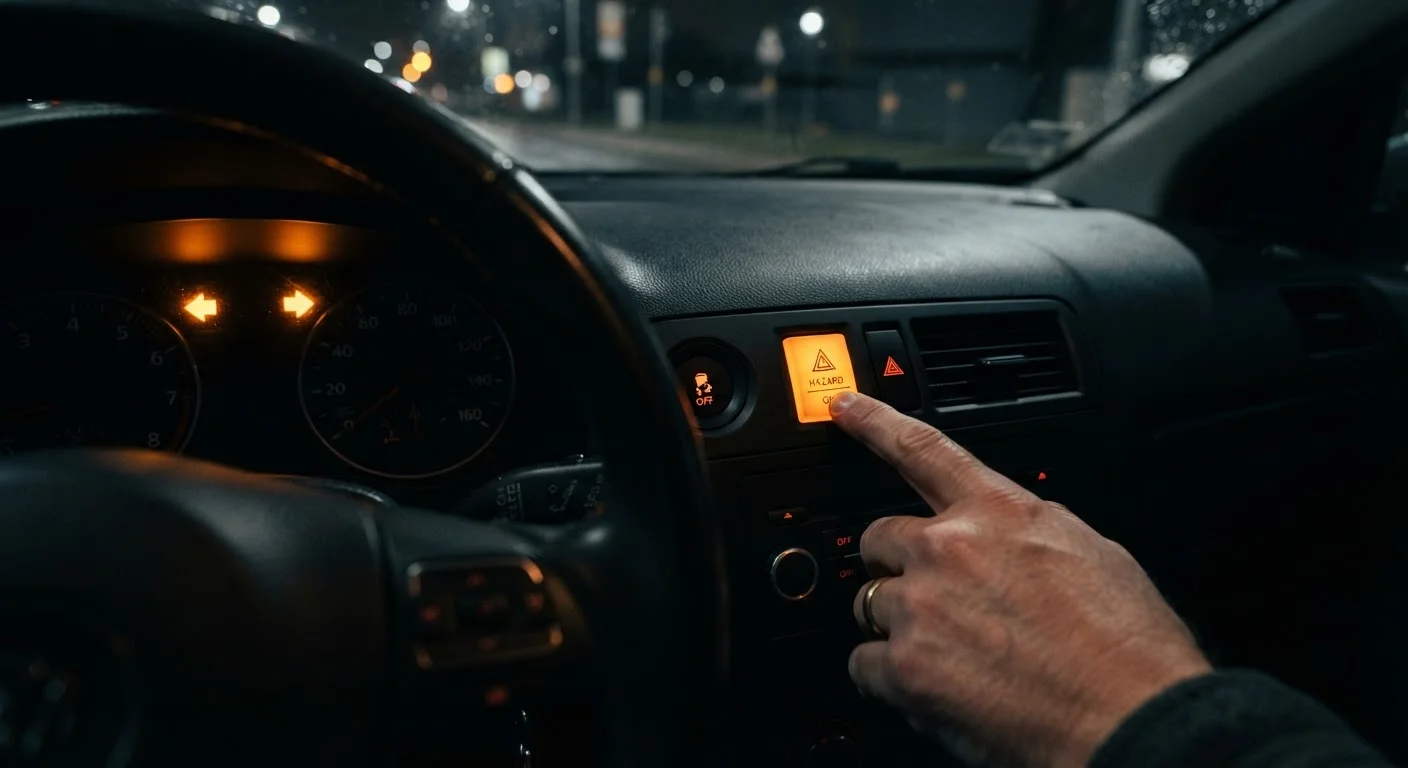
Once you are safely stopped, press the hazard button - typically a red triangle icon on the dashboard, steering column, or center console. All four turn signals will begin flashing simultaneously. Confirm they are working by checking that your dashboard indicator flashes and, if safe to exit briefly, visually verify front and rear lights are active.
Deploy additional warning devices if safe to do so
Hazard lights alone may not be sufficient, especially at night or on high-speed roads. If it is safe to exit your vehicle, place reflective warning triangles at least 100-300 feet behind your car, or use road flares where permitted. This gives approaching drivers earlier warning and additional time to change lanes. See our night driving safety guidance for added visibility tips in low-light conditions.
Call for roadside assistance
Contact your roadside assistance provider, insurance carrier, or emergency services as appropriate. Do not attempt to perform repairs in an active traffic zone. While waiting, remain behind a guardrail or as far from traffic as terrain allows. Turn off hazard lights only once your vehicle has been moved to a safe location or repairs are complete and you are ready to re-enter traffic.
Situations Where Hazard Lights Are Commonly Misused
Understanding when not to use hazard lights is just as important as knowing when to use them. Here are the most common misuses:
- Driving in rain or fog: Activated hazards prevent other drivers from seeing your turn signals, making lane changes and merging unpredictable. Use headlights and slow down instead.
- Brief illegal stops: Flashing hazards while parked in a no-stopping zone do not make the stop legal or safe.
- Highway driving in slow traffic: Some drivers activate hazards to warn drivers behind them of congestion. While common in some countries, this practice is discouraged or prohibited in most US states - it obscures your brake lights and turn signals.
- Funeral processions without local authorization: Some jurisdictions allow hazard use in processions; others require a lead vehicle permit. Confirm your local rules.
Hazard Lights Don't Replace Situational Awareness
Activating your hazard lights should never create a false sense of safety. Other drivers may not see them in time, especially at highway speeds. Always prioritize physically moving your vehicle away from traffic, and use reflective devices to extend your warning zone. If a dashboard warning suggests a serious mechanical issue, consult our guide on when to pull over to assess next steps.
Maintaining a safe following distance is your best defense against vehicles that stop suddenly ahead of you. Our article on safe following distance explains how to calibrate that gap in different conditions.