

| OBD-II Diagnostic Standard | Required on all US vehicles sold from 1996 onward (US Environmental Protection Agency) |
| TPMS Requirement | Mandatory on all new US passenger vehicles since 2008 (National Highway Traffic Safety Administration (NHTSA)) |
| Flashing Check Engine Light | Indicates active engine misfire - seek service promptly |
| Oil Pressure Light Response | Pull over and shut off engine immediately |
| Warning Light Colors | Red = urgent; Amber = attention needed; Green/Blue = informational |
The Color Code: Red, Amber, and Green
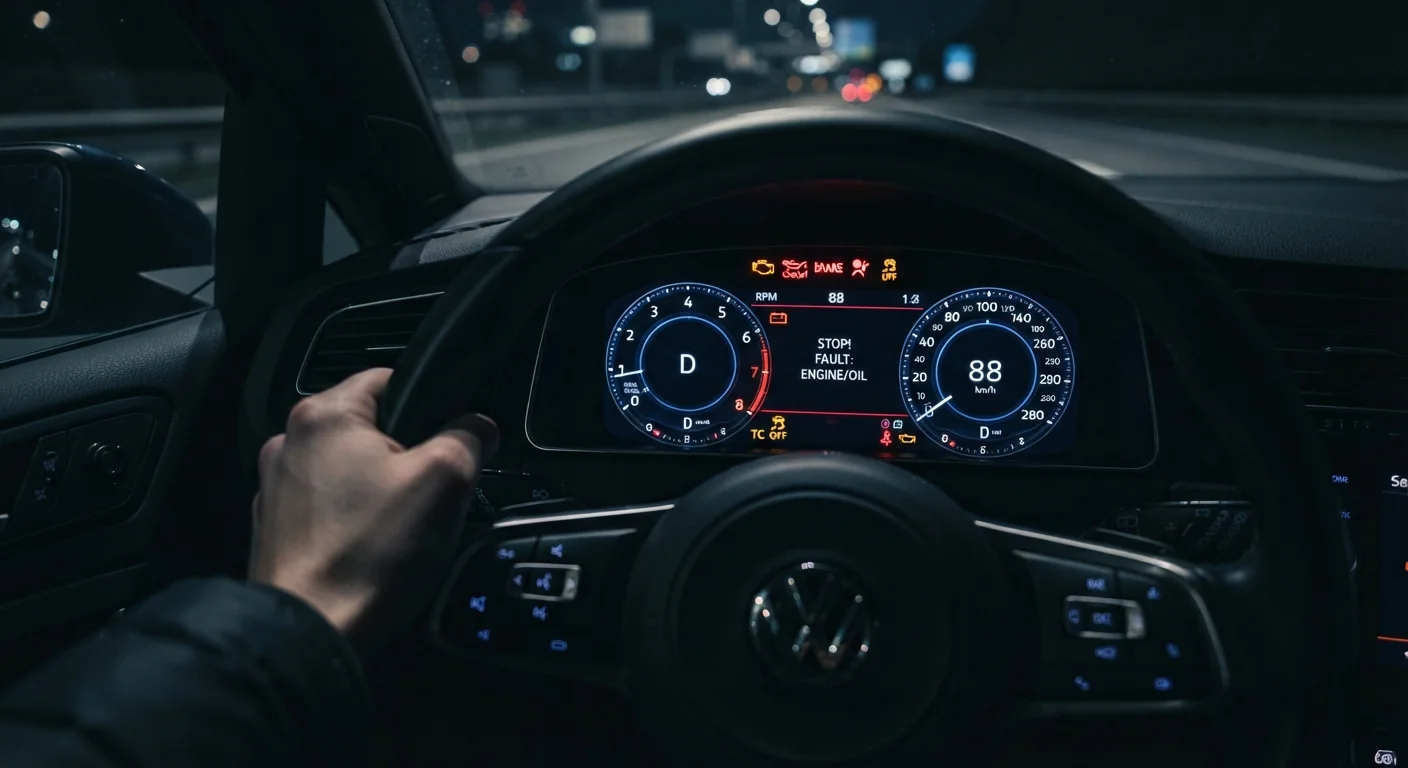
Before decoding individual symbols, understand the universal color system used across virtually all modern US vehicles. Red signals a serious, often immediate problem - stop safely as soon as possible and do not continue driving without addressing it. Amber or yellow means something needs attention soon but is not necessarily an emergency. Green or blue indicators are informational - they confirm a system is active, such as high beams or cruise control.
This hierarchy matters. A driver who treats every amber light as an emergency wastes money on unnecessary tow calls, while one who ignores a red light risks engine damage, brake failure, or worse. See our guide to triaging dashboard warnings for a deeper breakdown of pull-over decisions.
| OBD-II Diagnostic Standard | Required on all US vehicles sold from 1996 onward (US Environmental Protection Agency) |
| TPMS Requirement | Mandatory on all new US passenger vehicles since 2008 (National Highway Traffic Safety Administration (NHTSA)) |
| Flashing Check Engine Light | Indicates active engine misfire - seek service promptly |
| Oil Pressure Light Response | Pull over and shut off engine immediately |
| Warning Light Colors | Red = urgent; Amber = attention needed; Green/Blue = informational |
The Most Common Warning Lights Decoded
Most drivers will encounter these lights at some point during ownership:
- Check Engine (amber engine icon): Triggered by emissions-system faults, a loose gas cap, a failing oxygen sensor, or dozens of other conditions detected by the vehicle's onboard diagnostics (OBD-II) system. A steady light typically allows continued driving, but a flashing check engine light indicates an active engine misfire that can damage the catalytic converter - reduce speed and seek service promptly.
- Oil Pressure (red oil can): Low oil pressure can destroy an engine within minutes. Pull over safely, shut off the engine, and check the oil level. Do not drive further until the cause is identified by a qualified mechanic.
- Battery (red battery icon): The charging system has failed. The vehicle is running on reserve battery power alone. Turn off non-essential electronics and head directly to a service facility - you may have as little as 20-30 minutes of driving time remaining.
- Temperature (red thermometer in water): The engine is overheating. Pull over immediately, turn off the engine, and let it cool - never open the radiator cap on a hot engine. Continuing to drive risks severe, costly engine damage.
- Brake System (red circle with exclamation or "BRAKE"): Could indicate low brake fluid, worn brake pads, or a failure in the hydraulic system. If the parking brake is not engaged and this light is on, have the vehicle inspected before driving further.
- Tire Pressure (TPMS - horseshoe with exclamation): One or more tires is significantly under- or over-inflated. Check pressures when safe; driving on significantly underinflated tires increases blowout risk and reduces fuel efficiency.
- Traction Control / Stability Control (car with wavy lines): Usually illuminates briefly on slippery surfaces as the system intervenes. A steady light may indicate the system is disabled or has a fault.
OBD-II
On-Board Diagnostics II - a standardized system used in all US vehicles since 1996 that monitors engine and emissions performance and stores fault codes when something goes wrong. These codes can be read with an inexpensive scanner.
TPMS
Tire Pressure Monitoring System - sensors inside each wheel that alert the driver when tire pressure drops significantly below the recommended level. Required on US passenger vehicles since 2008.
Catalytic Converter
An emissions control device in the exhaust system that converts harmful engine gases into less harmful substances. An engine misfire can overheat and permanently damage this component.
Charging System
The combination of the alternator, battery, and associated wiring that keeps a vehicle's electrical systems powered while running. A charging system failure means the engine runs only on stored battery power.
ADAS
Advanced Driver-Assistance Systems - technology such as lane-keeping assist, automatic emergency braking, and adaptive cruise control that uses sensors and cameras to support the driver. Faults in these systems often trigger their own dedicated warning lights.
What to Do Before Your Next Drive
Your vehicle's owner's manual remains the definitive reference for every symbol on your specific dashboard - symbol designs can vary between manufacturers. Most vehicles also support OBD-II diagnostic scanning, and many auto parts retailers will perform a basic scan at no charge to retrieve the fault code behind a check engine light. That code narrows the diagnosis considerably before you pay for a full inspection.
Modern vehicles with advanced driver-assistance systems (ADAS) add another layer of warning lights tied to cameras, radar, and sensors. A blocked or dirty sensor can trigger these lights without a mechanical fault - a good first step is cleaning sensor areas per the owner's manual before assuming a component has failed.
When a warning light activates while driving at night, the reduced-visibility environment adds risk. Adjusting your night driving habits - including reducing speed and increasing following distance - gives you more reaction time if a mechanical issue develops suddenly. If you do need to stop for a warning light, activate your hazard lights immediately to alert other drivers.
This article provides general educational information about vehicle warning indicators. Always consult your vehicle's owner's manual and a qualified mechanic for diagnosis and repair of any warning light condition.