

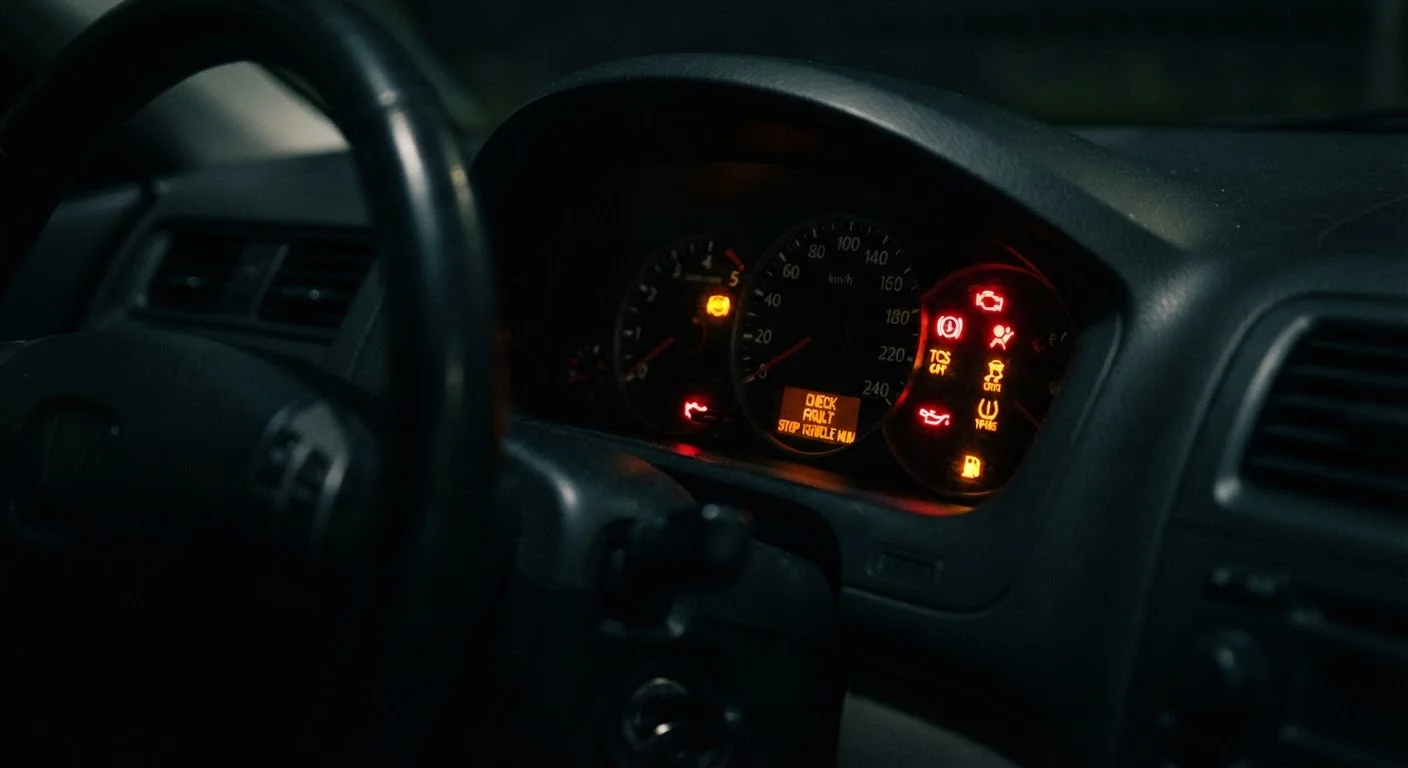
| Red light meaning | Stop or pull over - immediate risk |
| Amber/yellow light meaning | Schedule service soon - not an emergency |
| Green/blue light meaning | System active - informational only |
| Flashing vs. steady light | Flashing usually indicates higher urgency |
| Best reference for your vehicle | Owner's manual specific to your make and model year |
The Color Code: What Dashboard Light Colors Mean
US vehicle dashboards use a broadly standardized color system to signal urgency. Understanding it is the fastest way to triage any warning light before deciding your next move.
| Red light meaning | Stop or pull over - immediate risk |
| Amber/yellow light meaning | Schedule service soon - not an emergency |
| Green/blue light meaning | System active - informational only |
| Flashing vs. steady light | Flashing usually indicates higher urgency |
| Best reference for your vehicle | Owner's manual specific to your make and model year |
Red lights are the most urgent. They typically indicate an active problem that could cause immediate engine damage, a safety failure, or both. Pull over safely as soon as traffic and conditions allow. Yellow or amber lights generally mean investigate soon - something needs attention, but you usually have time to reach a mechanic. Green and blue lights are simply status indicators (headlights on, cruise control active) and require no action. A white or gray light may indicate a system is active or temporarily disabled, depending on the vehicle.
That said, color alone doesn't tell the whole story. Always consult your owner's manual for your specific vehicle - light meanings can vary by make, model year, and trim.
Lights That Mean Stop Now
Certain warning lights signal conditions that can escalate to engine failure, fire, or loss of vehicle control within minutes. If any of the following appear, reduce speed safely, activate your hazard lights, and exit the road as soon as possible. See our guide to hazard light usage for proper technique.
OBD-II
On-Board Diagnostics II - a standardized system used in US vehicles since 1996 that allows mechanics and scanners to read fault codes stored by the engine control unit.
TPMS
Tire Pressure Monitoring System - a sensor network that alerts drivers when one or more tires drops significantly below the recommended inflation pressure.
SRS
Supplemental Restraint System - the technical term for airbags and related components, including seatbelt pretensioners, that work alongside primary seatbelt restraints.
Oil pressure
The force that circulates engine oil through internal components to reduce friction. A loss of oil pressure means critical engine parts are running without lubrication.
- Oil pressure warning (red oil can icon): Low or lost oil pressure can seize an engine in minutes. Do not continue driving.
- Engine temperature warning (red thermometer or coolant icon): Indicates overheating. Continued driving can warp cylinder heads or crack the engine block.
- Battery / charging system warning (red battery icon): The electrical system is not charging. The vehicle may shut down with little warning.
- Brake system warning (red BRAKE or exclamation mark): If the parking brake is not engaged, this signals a brake fluid or hydraulic failure - a direct safety threat.
- Airbag / SRS warning (red airbag icon): Airbags or seatbelt pretensioners may not deploy correctly in a crash. Prioritize repair, even if the car seems driveable.
For a fuller breakdown of what triggers each of these lights, see our detailed warning light guide.
Lights That Mean Schedule Service Soon
Amber or yellow lights rarely require an immediate roadside stop, but they shouldn't be ignored for weeks either. Delaying attention to these warnings can turn a modest repair into a costly one.
~1 in 4
Vehicles on US roads with an active check engine light
Estimates from automotive data research suggest roughly a quarter of vehicles in operation have an unaddressed check engine condition at any given time.
25%
Tire pressure underinflation threshold for TPMS activation
Federal regulations require TPMS to alert drivers when a tire is 25% or more below the vehicle manufacturer's recommended pressure.
- Check Engine (amber engine outline): Could range from a loose gas cap to a misfiring cylinder. Have it scanned with an OBD-II reader at a shop. A flashing check engine light is more urgent - reduce speed and load, and get it checked the same day.
- Tire Pressure (TPMS - horseshoe with exclamation mark): One or more tires is significantly underinflated. Safe to drive briefly to a gas station for air, but prolonged driving on low tires increases blowout risk.
- Traction Control / Stability Control off: If illuminated without driver input, a sensor or system fault may reduce your vehicle's ability to prevent skids - especially relevant in wet or winter conditions. Night driving habits that minimize risk become even more important when stability systems are compromised.
- Transmission temperature warning: The transmission is running hot. Ease off towing or heavy loads and allow it to cool.
Note: Consult your owner's manual before assuming an amber light is non-urgent. Some manufacturers use amber for conditions that others display in red.
Your Owner's Manual Is the Final Authority
Dashboard warning light meanings are not fully universal. Some manufacturers use proprietary icons or assign different urgency levels to the same color. Keep your owner's manual in the glove box or download the digital version to your phone. When in doubt about any illuminated light, consult a qualified mechanic rather than guessing.