

Key Takeaways
- The EPA range number is a standardized estimate, not a guarantee of real-world performance.
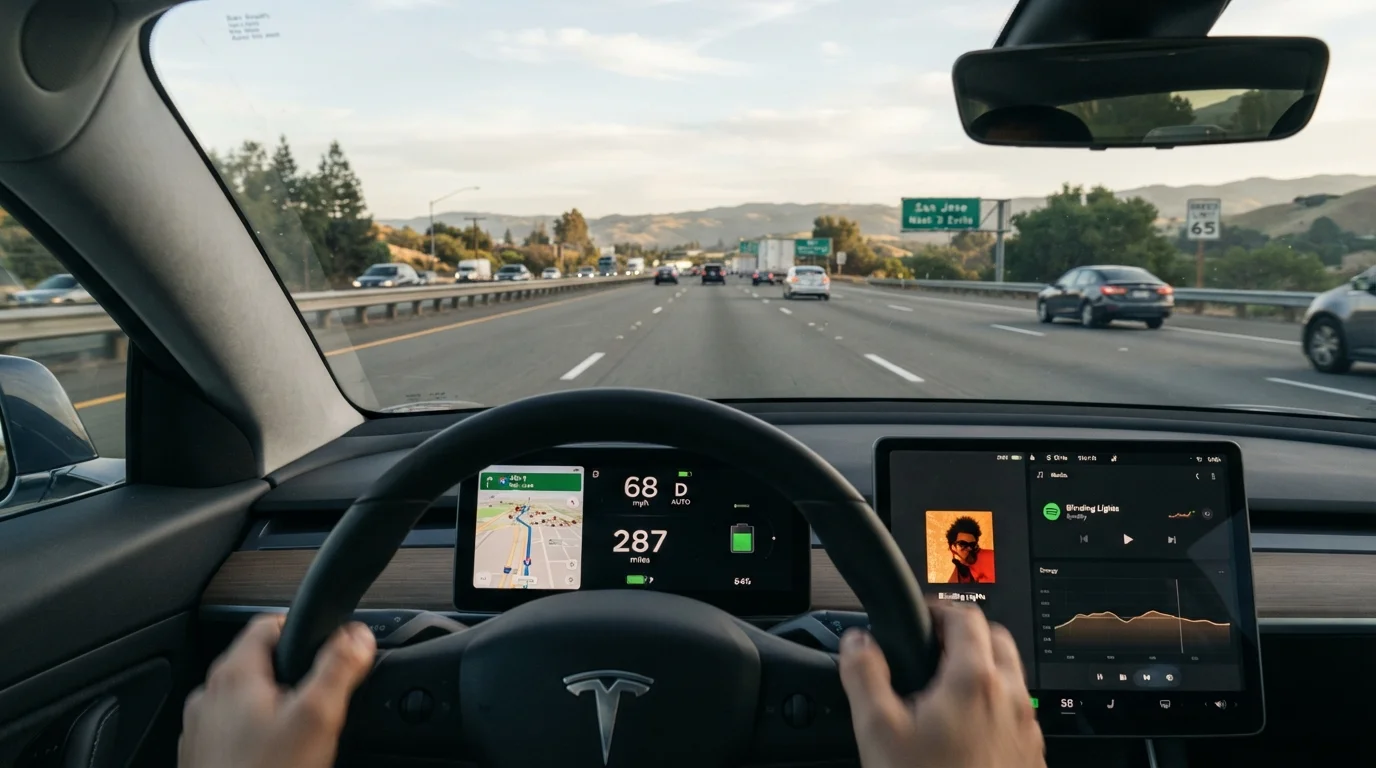
- Temperature, speed, and climate system use are the biggest factors that reduce actual range.
- Most EV drivers experience real-world range that varies between 70% and 100% of the EPA figure.
- Understanding kilowatt-hour efficiency helps drivers predict range more accurately than relying on the label alone.
- Driving habits and trip planning can close much of the gap between rated and actual range.
EPA Range Estimate
The EPA range estimate is the official mileage figure the U.S. Environmental Protection Agency assigns to a battery-electric vehicle after standardized laboratory testing. It represents how far a fully charged vehicle can travel under a specific set of controlled conditions. This number appears on the window sticker of every new EV sold in the United States.
The EPA uses a five-cycle test protocol that includes city and highway driving simulations, as well as adjustments for air conditioning use, high-speed driving, and cold-weather conditions. A correction factor is then applied, typically resulting in a published figure that is roughly 30% lower than raw dyno results.
How the EPA Tests EV Range
When an automaker wants to sell an electric vehicle in the United States, it must submit that vehicle for range testing under a process overseen by the Environmental Protection Agency. The agency uses a standardized five-cycle protocol conducted on a dynamometer - essentially an indoor treadmill for cars - rather than on public roads.
The test cycles simulate stop-and-go city traffic, steady highway cruising, high-speed driving, cold-temperature operation, and air-conditioner use. Raw results from the dynamometer tend to overestimate real-world performance, so the EPA applies a correction factor before publishing the final number. That published figure is what appears on the window sticker and what most shoppers use to compare vehicles.
To understand the energy unit behind that number, see our plain-English guide to kilowatt-hours - the fundamental measure behind every EV spec sheet.
~30%
Typical real-world range shortfall at sustained highway speeds
Independent testing by organizations such as the American Automobile Association has found EV range can fall roughly 25-30% below EPA estimates when driven at 70+ mph.
41%
Average range reduction in cold weather reported in AAA testing
AAA testing found that at 20°F with the cabin heater in use, average electric vehicle range dropped approximately 41% compared to manufacturer-rated figures.
5 cycles
Test scenarios used in the EPA's rating protocol
The EPA's five-cycle test includes city, highway, high-speed, air-conditioning, and cold-temperature scenarios before a correction factor is applied to derive the published estimate.
Why Real-World Range Differs From the Label
The EPA figure is an average designed to represent a wide range of drivers and conditions. Because no single driver matches that average exactly, real-world results inevitably diverge - sometimes modestly, sometimes significantly.
Speed and Aerodynamics
Aerodynamic drag grows with the square of velocity. At 75 mph, an EV works considerably harder than it does at the 48-60 mph range that dominates EPA test cycles. Sustained highway driving at higher speeds is one of the most consistent causes of range falling below the rated figure.
Temperature
Lithium-ion batteries are sensitive to cold. Chemical reactions inside the cells slow down in low temperatures, reducing the energy the pack can deliver. Cabin heating - which in an EV draws directly from the battery rather than waste engine heat - compounds the effect. The science behind winter range loss explains this in detail. Hot weather presents a smaller but still real challenge, as cooling both the cabin and the battery management system consumes energy.
Driving Style and Terrain
Aggressive acceleration, frequent hard braking (where regenerative braking can't fully recapture energy), and steep elevation gain all draw more energy from the pack. Urban driving with consistent regenerative braking often outperforms the EPA estimate; sustained uphill freeway runs can fall well short of it.
Reading the Range Number as a Planning Tool
Experienced EV drivers tend to think in terms of miles per kilowatt-hour (mi/kWh) rather than treating the EPA figure as a fixed budget. If you know your vehicle's usable battery capacity and your typical efficiency under your conditions, you can estimate actual range far more reliably than the window sticker alone allows.
Use Your Vehicle's Trip Computer
Most modern EVs display a real-time or recent-average efficiency figure in mi/kWh alongside the range estimate. Tracking this number over a few weeks of typical driving gives you a personalized baseline that is more useful for trip planning than the EPA label. Multiply your average mi/kWh by your usable battery capacity to get a realistic range estimate for your conditions.
For plug-in hybrid owners, range math works differently because two energy sources are involved. The difference between electric range and total range on a plug-in hybrid is worth understanding before you plan any trip.
Battery health also plays a long-term role. As a pack ages, its usable capacity gradually decreases, which means the gap between the original EPA estimate and actual range tends to widen over time - a factor that influences EV resale value as well.
“The EPA label is a useful yardstick for comparison shopping, but drivers should think of it as a reference point - not a promise. Conditions that differ from the test environment will always produce different results.”
— Autos Editorial Team, Editorial analysis based on EPA testing methodology documentation