

Key Takeaways
- Electric range tells you how far a PHEV travels on battery power before the gas engine activates.
- Total range adds gasoline-powered miles to the electric range, giving the full combined distance.
- Most PHEVs offer between 20 and 50 miles of electric-only range before switching to hybrid mode.
- EPA figures are benchmarks; real-world range varies with temperature, driving style, and terrain.
- Charging regularly keeps a PHEV running mostly on electricity, lowering fuel costs over time.
Electric Range vs. Total Range
On a plug-in hybrid (PHEV), electric range is the estimated miles the vehicle can travel on battery power alone before the gasoline engine turns on. Total range is the combined distance the car can cover using both the battery and a full tank of gas. These are two distinct figures representing two different driving modes.
Both numbers on EPA window stickers are derived from standardized test cycles. Electric range is measured under the SAE J1634 procedure, while total range combines that figure with conventional EPA fuel economy estimates for the hybrid mode.
Two Numbers on the Window Sticker - What They Mean
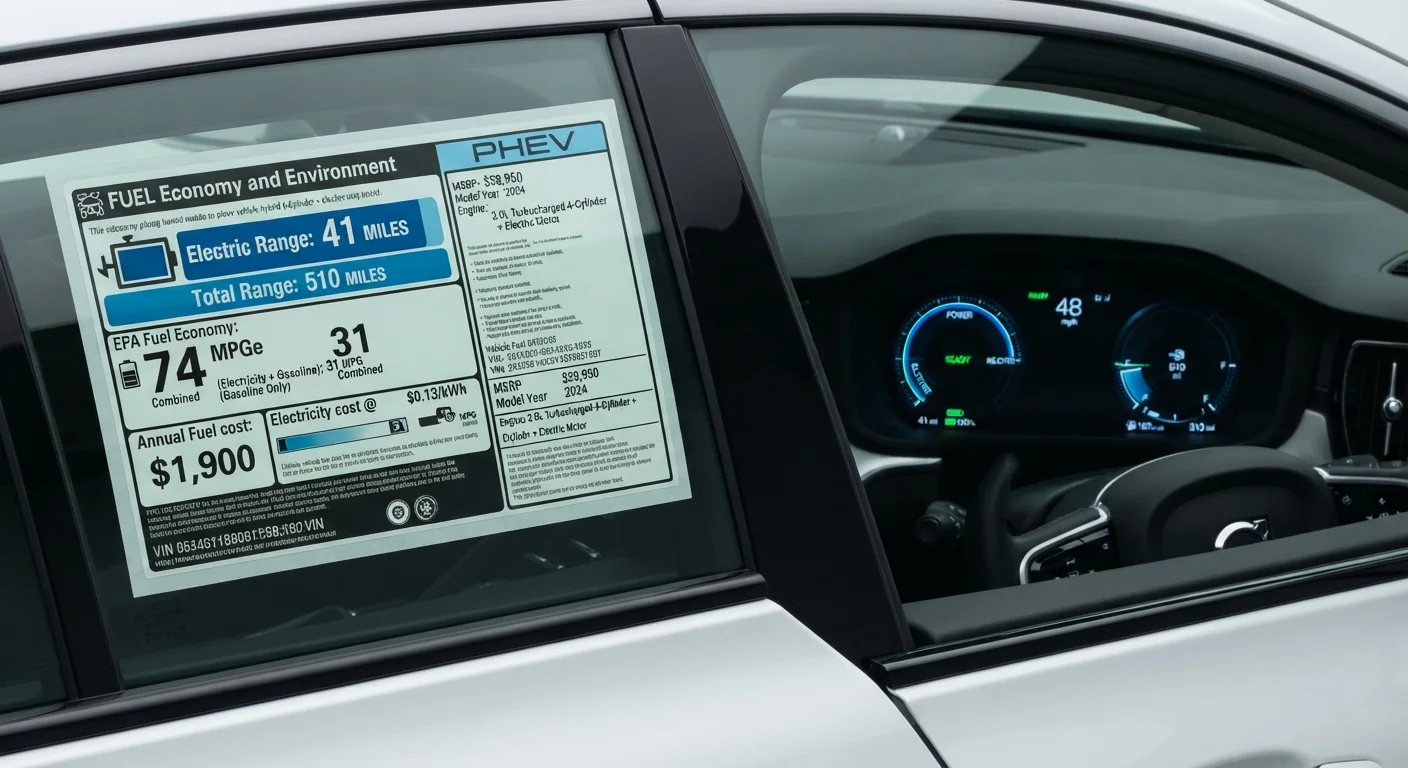
Walk up to any new plug-in hybrid on a dealer lot and the EPA window sticker will show at least two range-related figures. First-time PHEV shoppers often assume the larger number is simply a more optimistic version of the smaller one. They're actually measuring two completely different things.
Electric range (sometimes labeled "EV range") is the distance the car can cover using only battery power, with the gasoline engine off. When that battery depletes, the car's hybrid system takes over automatically. Total range is the sum of that electric-only distance plus all the miles available from a full tank of gas operating in conventional hybrid mode.
Think of it this way: electric range answers "how far before I need gas?" and total range answers "how far before I need both gas and a charge?" For most PHEVs currently on US roads, electric range falls between 20 and 50 miles, while total range typically runs from 400 to 600 miles.
20-50 mi
Typical EPA electric range for US PHEVs
Most plug-in hybrids sold in the United States carry battery packs sized to cover the average American's daily commute on electricity alone.
~29 mi
Average one-way US commute distance
According to US Census Bureau data, the median one-way commute is approximately 27-30 miles, placing it within the electric range of many PHEVs.
20-40%
Electric range reduction in cold weather
Industry testing and owner data consistently show lithium-ion battery performance drops significantly in freezing temperatures.
How the EPA Calculates Each Figure
The EPA tests PHEVs in two distinct charge conditions. To establish electric range, the battery starts fully charged and the vehicle is driven until the engine must engage - this is called the "charge-depleting" phase. To establish fuel economy in hybrid mode, the battery is intentionally depleted first, and the car is tested running on gasoline - the "charge-sustaining" phase.
Total range is then a mathematical combination: add the charge-depleting miles to the estimated miles from a full tank in charge-sustaining mode. Because these are standardized lab tests, real-world results will differ. Temperature, highway speeds, cargo weight, and driver behavior all shift actual performance. For a deeper look at how the EPA's methodology compares to real driving, see our complete guide to EPA range estimates.
MPGe: A Third Figure Worth Understanding
Window stickers often show a third metric: MPGe, or miles per gallon equivalent. This number translates the efficiency of electric driving into a gasoline-equivalent figure so consumers can compare PHEVs and EVs with conventional cars. It does not represent how many miles the car will travel - it's a comparative efficiency rating. For a full breakdown of EV spec sheet terminology, the EV glossary is a useful reference.
Why Electric Range Is the More Useful Daily Number
For most US commuters - whose average one-way commute is under 30 miles - the electric range figure is the one that directly affects day-to-day costs. If your PHEV's electric range covers your daily driving, you can complete the week on electricity alone, refueling only for longer trips.
Total range becomes the relevant figure when planning road trips or living somewhere without consistent charging access. It reassures drivers that, unlike a battery-electric vehicle, running low on charge never means being stranded - the gasoline engine is always available as a backup.
If you're weighing a PHEV against a fully electric vehicle, our article comparing BEVs and PHEVs side by side walks through the trade-offs in detail. And if terms like kWh or miles-per-kWh appear on your vehicle's spec sheet, our plain-English guide to kilowatt-hours explains exactly what those figures mean.
Maximize Electric Miles With Smart Charging Habits
Plug in every night if possible, even for a partial charge. Most PHEVs allow you to schedule charging during off-peak electricity hours, which can lower your energy costs. Keeping the battery topped off means more daily driving on electricity and less reliance on gasoline.
Factors That Shrink Both Numbers in the Real World
Neither EPA figure is a guarantee. Several real-world variables consistently reduce both electric range and total range:
- Cold weather: Battery capacity drops in freezing temperatures, and energy spent heating the cabin further reduces electric miles available.
- Highway driving: Higher sustained speeds draw power faster than the EPA's mixed-cycle test reflects, cutting both EV and gas efficiency.
- Climate control: Air conditioning and seat heaters pull from the battery, reducing electric range even in mild weather.
- Vehicle load: Passengers and cargo add weight, increasing the energy demand per mile.
- Terrain: Hilly or mountainous routes consume more energy than flat driving - though regenerative braking on descents can partially recover some of that loss.
Planning your driving with a 10-15% buffer below the EPA electric range figure is a practical habit, particularly in winter months.
“Plug-in hybrids are uniquely positioned for drivers who want the daily cost benefits of an EV without giving up the flexibility of a gasoline backup. The key is understanding which range number actually governs your daily life.”
— Autos Editorial Team, Automotive Technology Analysts