

Key Takeaways
- A documented service history builds buyer trust and can support a stronger private-sale asking price.
- Both paper and digital records are valid; redundancy between the two protects against loss.
- Key documents include oil change receipts, inspection reports, warranty paperwork, and recall completion notices.
- Starting a record system at any point in ownership is better than waiting for the perfect moment.
- Organized records also help you catch missed intervals and stay on top of your car's long-term needs.
Why a Paper Trail Matters More Than Most Owners Realize
When a prospective buyer evaluates a used vehicle, they're essentially making a judgment call on an object they can't fully verify. A clean service history doesn't just signal that a car was maintained - it signals that the owner cared enough to track it. That distinction carries real weight in private-sale negotiations.
Buyers who can see documented oil changes, brake replacements, and state inspections have measurable evidence to weigh against mileage and asking price. Those without records often discount their offer to account for the unknown. According to industry observers, a well-documented vehicle history can help sellers justify a stronger asking price compared to an equivalent car with no paperwork - though actual outcomes depend on the vehicle, market, and individual negotiation.
Beyond resale, keeping records helps you catch your own patterns. If coolant flushes or transmission service keep getting postponed, the paper trail makes that visible before a costly failure does. For more on what deferred service actually costs over time, see what skipping service intervals actually costs.
What to Keep - and What Buyers Actually Want to See
Not every piece of paper from your glove box is worth preserving, but some documents are genuinely important. Prioritize the following:
- Oil change receipts - The most frequently performed service; a continuous chain of receipts is reassuring.
- Major service records - Timing belt or chain replacement, brake work, transmission service, and coolant flushes.
- State inspection reports - These confirm the vehicle passed safety and emissions checks at specific mileage points.
- Recall completion notices - Shows federally mandated safety work was performed. Buyers can cross-reference on the NHTSA website.
- Warranty documentation - Original factory warranty paperwork and any extended coverage terms.
- Accident or body repair invoices - Transparency here builds trust even when there's a history to disclose.
When it's time to transfer ownership, you'll also need the right legal paperwork. See what documentation you'll need for a private sale for a full breakdown.
Building a System That Holds Up Over Time
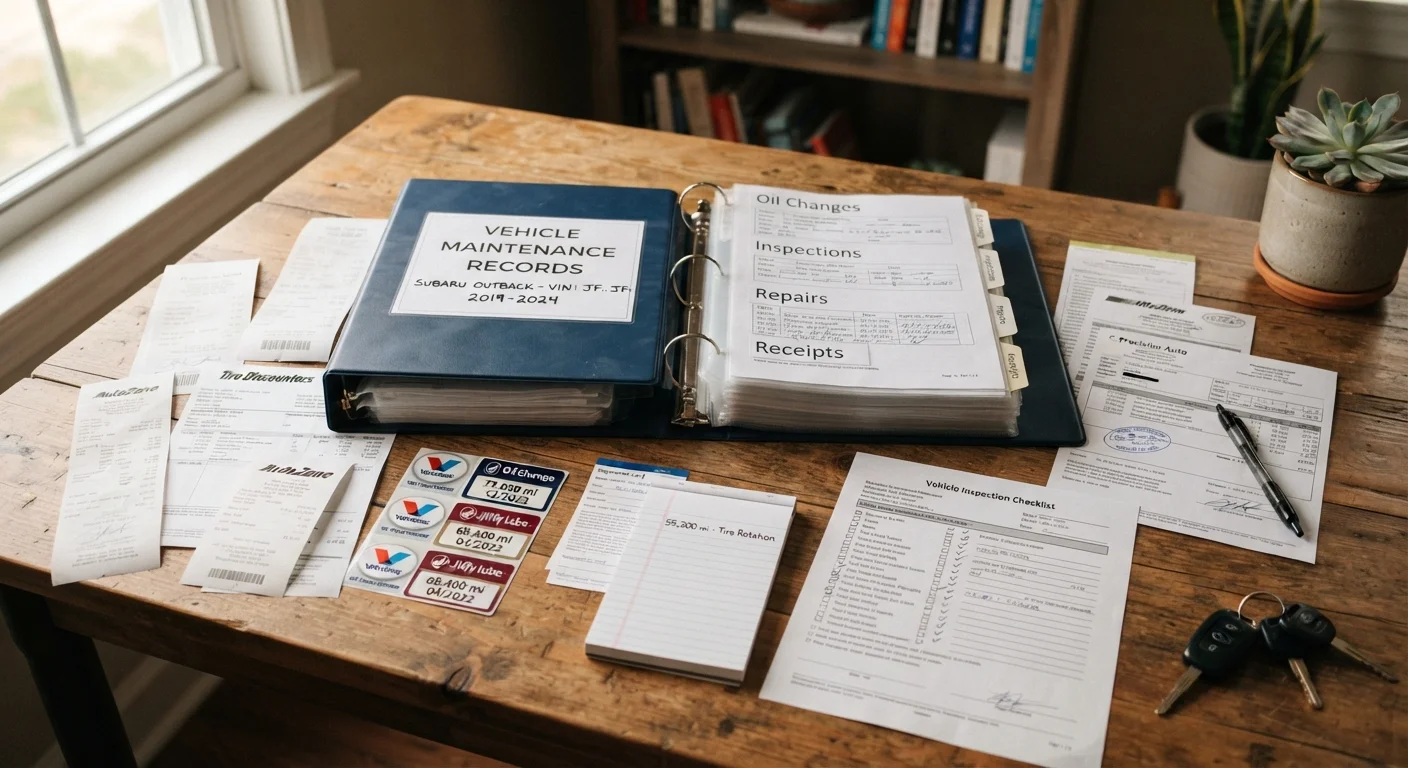
The best record-keeping system is one you'll actually maintain. For most owners, a hybrid approach - physical folder plus digital backup - is the most resilient.
For physical records, a simple accordion folder or manila envelope kept in the glovebox works. Label it clearly and file receipts immediately after service rather than letting them pile up. For digital storage, photograph or scan each receipt and save it to cloud storage (any major service will do). Folder names like "2019_OilChange_March" make future retrieval straightforward.
If you're looking to extend this habit beyond your vehicle, the same discipline applies to purchase records generally - see protecting yourself with receipts and records after a purchase and managing digital receipts effectively for broader strategies.
Starting Mid-Ownership: It's Not Too Late
Many owners assume that if they didn't start keeping records from day one, there's no point in starting now. That reasoning doesn't hold. A partial history is meaningfully better than none at all, and a buyer seeing three years of clean records on a five-year-old car still gains useful information.
Start today by requesting a service printout from your dealership or independent shop - most keep electronic records going back several years and will provide a summary on request. Some automakers also maintain service histories tied to the VIN (vehicle identification number) that you can access through owner portals. Third-party vehicle history services can sometimes fill in additional gaps using dealer data, though coverage varies by region and shop type.
Once you have what's available, file it and begin adding to it with every future service visit. Consistency from this point forward is what matters most.