

Key Takeaways
- A clean, lien-free title is the single most important document in any private car sale.
- A written bill of sale protects both seller and buyer by recording agreed terms.
- Odometer disclosure is federally required for most vehicles under ten years old.
- Maintenance records aren't required but can support your asking price and buyer confidence.
- Requirements vary by state - always verify your local DMV rules before completing the sale.
Summary
16 items · 30-60 minutes
Why Documentation Matters in a Private Sale
Selling a car privately often puts more money in your pocket than trading it in at a dealership - but it also puts more responsibility on your shoulders. Without a dealer managing paperwork, both you and the buyer are on the hook for making sure the transaction is legitimate, complete, and legally protected.
Missing or incorrect documents can stall a sale, expose you to future liability, or leave a buyer unable to register the vehicle. Getting your paperwork in order before you list the car is one of the most practical things you can do. See our guide to comprehensive car ownership for broader context on every stage of the vehicle lifecycle.
Before You List
At the Point of Sale
After the Sale
What You'll Need Before, During, and After the Sale
The documents below fall into three phases: what you gather before listing, what gets exchanged at the point of sale, and what the buyer needs to complete registration afterward. Not every document is required in every state, but most are either legally mandated or strongly advisable for your own protection.
State Requirements Vary Significantly
There is no single national standard for private vehicle sales documentation. Some states require a notarized bill of sale; others require a specific DMV-issued form for odometer disclosure or release of liability. Before you complete any sale, verify current requirements directly with your state's Department of Motor Vehicles - rules can change, and outdated information can cause problems for both parties.
Understanding the title specifically is foundational - the vehicle title establishes legal ownership and must be properly signed over for the sale to be valid. If you're unsure how that process works, review what title transfer involves before proceeding.
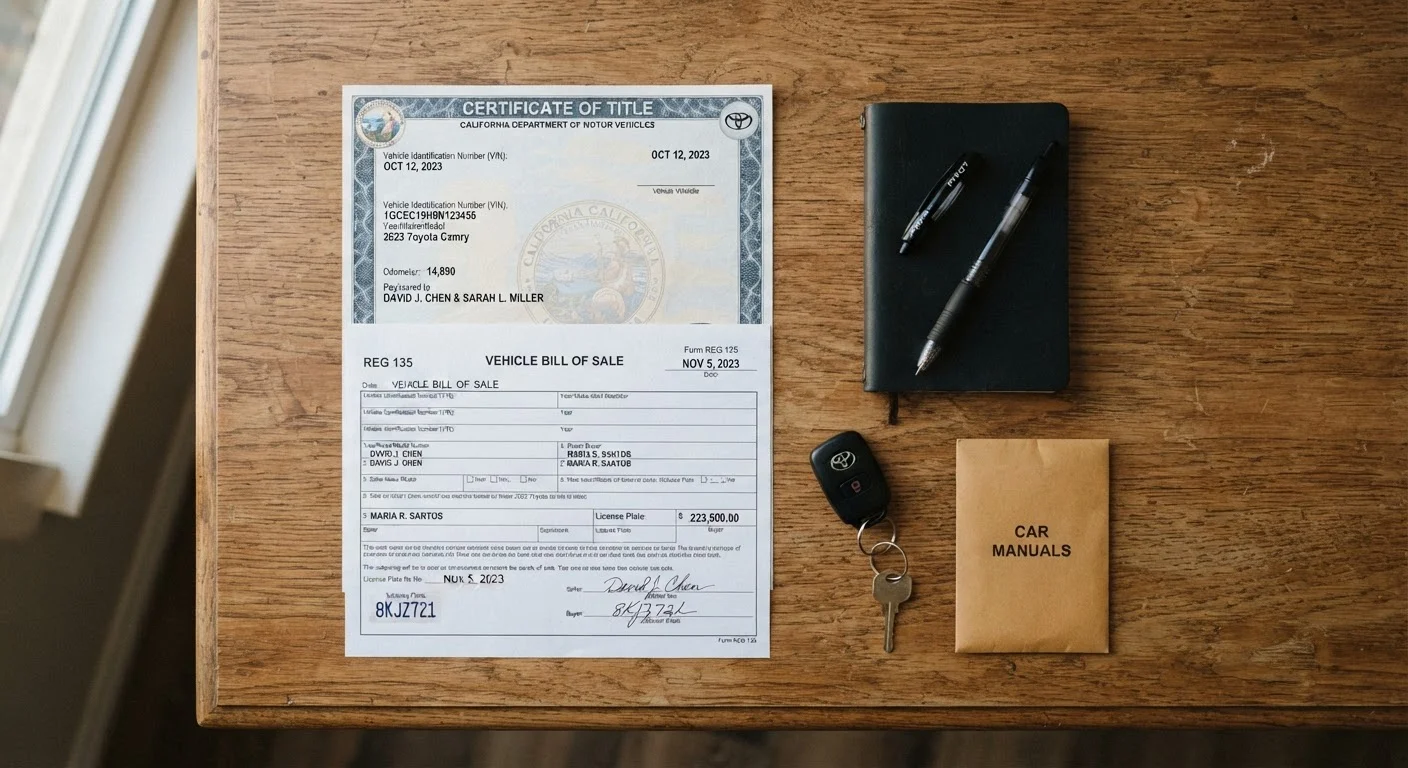
Vehicle Title
The primary legal document proving ownership - must be signed over to the buyer to complete the sale.
Bill of Sale
A written record of the transaction terms, protecting both seller and buyer if disputes arise later.
Odometer Disclosure Statement
A federally required form recording the vehicle's mileage at time of sale for most vehicles under ten years old.
State Release of Liability Form
Notifies your state DMV that ownership has changed, shielding you from future liability tied to the vehicle.
Maintenance and Repair Records
Documents the vehicle's service history - not legally required, but builds buyer confidence and may support your asking price.
Vehicle History Report
A third-party report using the VIN that surfaces accident history, title issues, and odometer inconsistencies.
On the buyer's side, having a record of the transaction matters just as much. Directing buyers to understand receipts, records, and consumer rights helps set expectations about what they should keep after the handoff.
A Note on Maintenance Records
Service history isn't a legal requirement in a private sale, but it's one of the most persuasive tools you have as a seller. Buyers paying out of pocket want confidence they're not inheriting hidden problems. A well-organized service folder - oil changes, timing belt replacements, brake jobs - signals that the vehicle was cared for.
If you've been diligent about keeping records, now is the time to compile them. Our guide on keeping maintenance records explains how to organize your history in a way that genuinely supports a stronger asking price.
Never Sign a Blank Title
Signing a vehicle title before all fields are filled in - including the buyer's name, sale price, and date - is risky and potentially fraudulent. A blank signed title gives whoever holds it the ability to fill in any information they choose. Always complete all required fields simultaneously with the buyer present, and never hand over a signed title until you have received confirmed payment.
This article provides general information about private vehicle sales in the United States. Documentation requirements vary by state. Always verify the current rules with your state's Department of Motor Vehicles before completing a sale.