

Key Takeaways
- Towing capacity is a hard engineering limit, not a conservative estimate to ignore.
- Exceeding it stresses the engine, transmission, brakes, and frame simultaneously.
- Your vehicle's towing rating is listed in the owner's manual and often on the door jamb sticker.
- Tongue weight - the downward force at the hitch - is a separate limit that also matters.
- Overloading a trailer can void powertrain warranties and affect liability in an accident.
- Always add up the trailer's dry weight plus every item loaded onto it before hitching up.
Towing Capacity
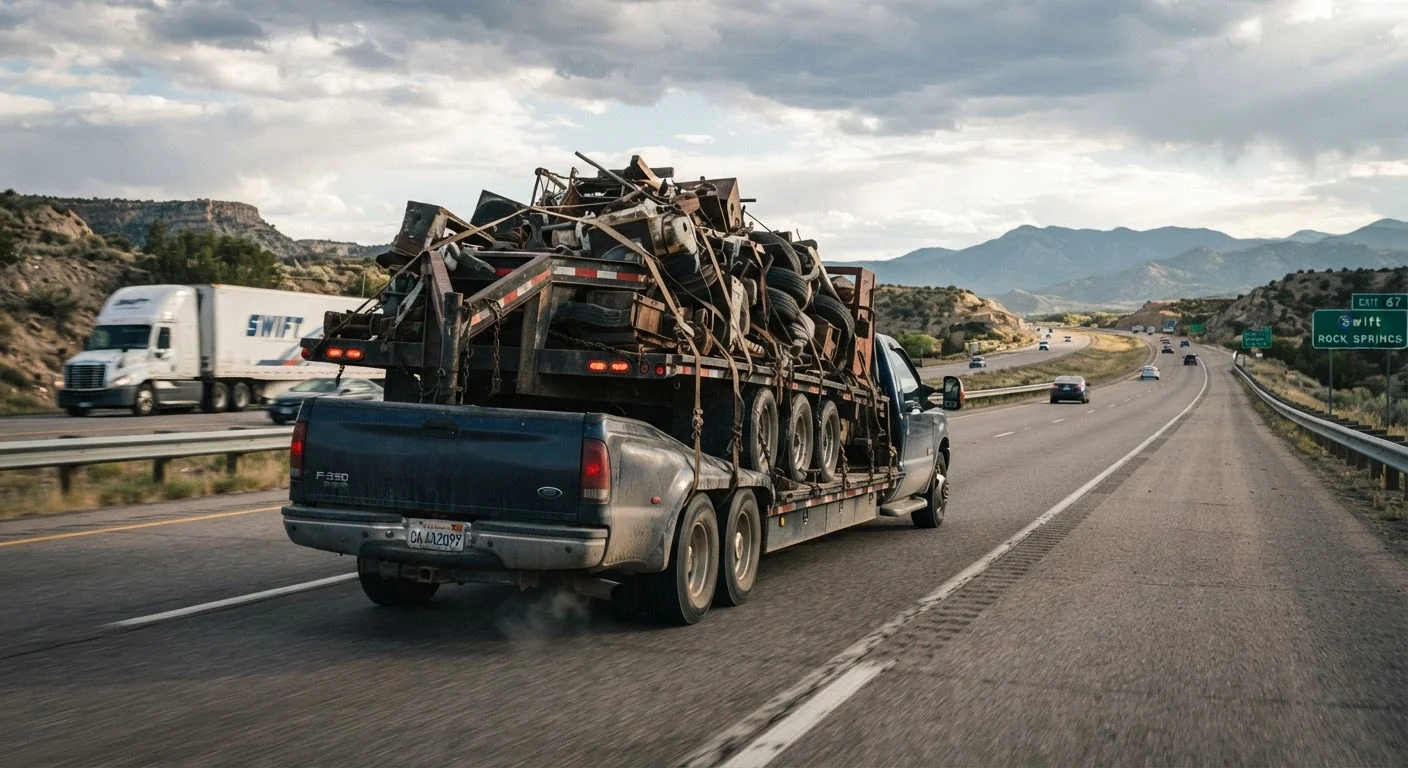
Towing capacity is the maximum weight a vehicle is engineered to pull behind it - including the trailer and everything loaded onto it. This figure is calculated by the manufacturer based on the limits of the engine, transmission, brakes, frame, and cooling system working together. Going beyond that number doesn't just risk a ticket; it puts real mechanical and safety strain on your vehicle.
Towing capacity is distinct from payload capacity, which refers to the weight the vehicle can carry in its cab and bed. Both figures must be respected simultaneously when towing.
What the Numbers Actually Mean
Every vehicle with a tow rating carries a specific number - say, 7,500 lbs - that represents the maximum the powertrain, chassis, and braking system can safely manage when pulling a trailer. That number isn't a round estimate; it's a ceiling determined through engineering analysis and testing by the manufacturer.
The figure covers the Gross Trailer Weight (GTW) - the trailer's empty weight plus everything loaded onto it. A boat trailer rated at 2,000 lbs empty, loaded with a 3,500-lb boat and 200 lbs of gear, weighs 5,700 lbs. That total is what counts against your vehicle's tow rating, not just the trailer's dry weight.
A separate but equally important figure is tongue weight - the downward force the loaded trailer places on your hitch. Most vehicles allow tongue weight of roughly 10-15% of total trailer weight. Too little tongue weight and the trailer can sway violently at highway speeds. Too much overloads the rear axle and lifts the front wheels, reducing steering responsiveness and brake effectiveness.
Tow Package Matters More Than Most Realize
A factory tow package typically includes a trailer wiring harness, a higher-capacity cooling system, a transmission cooler, and a heavier-duty hitch receiver. Vehicles without a factory tow package may have a significantly lower tow rating - or none at all - even if an aftermarket hitch is installed. Always verify whether your specific vehicle came equipped with the factory package before relying on the maximum published tow rating.
What Happens When You Exceed the Limit
Overloading your hitch stresses multiple vehicle systems at once, and the effects compound quickly:
- Transmission: Excess load forces the transmission to stay in lower gears longer, generating heat that degrades fluid and accelerates wear. Transmission failure is one of the most expensive consequences of chronic overloading.
- Engine: The engine works harder to maintain speed, especially on grades, and runs hotter. Sustained high temperatures can damage seals, gaskets, and cooling components.
- Brakes: A heavier trailer dramatically increases stopping distance. Factory brakes are sized for the vehicle's rated capacity; beyond that, fade and overheating become real risks. Trailers over a certain weight require their own electric brake systems under most state laws.
- Frame and suspension: The hitch receiver and vehicle frame absorb the load. Repeated overloading can cause metal fatigue, weakening the connection points over time.
These aren't hypothetical risks reserved for extreme overloads. Even modest overages - hauling 10-15% over the rated limit on a mountain pass in summer heat - can trigger warning lights or thermal shutdowns. See our guide to dashboard warning lights to understand what your vehicle is telling you when systems are under stress.
40%
Increase in stopping distance at 10% over tow limit
Vehicle dynamics research consistently shows that modest overloads of 10% above rated capacity can increase stopping distances by roughly 40% depending on speed and grade.
~$3,000-$8,000
Average transmission replacement cost
Transmission failure, one of the most common consequences of chronic overloading, typically costs between $3,000 and $8,000 to repair or replace at a dealership or independent shop.
Practical Steps Before You Hitch Up
Getting the math right before you leave the driveway is straightforward and takes only a few minutes:
- Confirm your vehicle's ratings: Check the owner's manual for both towing capacity and tongue weight limit. Ratings can vary by trim, engine, and whether a factory tow package is installed - verify for your specific configuration.
- Weigh the loaded trailer: Portable or commercial scales (often available at truck stops and weigh stations) provide an accurate loaded weight. Estimating based on the trailer's sticker capacity isn't sufficient.
- Check tongue weight: A simple tongue weight scale sold at auto parts stores attaches between your hitch and coupler to measure downward force directly.
- Factor in conditions: If you're heading into mountainous terrain or towing during peak summer heat, consider staying comfortably below your maximum rating rather than operating at its edge.
A thorough pre-trip vehicle inspection - covering tire pressure (including trailer tires), fluid levels, and lighting connections - is especially important any time you're adding towing load. If you drive an electric truck or SUV, range planning adds another layer of complexity; towing hits EV range harder than most drivers expect.
Use a Certified Scale Before Every Tow
Guessing the weight of a loaded trailer based on estimated cargo is one of the most common mistakes drivers make. Many truck stops and agricultural co-ops offer certified scale access for a small fee. Weighing the loaded trailer before departure takes minutes and removes all guesswork about whether you're within your vehicle's rating.
The Liability and Warranty Angle
Beyond the mechanical consequences, towing over capacity creates real financial and legal exposure. Most manufacturer powertrain warranties include language permitting claim denial when the vehicle was used outside its rated specifications. If a transmission fails after documented overloading, the repair cost falls entirely on the owner.
In the event of an accident, investigators and insurance adjusters will often examine whether the vehicle was operated within its engineered limits. Towing beyond capacity - particularly if it contributed to extended stopping distance or loss of control - can affect both liability determinations and coverage decisions.
Understanding the full picture of responsible safe driving practices includes recognizing that ratings like towing capacity exist to keep you, your passengers, and other road users safe. They're not conservative buffers that can be quietly stretched - they're the result of careful engineering, and they deserve the same respect as any other vehicle safety specification.