

Key Takeaways
- Pre-production is the planning phase that happens before any filming begins.
- Script breakdowns, budgeting, casting, and location scouting are all core pre-production tasks.
- Department heads - including the cinematographer and production designer - come aboard during this phase.
- A well-executed pre-production phase directly reduces costly surprises during principal photography.
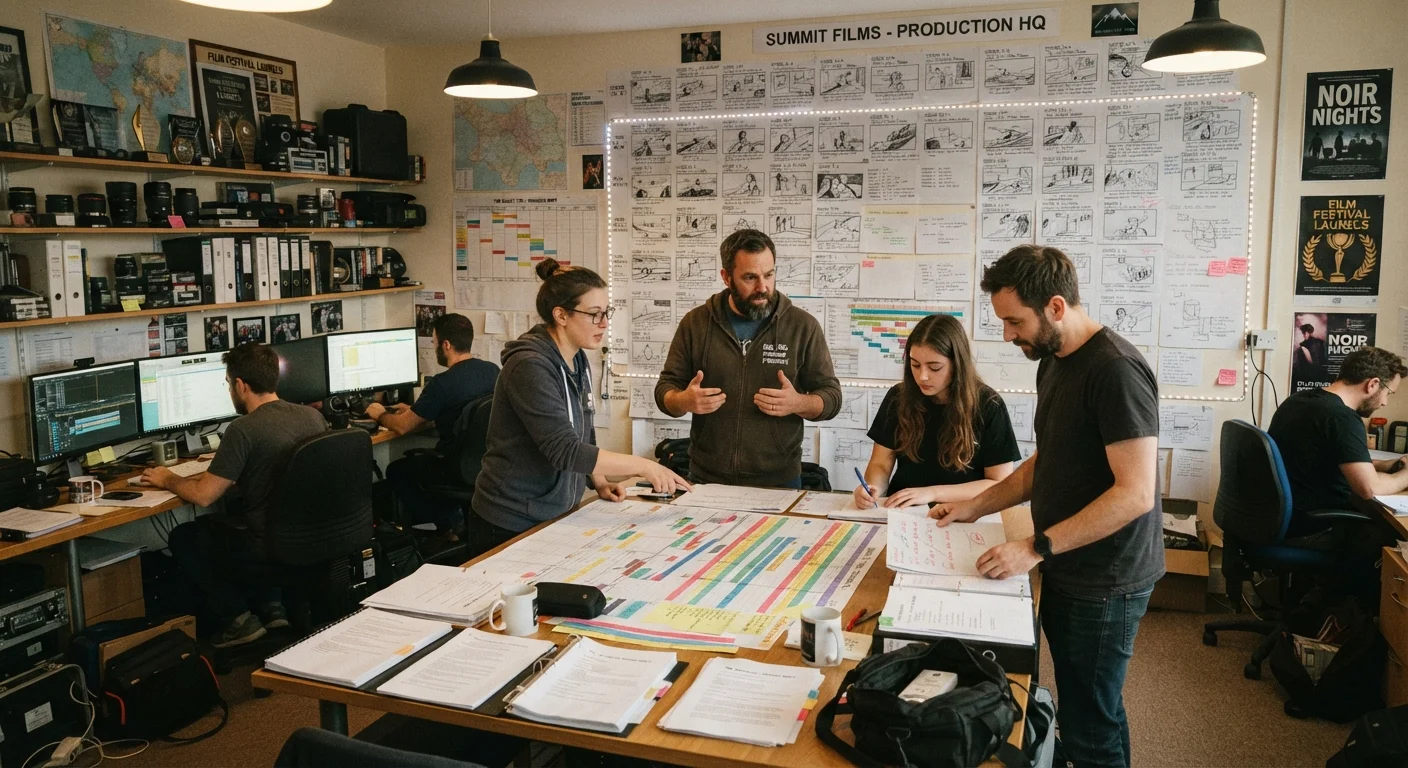
- Storyboarding and shot lists translate the script's vision into a concrete visual plan.
Film Pre-Production
Pre-production is the planning phase of filmmaking that occurs after a script is finalized but before any footage is captured. It covers every decision that shapes how a film will look, sound, and function - from casting and location scouting to budgeting and scheduling. Think of it as building the blueprint before construction begins. A film's success or failure in production often traces back to how thoroughly this phase was handled.
In studio filmmaking, pre-production can last anywhere from a few weeks on a low-budget independent film to over a year on a large-scale production, with department heads onboarded in overlapping waves as responsibilities ramp up.
Why Pre-Production Matters More Than Most People Think
Every film you've ever watched - from a sweeping summer blockbuster to a quiet indie drama - went through a period of intense planning before a single frame was captured. That period is called pre-production, and it's arguably the most consequential phase in all of filmmaking. What happens here sets the creative and logistical foundation for everything that follows.
Most audiences are familiar with the glamorous parts: the red carpets, the behind-the-scenes footage of actors in costumes, the visual effects spectacle. But the machinery that makes all of that possible is quietly assembled during pre-production, in conference rooms, location vans, and production offices. Understanding what producers do during this phase reveals just how many moving parts are being coordinated simultaneously.
6-18 months
Typical pre-production window for major studio films
Industry professionals generally cite this range for large-scale productions, with blockbusters and effects-heavy features requiring the longest lead time.
~10%
Share of total budget often spent in pre-production
Film finance analysts commonly note that pre-production spending, while a small fraction of the total budget, directly protects the much larger investment made during principal photography.
Hundreds
Number of crew roles filled before cameras roll
On a major production, pre-production involves hiring across dozens of departments - from art and wardrobe to transportation and catering - before a single day of shooting begins.
Breaking Down the Script: The First Real Step
Once a screenplay is locked - meaning the story and dialogue are finalized - the production team conducts a script breakdown. Each scene is analyzed line by line to identify every element it requires: which cast members appear, what props are needed, what locations are involved, whether stunts or special effects are required, and what time of day the scene takes place.
This breakdown generates what's called a one-liner or strip board - a color-coded, scene-by-scene overview of the entire film. Scenes are then grouped not by narrative order but by shooting efficiency: all scenes at one location may be shot together, regardless of where they fall in the final cut. This is how a character's first scene and last scene can be filmed on the same day.
The breakdown feeds directly into two critical documents: the production schedule and the budget. Without it, neither can be built accurately.
The Budget Is Built on the Breakdown
Every line in a film's budget traces back to the script breakdown. This is why experienced producers say that money is won or lost in pre-production, not on set. The more detailed and accurate the breakdown, the fewer expensive surprises arise once principal photography begins.
Assembling the Team and Scouting the World
Pre-production is when a film's key creative collaborators come aboard. The director works closely with the cinematographer (also called the director of photography) to develop the visual language of the film - decisions about lighting style, camera movement, and lens choices that audiences feel even if they can't name them. What cinematographers actually do goes far beyond operating a camera.
The production designer begins designing sets and establishing the film's overall aesthetic - the color palettes, the texture of spaces, the feeling of the world characters inhabit. Meanwhile, location scouts travel to find real-world spaces that match the script's requirements, weighing practicality alongside visual appeal.
Casting directors begin auditioning actors, starting with lead roles and working outward. Costume designers pull references. Stunt coordinators assess action sequences. All of these tracks run in parallel, coordinated by the production team to converge on a single start date for principal photography.
Storyboarding, Shot Lists, and Visual Planning
Before cameras roll, directors and cinematographers often work with storyboard artists to sketch out key sequences frame by frame. These visual blueprints communicate exactly what a shot should look like, how a camera should move, and how scenes will cut together. Complex action sequences, VFX-heavy scenes, or precisely choreographed moments almost always get storyboarded. The craft that eventually shapes what viewers feel is rooted in decisions made long before editing begins.
Alongside storyboards, the cinematographer and director develop a detailed shot list - a rundown of every planned camera setup for each scene. Shot lists keep production on schedule by ensuring the crew knows exactly what to set up and capture each day.
This visual planning phase also feeds directly into VFX preparation. Shots that will require digital effects need to be designed with those elements in mind from the start - a process explored further in our look at how visual effects are built from green screen to final cut.
“The best thing about pre-production is that it's where you solve problems cheaply. Every question you answer before you're on set saves you ten times the cost later.”
— Kathleen Kennedy, Film producer with decades of major studio production experience