

Key Takeaways
- Film festivals like Sundance and SXSW can screen hundreds of titles - strategic planning prevents burnout.
- Identifying your personal priorities before the festival opens makes scheduling significantly easier.
- Buzz and awards momentum are useful signals, but the most memorable discoveries often come from obscure slots.
- Building in rest time and flexibility is just as important as locking in screenings.
- Festival films frequently reach streaming platforms or theaters within months of their premiere.
What you will need
Why Film Festivals Feel Overwhelming - And Why That's Worth Solving
A single edition of Sundance can include more than 100 feature films across a dozen program sections, plus shorts, panels, and special events - all compressed into roughly ten days. SXSW and Tribeca operate at similar scale. For anyone who loves film, that abundance is exciting in theory and paralyzing in practice. Most people respond by defaulting to whatever is getting the most press attention, which means they leave having seen the same five movies everyone else saw and missing the stranger, more adventurous work that festivals exist to champion.
Understanding what these events are actually designed to do helps reframe the approach. Festivals like Sundance and Tribeca function as launch pads for independent and international work that might not otherwise find distribution. They're also cultural thermometers, surfacing the themes and formal experiments that filmmakers are grappling with right now. To learn more about what the major international festivals stand for and how they influence which films reach American audiences, see our piece on what Cannes, Venice, and Berlin represent in the film world.
What you will need
Festival Official App or Website
Browse the full lineup, filter by category or genre, and manage your personal schedule.
Film Trade Publications
Access early reviews and real-time buzz from critics covering the festival as it unfolds.
Letterboxd or Similar Film Tracking App
Log films you want to see, track what you've watched, and read brief community reactions.
Printed or Digital Program Guide
Cross-reference screening times, venues, and filmmaker backgrounds during planning.
How to Build a Festival Schedule That Actually Works
Don't Skip the Schedule Release Date
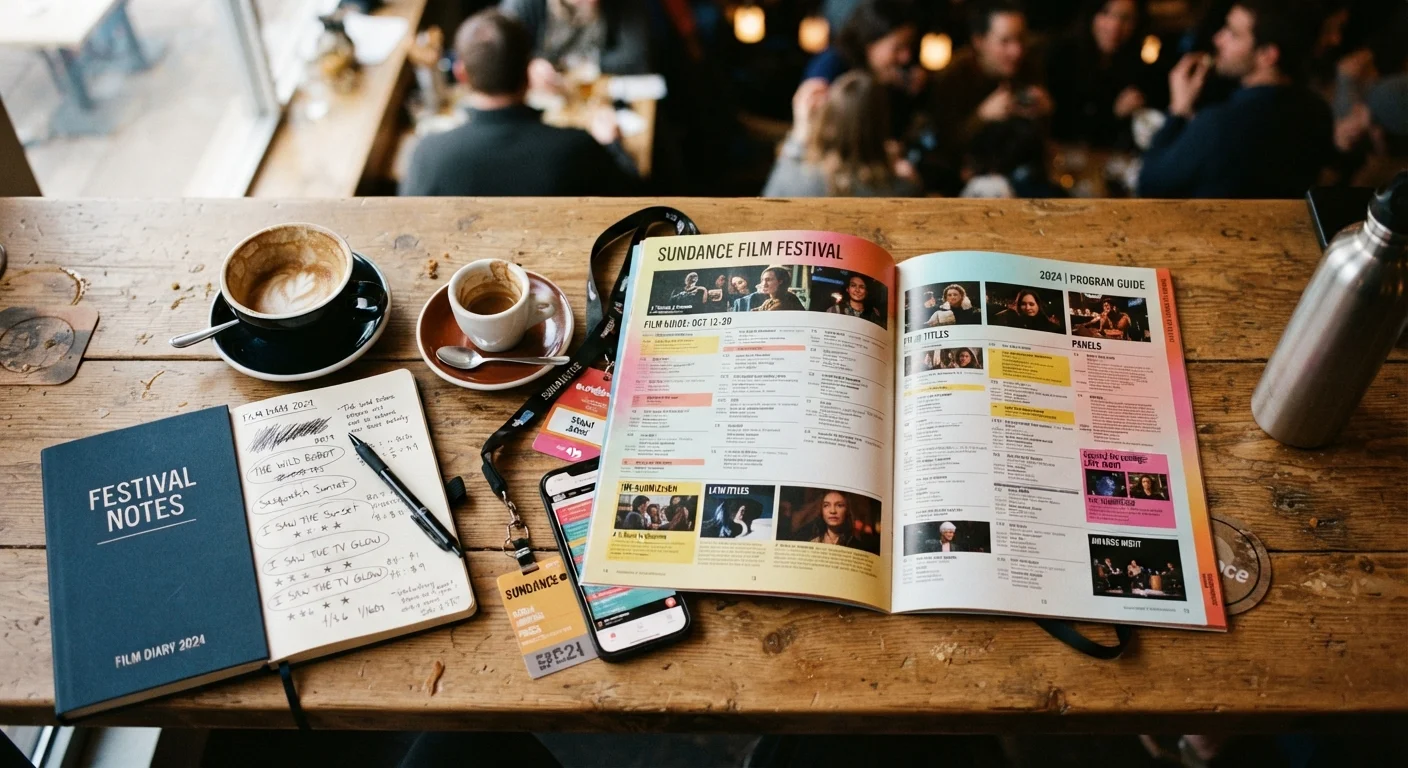
Most major festivals publish their full lineup and ticketing windows several weeks in advance. Missing the opening ticket window - especially for high-profile premieres - often means sitting out the most talked-about screenings. Set a calendar reminder for when passes and individual tickets go on sale. For in-person attendance, also verify venue capacities and standby policies before you plan your day.
The steps below apply whether you're attending in person, watching through an official virtual pass, or simply following along to track which films are worth seeking out when they hit wider release later in the year. The core discipline is the same in each case: set priorities before the noise of the event takes over, build in room to adapt, and stay curious about what doesn't immediately grab your attention.
Define What You're Actually Looking For
Before opening the program, spend a few minutes identifying your priorities. Are you drawn to documentary work, international narrative features, short films, or genre cinema? Do you follow specific directors or cinematographers? Are you hoping to see potential awards contenders - films that could shape the awards season calendar in the months ahead? Anchoring your choices in genuine personal interest rather than hype leads to far more satisfying viewing.
Sort the Lineup Into Tiers
Once the full schedule is available, divide every film that interests you into three groups: must-see, would like to see, and backup options. Your must-see list should be short - no more than five or six titles - so that ticket competition and conflicts don't derail your entire plan. The backup list is crucial; it fills gaps when a sold-out screening or a scheduling clash cuts a priority film loose.
Map Out Logistical Reality
Whether you're attending in person or watching virtually, practical constraints shape your schedule more than enthusiasm does. For in-person festivals, factor in travel time between venues, meal breaks, and geographic clustering - many festivals spread screenings across multiple locations that aren't always walkable. For virtual editions, account for time zone differences in live streams and whether on-demand windows give you replay flexibility.
Reserve One Slot for a Genuine Unknown
Festival programming teams spend months curating lineups that go far beyond headline films. Deliberately choosing one screening per day from a section you know nothing about - a shorts program, a regional spotlight, or a debut feature from an unfamiliar filmmaker - is often how the most lasting discoveries happen. International cinema in particular tends to get overlooked in favor of English-language titles, yet frequently represents some of the most formally inventive work in any lineup.
Stay Flexible and Adjust in Real Time
Even the most carefully planned festival schedule will bend. A film may not land the way you expected, a Q&A runs long, or a word-of-mouth screening becomes the conversation of the day. Follow the energy of the festival itself. Mid-event trade reviews and social conversation can surface a film that wasn't on your radar but is drawing genuine excitement. Treat your schedule as a living document rather than a contract.
Plan for What Comes After
Most festival premieres don't disappear after their closing night. Many films move into wide theatrical release or land on streaming platforms within months - a dynamic explored in depth in discussions about streaming vs. theatrical release paths. If you miss a title at the festival, there's a reasonable chance it will surface again. Use this knowledge to depressurize your schedule - you don't have to see everything right now.
Over-Scheduling Kills the Experience
It's tempting to fill every time slot, but back-to-back screenings with no breaks leave little room for the spontaneous conversations, panel discussions, and Q&As that give festivals their real energy. Leave at least one open slot per day as a buffer for overruns, rescheduling, or simply processing what you just watched.
Use Press Coverage as a Compass
Trade outlets such as Variety and IndieWire publish real-time reviews throughout festival runs. Checking these sources mid-festival - rather than relying solely on pre-festival hype - gives you a more accurate read on which films are genuinely resonating with critics versus which ones generated pre-release buzz that didn't hold up.
Once the festival wraps and you've had time to process what you watched, it can be worth sitting with the films more deliberately. Our guide to questions to ask yourself after watching a film offers a useful framework for turning a great screening into a genuinely lasting experience.