

Key Takeaways
- Film scores are composed specifically for a movie, distinct from songs on a pre-existing soundtrack.
- Composers collaborate directly with directors before and during production to align music with story intent.
- Music manipulates tempo, harmony, and timbre to influence how viewers emotionally interpret a scene.
- The 'spotting' process determines exactly where music starts and stops within the film.
- A well-crafted score can shift audience perception of the same scene entirely.
Film Score
A film score is original music composed specifically to accompany a movie, written to enhance storytelling rather than exist as a standalone piece. Unlike a soundtrack - which may include pre-existing songs - a score is tailored to the precise timing, tone, and emotion of each scene. Composers work closely with directors to create music that guides how audiences interpret and feel what they're watching.
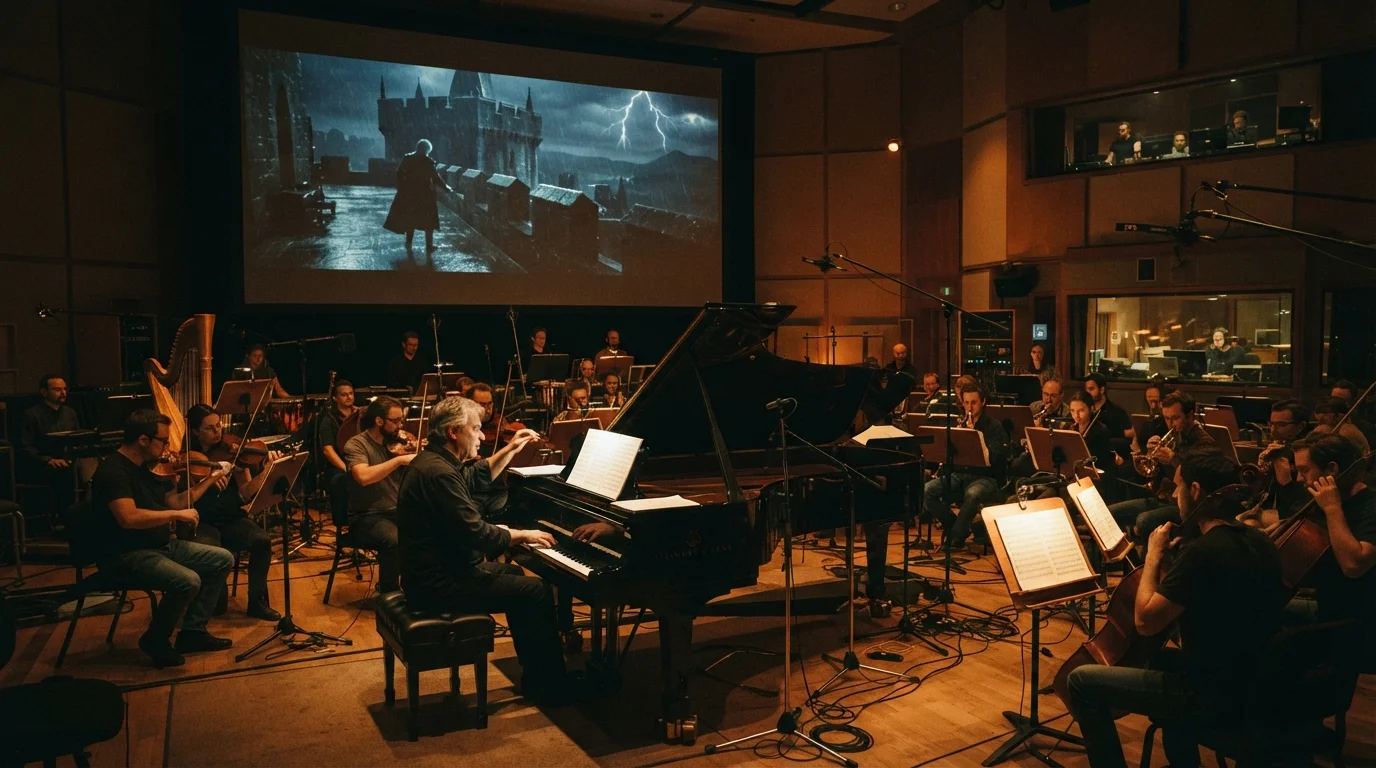
Scores are typically recorded by live orchestras, synthesizers, or hybrid ensembles, then mixed by music editors who sync cues to the film's final cut - a process called 'spotting and scoring.'
The Collaboration Begins Before the Camera Rolls
Most people assume composers get involved after a film is finished - that music is layered over a completed product. In reality, many directors bring a composer into conversations early, sometimes during pre-production, to establish what a film should sound like emotionally before a single frame is shot.
The director-composer relationship is one of the most creatively intimate in filmmaking. Directors often share reference tracks - pieces of music that capture a desired mood - and composers respond with themes, sketches, or demos. This back-and-forth shapes not just the score, but sometimes the pacing of the film itself. Editors will occasionally cut scenes to a composer's early themes, locking in a rhythm that then informs the final score.
Once a rough cut exists, the director and composer sit down for what's called a spotting session: a scene-by-scene review of the film to decide where music will appear, what emotion it should carry, and precisely when it should begin and end. That detail - the exact frame where a cue starts - can shift a scene's meaning entirely. You can also explore how sound design complements the score to create a film's full audio world.
How Composers Craft Emotion Through Music
A film composer's toolkit is more psychological than most audiences realize. Music influences emotion through several interconnected mechanisms:
- Tempo: Faster tempos accelerate perceived urgency; slow tempos deepen intimacy or dread.
- Key and harmony: Minor keys generally signal tension, grief, or threat. Major keys convey resolution or joy. Dissonance - notes that clash - creates unease even when nothing visually alarming is happening.
- Timbre: The texture of instruments matters enormously. Strings evoke warmth or tragedy; brass suggests power; high woodwinds can feel whimsical or anxious depending on context.
- Silence: Strategic absence of music - particularly after a musical buildup - is one of the most powerful tools a composer has.
These elements work on audiences whether they're conscious of it or not. Research in music psychology consistently shows that people's emotional responses to visuals shift dramatically based on accompanying music - a phenomenon sometimes called the congruence effect. The same scene edited with different music can register as a thriller, a romance, or a tragedy.
~40%
Of a film's runtime typically has scored music
Industry estimates suggest most feature films score roughly 30-50% of their total runtime, though this varies significantly by genre and directorial style.
2-3 min
Average length of a single score cue
Film music editors typically work with individual cues ranging from under a minute to several minutes, synced to the frame in the final mix.
High
Audience emotional response to music-matched scenes
Studies in music cognition consistently show that congruent music dramatically increases emotional intensity ratings for film scenes compared to mismatched or absent music.
Themes, Motifs, and Musical Storytelling
One of the most sophisticated tools in a film composer's craft is the leitmotif - a recurring musical theme tied to a specific character, place, or idea. When that theme returns, even subtly, it carries all the emotional weight the audience has already associated with it. It can signal a character's presence before they appear on screen, or foreshadow a moment the story hasn't reached yet.
This technique creates a kind of musical subtext running beneath the film's dialogue and visuals. Just as visual symbolism layers meaning into a scene, musical themes add narrative depth that many viewers absorb emotionally without consciously identifying it.
“The music tells you what to feel when the image alone isn't enough - and sometimes, it tells you what to feel even when you think the image is doing all the work.”
— A working Hollywood composer, paraphrased from industry discussions on film scoring craft, Film Composer, reflecting on the role of music in cinema
Composers also use source music - music that characters within the film can hear, like a song on a radio - versus underscore, which exists only for the audience. The interplay between these two types creates another dimension of storytelling that filmmakers exploit deliberately.
Why the Score Is Often the Last Thing You Notice - and the First Thing You Feel
Great film scores share something with great film editing: when they work, you don't notice them. The music feels inevitable, as if the scene couldn't exist any other way. That invisibility is the goal. A score that draws attention to itself risks pulling audiences out of the story - a costly mistake in a medium built on immersion.
What this means practically is that composers spend as much time restraining themselves as they do composing. Knowing when not to write music, or when to let a spare, minimal cue do the work of a full orchestra, is a mark of the craft's maturity.
The next time you watch a film, pay attention to the music before you feel its effect - notice what's playing when your pulse quickens, when your eyes tear up, or when a reveal lands harder than you expected. Chances are the score got there a few seconds before the image did. If you want to go deeper into how all these elements combine, reflective questions after watching can sharpen your appreciation of music's role in what you just experienced.