

Key Takeaways
- Directors shape performances, framing, and pacing on set, but don't always control the final edit.
- Final cut rights are a contractual matter and are frequently retained by studios rather than directors.
- The director collaborates closely with the cinematographer, production designer, and editor - not working in isolation.
- A director's power is greater on independent films, where budgets and studio oversight are typically lower.
- Producers and studios can override creative decisions, particularly when significant money is at stake.
Film Director
A film director is the creative lead responsible for guiding the artistic and dramatic vision of a movie. They work with actors, crew, and department heads to translate a screenplay into a finished visual story. While directors wield significant creative authority, their actual control varies depending on the production's structure, budget, and contract terms.
In industry terms, 'final cut' - the right to deliver the definitive edited version of a film - is a contractual privilege not automatically granted to every director, and is often retained by studios or producers.
What Directors Actually Do on Set
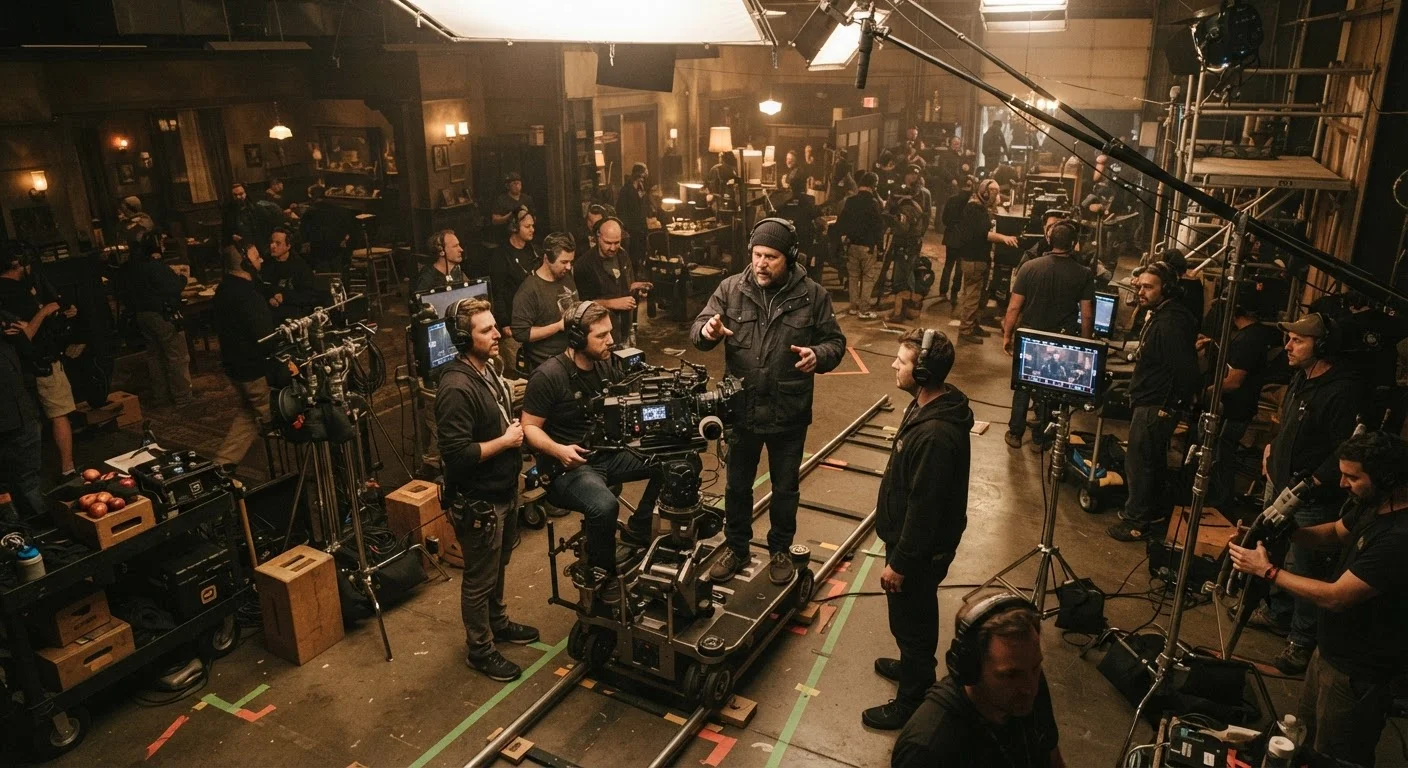
The director is the person you most often see depicted in behind-the-scenes footage - sitting behind a monitor, calling action, huddling with actors. But the job is less about issuing commands and more about making a near-constant stream of decisions across every creative department simultaneously.
On any given shooting day, a director is managing actor performance, approving camera angles in collaboration with the cinematographer, and making judgment calls on lighting, blocking, and pacing. They're the person every department head ultimately defers to on creative questions - but that deference doesn't mean unlimited authority. It means the director is the creative center of gravity around which the production orbits.
To understand the full picture of how visual storytelling decisions get made, it's worth reading about what cinematographers actually contribute - because the director of photography is a genuine creative partner, not just a technical operator following orders.
“Directing is not about having ideas. It's about having the idea that is right for this movie at this moment, and knowing when to listen to the people who know more than you do.”
— Sidney Lumet, Director of 12 Angry Men, Network, and Dog Day Afternoon; author of Making Movies
Where Director Control Has Real Limits
The biggest misconception about directors is that they control everything. In reality, several layers of authority sit above even the most celebrated filmmaker.
The edit: Unless a director has negotiated final cut rights, the studio can recut the film after the director delivers their version. Directors' cuts - alternate versions released years later - exist precisely because many original theatrical cuts were shaped by studio notes rather than the director's own vision.
Casting: Directors advocate strongly for their preferred cast, but studios often have approval rights over major roles. Stars with box-office value may be attached to a project before a director even joins.
Budget: Every creative choice exists within a financial envelope set by producers. A director may envision a sprawling location shoot; the producer may approve three days on a soundstage instead. Understanding that tension is central to understanding how films actually get made - and what producers are actually responsible for sheds light on why their role is so consequential.
~14%
Female directors among top-grossing Hollywood films
According to the Annenberg Inclusion Initiative's ongoing research, women remain significantly underrepresented in directing roles on the highest-grossing studio films.
Few
Directors who hold full final cut rights
Only a small number of directors - those with exceptional track records or significant negotiating leverage - routinely secure final cut in their studio contracts, according to reporting from trade publications like Variety and The Hollywood Reporter.
Indie vs. Studio: Two Very Different Versions of the Job
A director on a studio tentpole and a director on a $500,000 independent film are doing recognizably similar work - but with vastly different authority. Independent productions generally give directors wider creative latitude because there are fewer stakeholders with financial leverage over the outcome. The tradeoff is fewer resources and smaller audiences.
Studio directors, by contrast, may have tremendous on-set authority while ceding significant control in the editing room and marketing phase. The film's title, poster, and release strategy are typically studio decisions, not the director's.
This spectrum is one reason film schools spend considerable time on the business side of the industry - technical skill alone doesn't prepare a director for navigating the power structures of a real production. What film schools teach - and what they leave out is worth exploring for anyone curious about how directors are actually trained.
Watch Director Commentaries for Real Insight
Many Blu-ray and streaming releases include director commentaries or making-of documentaries that reveal exactly how much - and how little - control directors had. Listening to a director describe what they fought for and what they conceded gives a much richer picture of the filmmaking process than any interview.
The Collaborators Who Shape the Vision
Great directors are rarely solo auteurs. The finished film is almost always the product of deep collaboration with a core creative team: the cinematographer, the production designer, the editor, the composer, and the costume designer all contribute meaningfully to what ends up on screen.
The director sets the tone, makes the final calls, and takes the public credit - or blame. But a director who ignores the expertise of their collaborators generally produces weaker work than one who channels it. The best-reviewed films in any given year are almost always collaborative achievements dressed up as a single person's vision.
Understanding this collaborative reality makes it easier to appreciate what you're watching - and why a film can feel coherent even when different departments are pulling in different directions. The director's job, at its core, is to hold all of that together.