

Key Takeaways
- Film schools build strong technical foundations in cinematography, editing, sound, and screenwriting.
- Critical film theory and collaborative production experience are core strengths of formal programs.
- Networking value varies widely depending on the school and a student's own effort.
- Industry relationships, business savvy, and on-set politics are rarely covered in depth.
- Self-taught filmmakers and film school graduates both have significant career success stories.
Structured technical training across core filmmaking disciplines
Students gain hands-on experience with cameras, lighting, editing software, and sound - giving them a versatile foundation before entering professional environments.
Deep grounding in film history and critical theory
Analyzing films from the silent era to contemporary arthouse cinema builds a visual literacy that shapes a filmmaker's creative instincts throughout their career.
Collaborative production experience under real constraints
Working on short films with peers under deadlines and limited budgets mimics real production pressures in ways that solo self-study cannot replicate.
Access to professional equipment and facilities
Many programs provide students with camera packages, sound stages, and editing suites that would be prohibitively expensive to access independently.
Cohort relationships that can become career connections
At well-regarded programs especially, classmates often go on to work in the industry together - creating professional networks that pay dividends for years.
Industry business knowledge is rarely covered in depth
Film financing, distribution deals, and rights management are central to professional filmmaking but largely absent from most academic curricula, leaving graduates underprepared for commercial realities.
On-set hierarchy and workplace politics aren't taught
Professional film sets operate under strict departmental hierarchies; most graduates learn on-set etiquette and chain-of-command dynamics only after entering the workforce.
High cost relative to uncertain industry outcomes
Tuition at prominent film programs can run into six figures, and the industry remains highly competitive - making the return on investment genuinely unpredictable for most students.
Networking value depends heavily on the institution
While elite schools offer meaningful industry access, many programs provide networking opportunities that are no richer than those a motivated self-taught filmmaker could build independently.
Academic production rarely mirrors professional production scale
Student films are valuable learning tools, but the logistics, union rules, and interpersonal dynamics of a real feature or television production are a significant step beyond what classrooms can simulate.
Our Verdict
Film school provides genuine value for students who want structured craft training, exposure to film history, and a collaborative creative environment. However, it leaves notable gaps in industry knowledge, business skills, and real-world production dynamics that graduates often have to fill through experience alone.
Best for aspiring filmmakers who thrive in structured learning environments and want deep technical and theoretical grounding before entering the industry.
What Film Schools Actually Teach
At their core, film programs are designed to demystify the craft - and they do that well. Students typically move through courses covering cinematography, sound design, editing, screenwriting, and directing. The goal is to give emerging filmmakers fluency across every department so they understand how collaborative filmmaking actually works.
Formal programs also invest heavily in film history and theory. Students screen and analyze hundreds of films, learning to read visual language the way a literature student reads prose. This kind of critical framework shapes how graduates approach storytelling long after graduation - whether they're writing a feature script or cutting a documentary. For a closer look at how visual choices translate to emotional impact, see our guide on the cinematographer's role.
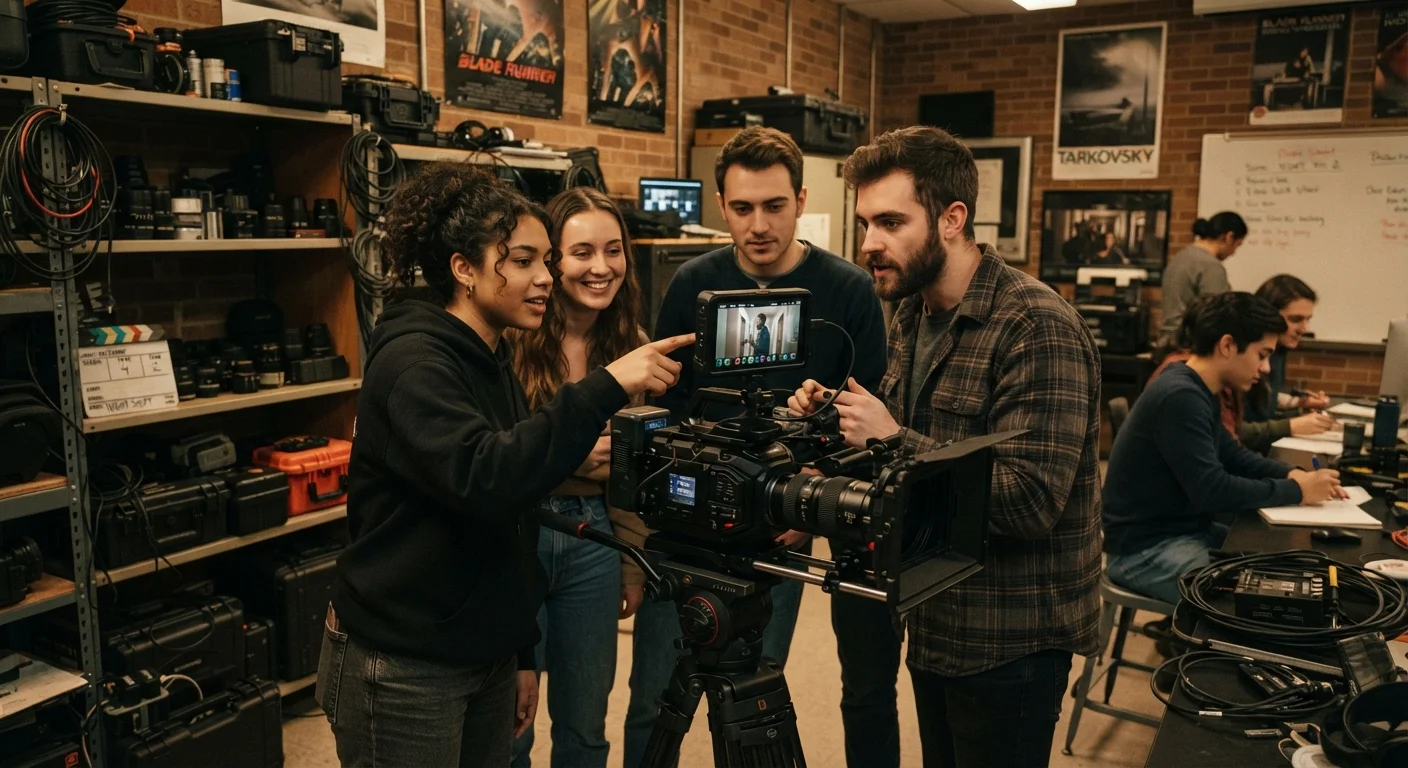
Perhaps most underrated is the collaborative practice film school provides. Making short films with classmates - under real deadlines, with limited budgets - simulates the pressures of production in ways that solo online learning rarely can. That friction is educational in itself.
Structured technical training across core filmmaking disciplines
Students gain hands-on experience with cameras, lighting, editing software, and sound - giving them a versatile foundation before entering professional environments.
Deep grounding in film history and critical theory
Analyzing films from the silent era to contemporary arthouse cinema builds a visual literacy that shapes a filmmaker's creative instincts throughout their career.
Collaborative production experience under real constraints
Working on short films with peers under deadlines and limited budgets mimics real production pressures in ways that solo self-study cannot replicate.
Access to professional equipment and facilities
Many programs provide students with camera packages, sound stages, and editing suites that would be prohibitively expensive to access independently.
Cohort relationships that can become career connections
At well-regarded programs especially, classmates often go on to work in the industry together - creating professional networks that pay dividends for years.
The Real Gaps in a Film Education
What film school often doesn't teach is how the industry actually works once you leave campus. The business side of filmmaking - financing, distribution, talent representation, and deal structures - is largely absent from most curricula. Understanding how a film gets greenlit, sold, and released is a different education entirely, and one that formal programs tend to gloss over. Our piece on how the Hollywood studio system shapes what you watch illustrates just how complex that ecosystem is.
On-set hierarchy and workplace culture are another blind spot. Film school sets are collaborative and relatively flat in structure. Real productions have strict chains of command - knowing how to navigate them professionally is something most graduates learn the hard way. Similarly, what a director actually controls on set is often very different from what students are taught in academic settings.
Networking is frequently cited as a major benefit of film school, but it's inconsistent. At elite programs, cohort connections can open real doors. At others, networking is largely what students make of it - no different from attending industry events independently.
Industry business knowledge is rarely covered in depth
Film financing, distribution deals, and rights management are central to professional filmmaking but largely absent from most academic curricula, leaving graduates underprepared for commercial realities.
On-set hierarchy and workplace politics aren't taught
Professional film sets operate under strict departmental hierarchies; most graduates learn on-set etiquette and chain-of-command dynamics only after entering the workforce.
High cost relative to uncertain industry outcomes
Tuition at prominent film programs can run into six figures, and the industry remains highly competitive - making the return on investment genuinely unpredictable for most students.
Networking value depends heavily on the institution
While elite schools offer meaningful industry access, many programs provide networking opportunities that are no richer than those a motivated self-taught filmmaker could build independently.
Academic production rarely mirrors professional production scale
Student films are valuable learning tools, but the logistics, union rules, and interpersonal dynamics of a real feature or television production are a significant step beyond what classrooms can simulate.
How Film School Shapes the Way Graduates See Cinema
One lasting benefit that film school provides - sometimes underestimated - is the ability to engage with film analytically. Graduates leave with a vocabulary for discussing composition, pacing, sound, and structure that enriches both their work and their viewing experience. This critical lens is something viewers can develop on their own, too. Our collection of questions to ask after watching a film is a good starting point for anyone building that habit.
Understanding editing - how cuts build tension, establish rhythm, or guide emotion - is another skill film programs sharpen through hands-on practice. It's a craft that rewards close study; our breakdown of what to look for in a film's editing explains why it's often called cinema's invisible art.
Self-Taught vs. Formally Trained Filmmakers
Many celebrated filmmakers - including those who have received major industry recognition - never attended formal film school. Conversely, some of the most technically accomplished directors credit their formal training as foundational. Neither path guarantees success, and both have produced remarkable work. What matters most is sustained practice, critical engagement with cinema, and the ability to collaborate effectively with other creative professionals.
Ultimately, film school is one path into the industry - not the only one. The question isn't whether it's worth attending in the abstract, but whether the specific program, cost, and opportunity align with an individual's goals and circumstances.