

Key Takeaways
- Bedroom pop emerged from home recordings made with consumer-grade equipment, not professional studios.
- The genre's rise coincides directly with affordable digital audio workstations and social media distribution.
- Artists like Clairo and Rex Orange County gained millions of listeners before signing with major labels.
- Lo-fi sound quality, once a limitation, became a defining artistic choice and emotional signal.
- Streaming platforms and TikTok accelerated bedroom pop's crossover into mainstream pop culture.
- The genre blurs the line between amateur and professional, reshaping how the music industry discovers talent.
Bedroom Pop
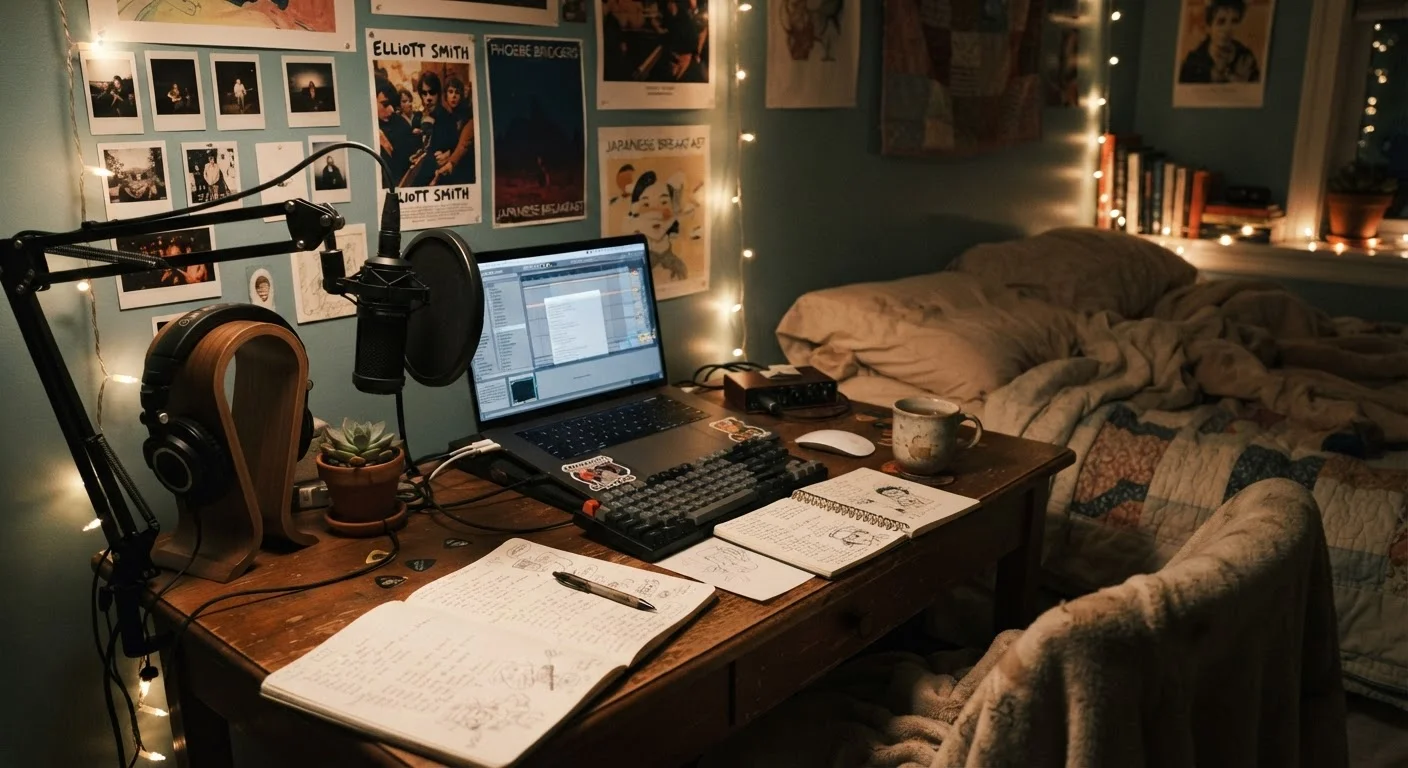
Bedroom pop is a genre of indie music produced independently by artists recording at home, often using just a laptop, a microphone, and basic software. The sound is typically intimate and lo-fi - meaning it has a raw, unpolished quality that feels personal and close. Artists in this space write, record, mix, and release music entirely on their own terms, without the backing of a traditional record label or professional studio.
The term 'lo-fi' refers to low-fidelity audio, characterized by audible tape hiss, room noise, or compressed sound - qualities once considered flaws that bedroom pop artists have embraced as an aesthetic signature.
The Sound That Started in a Spare Room
Before bedroom pop had a name, teenagers were already making it. Armed with little more than a laptop, a cheap USB microphone, and a free download of GarageBand or Audacity, a wave of young musicians began recording songs in their childhood rooms - and quietly posting them online. The result was music that felt startlingly intimate: vocals that sounded like a whisper across a pillow, guitar strums with just enough background hiss to feel real.
What separated this from earlier home recording was distribution. In the pre-streaming era, a home recording might reach a few local fans at best. By the mid-2010s, the same track could land on Spotify, SoundCloud, and YouTube simultaneously - and reach listeners in another country by morning. That shift is part of a broader story explored in our piece on how streaming reshaped music releases.
~$200
Estimated cost of a basic home recording setup
Industry observers note that a USB microphone, free DAW software, and basic acoustic treatment can be assembled for under $200, lowering the barrier to entry dramatically compared to professional studio time.
Top 10
Chart positions reached by self-recorded artists
Multiple bedroom pop artists - including Clairo and Rex Orange County - have charted in major markets after building audiences entirely through self-released online recordings.
60%+
Of new music on streaming platforms is independent
According to industry analyses cited by music trade publications, the majority of tracks uploaded to major streaming platforms come from independent or self-releasing artists, reflecting the broader DIY recording trend.
From Curiosity to Cultural Force
The tipping point for bedroom pop as a recognized genre came in the mid-2010s, when a handful of artists demonstrated that homemade recordings could generate real commercial momentum. Clairo's track 'Pretty Girl,' recorded on a webcam in her bedroom and uploaded to YouTube, amassed millions of views without any label machinery behind it. Rex Orange County self-released his debut album from his school bedroom and built a global fanbase before his twentieth birthday.
These weren't flukes - they were proof of a system change. Like punk, grunge, and trap before it, bedroom pop followed the classic underground-to-mainstream arc, just at internet speed. Labels began paying attention, and signing deals followed - though many artists negotiated terms that preserved creative control, reflecting the genre's fiercely independent ethos.
“The internet didn't just change how music is distributed - it changed who gets to make it in the first place. The kid in the suburb with a laptop is now a legitimate competitor to the artist with a major-label advance.”
— Cherie Hu, Music technology journalist and founder of Water & Music
Why the Lo-Fi Aesthetic Works So Well
There's a psychological reason bedroom pop's imperfect sound connects so deeply: it signals vulnerability. Professional studio production, with its polished compression and pristine reverb, can feel like a performance. A voice recorded in a small room, with audible breath and slight room noise, feels like a confession. Listeners, especially younger ones, respond to that sense of unfiltered honesty.
The genre also found a natural home on TikTok, where soft, mood-driven audio became the backbone of millions of videos. A dreamy chord progression doesn't need a chorus hook to go viral - it just needs to feel right for a moment. That's a dynamic unpacked further in our look at how TikTok is rewiring the structure of popular music. Bedroom pop, almost accidentally, was perfectly engineered for this new listening environment.
Want to Explore the Genre?
Streaming platforms like Spotify and Apple Music have dedicated bedroom pop playlists that are regularly updated with both established names and emerging artists. Searching 'lo-fi indie' or 'bedroom pop' in your platform's playlist search is a quick way to sample the genre's range - from polished crossover hits to raw, recently uploaded recordings.
What Bedroom Pop Changed About the Music Industry
The genre's rise challenged one of the music industry's oldest assumptions: that professional production was the price of entry. Bedroom pop proved that emotional resonance could outperform technical perfection. It also accelerated a broader genre-blending moment - bedroom pop artists routinely incorporate elements of indie folk, R&B, synth-pop, and even hip-hop, contributing to the genre collisions documented in our piece on where country, pop, and hip-hop collide.
For the industry, the implications run deep. A&R scouts now monitor SoundCloud plays and TikTok comment sections the same way they once canvassed local venues. The bedroom has become a legitimate launch pad - and the tools to use it have never been more accessible. Whether that democratization produces lasting artistic movements or a flood of short-lived viral moments remains one of music's most interesting open questions. What's certain is that bedroom pop has permanently widened the door.