

Key Takeaways
- Purchase tickets from official or clearly authorized sources to reduce risk of fraud.
- Most venues publish detailed bag and prohibited-item policies on their websites before the event.
- Earplugs are strongly recommended - high sound levels at concerts can cause hearing fatigue.
- Arriving early gives you time to find your spot, locate exits, and grab essentials without rushing.
- Understanding concert structure helps set expectations for openers, headliners, and encore patterns.
Start here
Getting Your Ticket: What First-Timers Should Know
Next
What to Bring (and Leave Behind)
Then
Inside the Venue: Reading the Room
At showtime
During the Show: Etiquette and Enjoyment
Wrap up
After the Show: Making It Last
Getting Your Ticket: What First-Timers Should Know
Before any of the fun begins, you need a valid ticket - and that step alone can feel unexpectedly complicated. Major concert tickets are sold through official channels tied directly to the venue or artist tour, and through secondary marketplaces where individual sellers resell their seats. Prices on the secondary market can swing dramatically from face value, so it pays to check official sources first.
Service fees are standard and can add a meaningful percentage to the listed price. Factor those in when budgeting. For guidance on navigating unfamiliar purchase processes online, the online shopping basics guide covers account setup, payment methods, and checkout fundamentals useful for any ticketing platform.
General Admission (GA)
A ticket type that grants entry to a standing-room area without a specific assigned seat. Attendees choose their own position within the designated space.
Headliner
The main act of a concert, typically the most prominent artist on the bill who performs last and for the longest set.
Opening Act
An artist or band that performs before the headliner. Opening acts usually have shorter sets and are often less established performers.
Encore
A tradition where a performer leaves the stage after the apparent end of their set, then returns to perform additional songs in response to sustained audience applause.
Secondary Market
Resale platforms where ticket holders sell their tickets to other buyers, often at prices that differ - sometimes significantly - from the original face value.
Pit
The area directly in front of the stage in a GA venue, often the most densely crowded and highest-energy zone during a performance.
Once purchased, save your ticket confirmation in multiple places - a screenshots folder, email, and the ticketing app itself. Most venues accept mobile tickets, but having a backup never hurts.
What to Bring (and Leave Behind)
Every venue publishes a clear bag policy, typically found on its website under a section like "Know Before You Go." Most large arenas have adopted a clear-bag rule: bags must be transparent and no larger than a specific size, often 12x6x12 inches. Review this before you pack.
Essential items to bring include your ticket (phone charged or printed), a valid ID if you plan to purchase alcohol, earplugs, and a small amount of cash for merchandise or food vendors who may not accept cards. Comfortable footwear is especially important for general admission shows where you'll be standing for two or more hours.
High-Fidelity Earplugs Are Worth It
Standard foam earplugs muffle sound unevenly, making music sound dull. Musician's earplugs - available at many music stores and pharmacies - reduce overall volume while preserving sound clarity. They make long shows more comfortable and protect your hearing without compromising the listening experience.
Leave large backpacks, outside food and beverages, professional cameras with detachable lenses, and anything on the venue's prohibited list at home. Getting turned away at the gate is a frustrating experience that's entirely avoidable with a five-minute policy check ahead of time.
Inside the Venue: Reading the Room
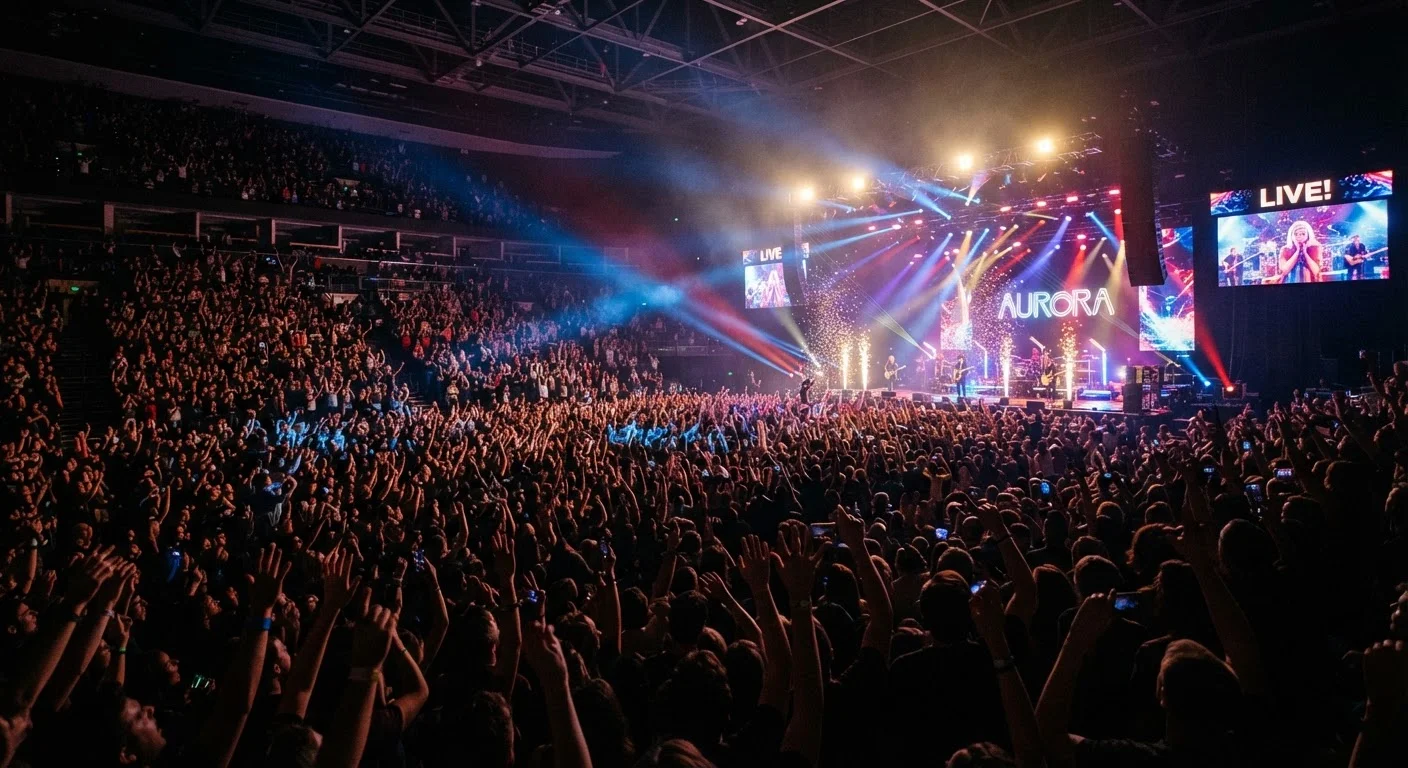
Walking into a large concert venue for the first time is disorienting in the best possible way - the scale, the sound check tones, the smell of food vendors and the growing crowd. Give yourself a few minutes to get oriented. Locate the restrooms, exits, and your section or designated standing area before the lights go down.
Concert venues generally have two broad configurations: seated (arenas, theaters, amphitheaters with reserved chairs) and general admission (GA floor areas where attendees stand and move freely). GA floors tend to be louder, more energetic, and physically demanding. Seated sections offer more comfort and predictability.
Opening acts - the artists who perform before the headliner - are worth watching. They're often emerging names, and discovering a new favorite act is one of the quiet pleasures of live music. For a deeper look at how a show's running order is deliberately crafted, the guide to reading a setlist breaks down how artists structure their performances.
During the Show: Etiquette and Enjoyment
Concerts are a shared social space, and a few unspoken norms help everyone have a better time. Avoid holding your phone up continuously to record - it blocks sightlines for people behind you and pulls you out of the present moment. Capture a clip or two, then put the phone away and actually be there.
Dense Crowds Can Be Overwhelming
Crowd compression near the front of GA floors can become intense during peak moments. Know where the nearest exit corridors are before the show starts, and don't hesitate to move to a less crowded area if you feel unsafe or overheated. Venue staff are trained to assist, and your safety always takes priority over your spot in the crowd.
In GA sections, the area directly in front of the stage - sometimes called the pit - can get extremely compressed as the show progresses. If you feel uncomfortable or unsafe in a dense crowd, move toward the outer edges. Venues have security staff and medical personnel for exactly these situations, and there is no shame in stepping back to a more comfortable position.
Singing along, dancing, and cheering are part of the experience - that's the whole point. Encores, where an artist leaves the stage briefly and returns to perform additional songs, are a long-standing concert tradition. When the lights stay dim and the crowd keeps clapping and cheering after an apparent set ending, an encore is likely coming. If you're curious how this and other concert conventions developed across American music culture, the festival experience breakdown offers useful parallel context.
After the Show: Making It Last
The show ends, the house lights come up, and thousands of people move toward the exits simultaneously. Patience is the single most useful quality here. Exiting a large venue efficiently requires waiting for crowd flow to thin - rushing toward the exits in the first wave rarely saves meaningful time and adds stress.
If you drove, note that parking lots near major venues can take 30 to 60 minutes to clear after a show. Some experienced concertgoers use rideshare pickup zones, public transit, or park further away and walk to sidestep the post-show traffic. For general guidance on navigating driving situations, the driving hub covers useful fundamentals.
After you're home, the post-concert reflection is real - many fans describe a kind of heightened emotional state in the hours after a show. Channel it: make a playlist of the night's setlist, look up the opening act, or simply let the experience settle. Live music has a way of making listeners curious to go deeper. If that curiosity leads you toward new genres, the guide to getting into jazz is a great example of how to start exploring unfamiliar musical territory with confidence.