

Key Takeaways
- Jazz originated in early 20th-century New Orleans as a fusion of African American musical traditions.
- Improvisation is the heartbeat of jazz - musicians create spontaneously within a shared structure.
- Major subgenres include swing, bebop, cool jazz, hard bop, and fusion, each with a distinct personality.
- Starting with accessible artists like Miles Davis or Dave Brubeck makes the genre immediately enjoyable.
- Live jazz performances are among the best ways to deepen your appreciation quickly.
Start here
Why Jazz Feels Intimidating (And Why It Shouldn't)
Build your foundation
The Core Elements That Define Jazz
Explore the landscape
A Map of the Main Subgenres
Put it on
Where to Begin Listening
Take the next step
Going Deeper: Live Jazz and Beyond
Why Jazz Feels Intimidating (And Why It Shouldn't)
For many first-time listeners, jazz carries a reputation for being difficult - the kind of music played in museums or discussed with a glass of wine and a furrowed brow. It can sound unpredictable, harmonically complex, and almost deliberately hard to follow. But here's the thing: jazz wasn't born in concert halls. It grew up in the streets and dance halls of New Orleans in the early 1900s, shaped by African American communities blending blues, ragtime, gospel, and African rhythmic traditions into something entirely new.
Jazz has always been music of the moment, made for real people. Letting go of the idea that you need credentials to enjoy it is the single most important first step. You don't need to identify every chord change to feel the pull of a saxophone solo - you just need to listen.
Your Best First Move
Don't try to understand jazz all at once - just pick one track and listen to it three times in a row. Pay attention to one instrument each time: first the melody, then the rhythm section, then the soloist. This simple exercise trains your ear faster than any reading can.
The Core Elements That Define Jazz
A few building blocks help new listeners orient themselves when jazz initially sounds like organized chaos.
Improvisation
The practice of composing music spontaneously during a live performance, rather than reading from a written score. It's the defining feature of jazz.
Syncopation
A rhythmic technique where the emphasis falls on unexpected beats, giving jazz its characteristic bounce and forward momentum.
Jazz Standard
A song - usually from the Great American Songbook - that jazz musicians commonly perform and use as a framework for improvisation. Think of it as a shared musical vocabulary.
Chord Changes
The sequence of chords (groups of notes played together) that form the harmonic backbone of a jazz song. Improvised solos respond to and navigate these changes.
Modal Jazz
A style that organizes improvisation around musical modes (scale patterns) rather than rapid chord changes, producing a more open and meditative sound.
Call and Response
A musical conversation pattern where one instrument or voice 'calls' with a phrase and another 'responds.' It has deep roots in African and African American musical traditions.
Understanding these elements won't make you an expert overnight, but they give you anchors. When a pianist suddenly breaks from the melody and starts playing something that sounds like a conversation with the drummer, that's improvisation at work. When the whole band swings with a buoyant, syncopated groove, that's the rhythm doing exactly what it's supposed to do.
If you want to go further into how music structures actually function, our music theory guide for beginners explains scales, chords, and rhythm in plain, jargon-free terms.
A Map of the Main Subgenres
Jazz isn't one sound - it's a family of styles that evolved across more than a century. Here's a quick orientation:
- Dixieland / Traditional Jazz (1910s-1920s): The original New Orleans style, featuring collective improvisation, brass instruments, and an upbeat, celebratory feel.
- Swing (1930s-1940s): Big bands, dancing, and melodic accessibility. Think of it as jazz at its most socially infectious - music America literally danced to.
- Bebop (1940s-1950s): A dramatic shift toward complexity and speed. Small groups, virtuosic playing, and harmonies designed more for listening than dancing.
- Cool Jazz (1950s): A reaction to bebop's intensity - relaxed tempos, understated emotion, and a West Coast influence that made jazz more contemplative.
- Hard Bop (1950s-1960s): Brought soul, gospel, and blues back into the bebop framework, grounding the music in Black American church and community traditions.
- Fusion (1970s onward): Jazz meets rock and funk, powered by electric instruments and studio experimentation. Polarizing among purists, thrilling to many new listeners.
- Contemporary Jazz: Today's artists draw from all of the above - plus hip-hop, electronic music, and global sounds - making jazz one of the most alive and evolving genres in modern music.
Subgenre Boundaries Are Flexible
Jazz historians and fans sometimes disagree on exactly where one subgenre ends and another begins. Many recordings blend elements of multiple styles, and artists often resist being categorized at all. Think of these labels as signposts, not strict walls - they help you navigate, not confine what you can explore.
Where to Begin Listening
The most reliable advice for new jazz listeners: start with one artist or album and stay with it long enough for it to open up. Jazz rewards repeat listening in a way that pop music rarely does.
A few genuinely accessible starting points:
- Miles Davis - Kind of Blue (1959): Consistently cited as one of the best-selling jazz albums of all time. Its modal, spacious style feels warm and unhurried - an ideal first listen.
- Dave Brubeck Quartet - Time Out (1959): Famous for its unusual time signatures, but somehow completely approachable. The track Take Five is one of the most recognized jazz pieces in American culture.
- Chet Baker - Chet Baker Sings (1954): Jazz vocals with a melancholy, intimate quality that translates instantly even for listeners with no jazz background.
- John Coltrane - A Love Supreme (1965): More intense, but deeply rewarding. Save this for once you've found your footing.
Most major streaming platforms offer curated jazz playlists organized by era, mood, and subgenre - a low-commitment way to explore before committing to a full album.
Going Deeper: Live Jazz and Beyond
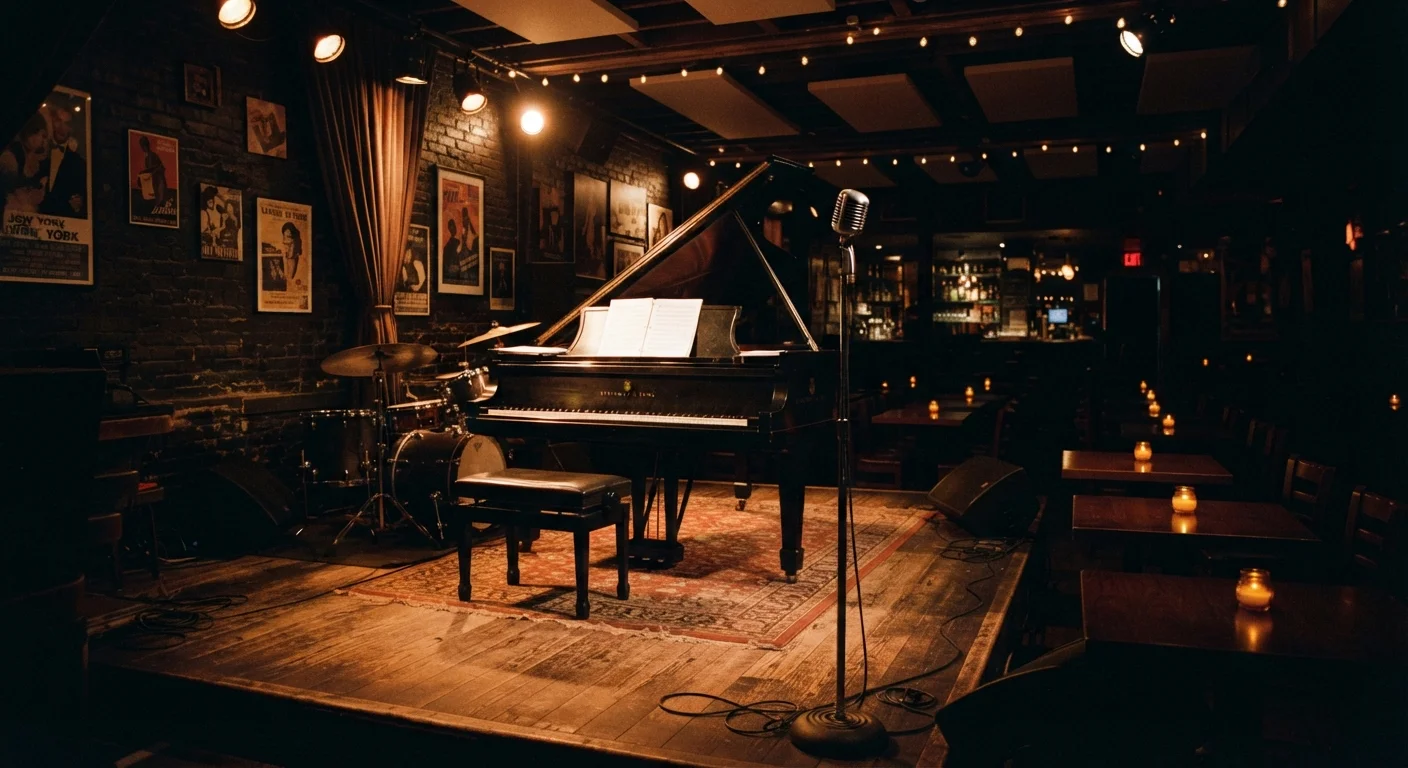
Recordings capture a performance but can't fully replicate the energy of watching musicians improvise together in real time. A live jazz set - even a small club performance - can shift your relationship with the genre instantly. You see the eye contact between players, the physical conversation happening on the bandstand, and the spontaneity that makes each show unrepeatable.
Many cities have dedicated jazz venues, and university music programs regularly host free or low-cost concerts. Our guide to attending your first concert walks through practical tips for making the most of a live music experience.
NPR Music's Jazz Playlists
NPR Music maintains a well-curated library of jazz playlists and features organized by era, mood, and artist. A reliable starting point for structured discovery.
Jazz at Lincoln Center - Learning Resources
Jazz at Lincoln Center offers free educational content including videos, podcasts, and listening guides designed to help new audiences connect with the music.
AllMusic Jazz Guide
AllMusic provides detailed artist biographies, album reviews, and genre breakdowns that help listeners understand where any artist or album fits in the broader jazz story.
Jazz is one of America's great art forms - a music that absorbed everything around it and gave back something entirely its own. You don't need to master it. You just need to let it in.