

Key Takeaways
- Music festivals offer rare opportunities to discover new artists and experience live music communally.
- Costs - including tickets, travel, lodging, and food - can add up significantly beyond the ticket price.
- Physical comfort is often sacrificed: heat, crowds, and limited facilities are standard realities.
- The curated lineup experience rarely matches moment-for-moment what you imagined beforehand.
- For many attendees, the social and cultural reward justifies the inconvenience and expense.
Unmatched musical discovery across genres and stages
Festivals concentrate dozens of acts in one place, making spontaneous discovery of new artists more likely than in almost any other setting. Many festivalgoers credit these events with reshaping their entire musical taste.
Shared communal energy unlike any single concert
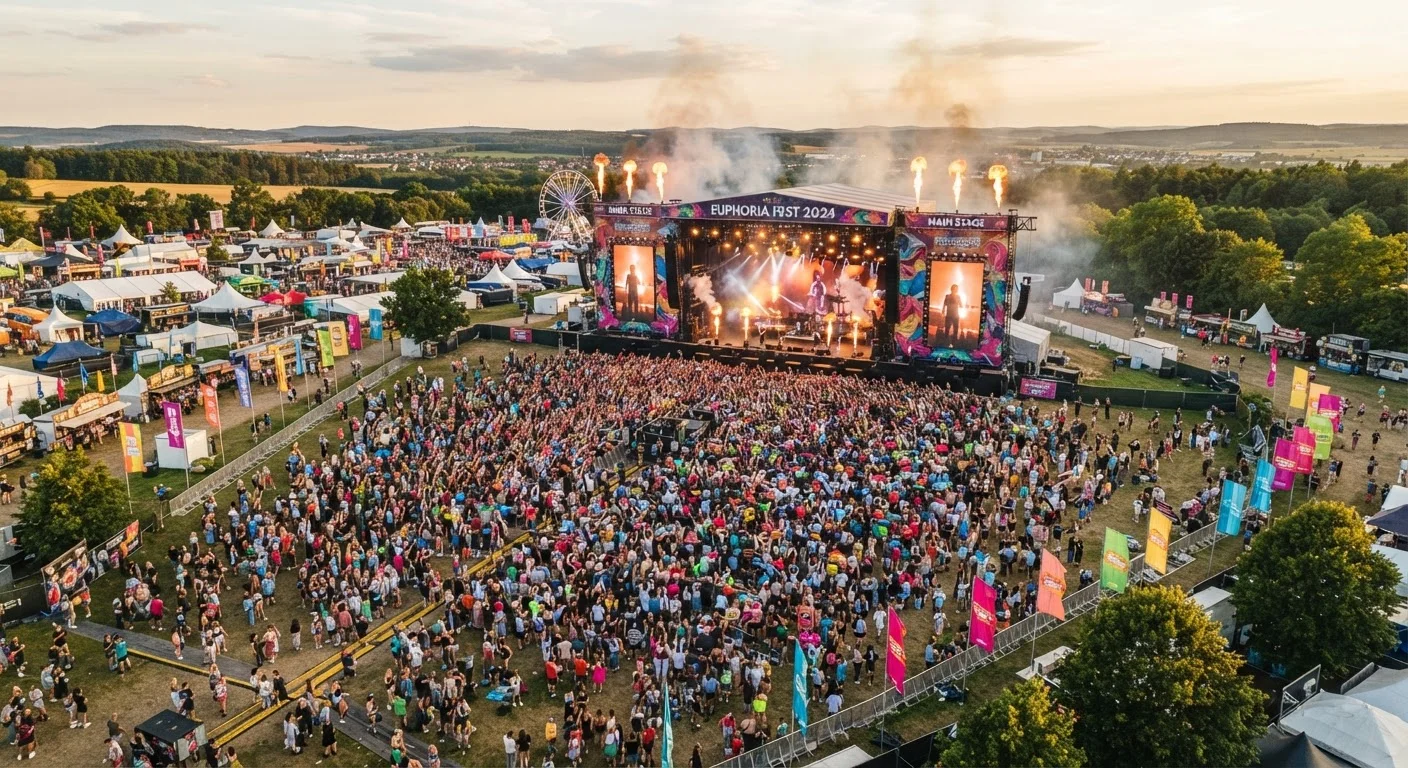
The collective atmosphere of a festival - thousands of people unified by a love of music - creates a social intensity that amplifies emotional responses to performances and builds a sense of belonging.
Cultural immersion beyond the music itself
Major festivals incorporate art installations, food culture, fashion, and community rituals that make them feel like complete cultural experiences rather than just concerts.
Flexibility to shape your own schedule
Unlike seated concerts with fixed programs, festival attendees curate their own experience, hopping between stages and discovering acts they hadn't planned to see.
A concentrated social event with broad appeal
Festivals often serve as annual gathering points for friend groups, offering a shared reason to travel, reconnect, and create lasting memories outside everyday routines.
Total costs far exceed the ticket price
Between travel, lodging, food, and incidentals, a weekend festival can become a significant financial commitment. Budgeting only for the ticket is a common and costly oversight.
Physical conditions are routinely demanding
Heat, dust, mud, standing for hours, and limited sleep are standard features of outdoor festival life. Physical fatigue can diminish the experience significantly, especially by day two or three.
Scheduling conflicts mean missing artists you came to see
Multi-stage lineups almost always produce clashes between acts you want to see simultaneously. Compromises are unavoidable, and some fans find this genuinely frustrating.
Crowds and infrastructure create constant friction
Long lines for food, restrooms, and water - combined with cell service outages in large crowds - add logistical stress that can undercut the enjoyment of even the best sets.
Sound and sightlines are rarely ideal
Open-air stages with massive crowds mean many attendees experience headliners from significant distances, with imperfect sound and obstructed views that no seat-map can fully prepare you for.
Our Verdict
Music festivals deliver something genuinely hard to replicate: the feeling of being part of a shared cultural moment, surrounded by music and people who care about it. But that experience comes packaged with real costs, physical demands, and logistical challenges that can catch first-timers off guard. Going in with realistic expectations makes a meaningful difference.
Best for music fans who prioritize live discovery, communal energy, and cultural immersion over comfort and convenience.
What Festivals Actually Promise - and Deliver
American music festivals have become cultural institutions. From Coachella in the California desert to Bonnaroo's sprawling Tennessee fields, these events draw hundreds of thousands of attendees annually, promising something beyond a standard concert: community, discovery, and the feeling of being part of something bigger than any single performance.
The promise isn't entirely marketing fiction. Festivals genuinely do create conditions for musical discovery that are hard to engineer elsewhere. Stumbling from one stage to another, you might catch an emerging artist between two headliner sets - and walk away having found your new favorite act. That kind of serendipity is baked into the festival format in a way that a single-artist concert simply can't replicate. For a deeper look at how these events are structured, see our full guide to how American music festivals work.
But the gap between the Instagram version of a festival and the lived experience can be significant. Understanding both sides makes for smarter decisions - and better weekends.
Unmatched musical discovery across genres and stages
Festivals concentrate dozens of acts in one place, making spontaneous discovery of new artists more likely than in almost any other setting. Many festivalgoers credit these events with reshaping their entire musical taste.
Shared communal energy unlike any single concert
The collective atmosphere of a festival - thousands of people unified by a love of music - creates a social intensity that amplifies emotional responses to performances and builds a sense of belonging.
Cultural immersion beyond the music itself
Major festivals incorporate art installations, food culture, fashion, and community rituals that make them feel like complete cultural experiences rather than just concerts.
Flexibility to shape your own schedule
Unlike seated concerts with fixed programs, festival attendees curate their own experience, hopping between stages and discovering acts they hadn't planned to see.
A concentrated social event with broad appeal
Festivals often serve as annual gathering points for friend groups, offering a shared reason to travel, reconnect, and create lasting memories outside everyday routines.
The Real Costs: More Than the Ticket Price
Ticket prices for major US festivals routinely run between $300 and $600 for a multi-day general admission pass - and that's before you've accounted for any of the actual trip. Camping gear, travel, parking or shuttle fees, hotel stays for those opting out of on-site camping, food and drink inside the grounds, and merchandise all stack up fast. Industry observers have noted that total festival spending per attendee often doubles or triples the face value of the ticket itself.
$1,400+
Average total spend per US festival attendee
Industry research has suggested that when travel, lodging, food, and merchandise are included, total per-person festival spending regularly exceeds the face value of the ticket by a substantial margin.
32M+
Americans attending music festivals annually
Pre-pandemic figures from the live events industry indicated that tens of millions of US consumers attend at least one music festival per year, reflecting the format's broad cultural reach.
Food and beverage costs inside festival grounds are another consistent frustration. Vendor pricing at large events is almost universally elevated, and the lines - especially during peak set times - can eat into the very experience you paid to have. Planning ahead, including understanding what outside food or drinks are permitted, can dramatically change the financial reality of a festival weekend. First-time concert-goers will find similar dynamics at smaller venues, but festivals amplify them considerably.
Total costs far exceed the ticket price
Between travel, lodging, food, and incidentals, a weekend festival can become a significant financial commitment. Budgeting only for the ticket is a common and costly oversight.
Physical conditions are routinely demanding
Heat, dust, mud, standing for hours, and limited sleep are standard features of outdoor festival life. Physical fatigue can diminish the experience significantly, especially by day two or three.
Scheduling conflicts mean missing artists you came to see
Multi-stage lineups almost always produce clashes between acts you want to see simultaneously. Compromises are unavoidable, and some fans find this genuinely frustrating.
Crowds and infrastructure create constant friction
Long lines for food, restrooms, and water - combined with cell service outages in large crowds - add logistical stress that can undercut the enjoyment of even the best sets.
Sound and sightlines are rarely ideal
Open-air stages with massive crowds mean many attendees experience headliners from significant distances, with imperfect sound and obstructed views that no seat-map can fully prepare you for.
The Communal Magic - and Its Limits
The social dimension of festivals is genuinely distinct. There's something compelling about standing in a crowd of tens of thousands of people who all chose to be in the same field, for the same music, at the same time. That shared intentionality creates a kind of ambient goodwill that regular concert venues rarely match. Strangers share sunscreen, trade set recommendations, and bond over the chaos of finding each other in a crowd with no cell signal.
But communal experience has a ceiling. Large festivals can feel isolating in their own way - when a crowd is massive enough, intimacy disappears. Sound bleed between stages, the crush of bodies near the front, and the sheer logistical effort of moving between performances can make a festival feel more like a marathon than a celebration. Festival culture and club culture scratch very different itches, and knowing which experience you're actually after matters before you commit to a weekend in a field.
Festivals Vary Enormously in Scale
The trade-offs described here are most pronounced at large commercial festivals with 50,000-plus attendees. Smaller regional or genre-specific festivals often offer a meaningfully different experience - more intimate crowds, shorter lines, and stronger artist-audience connection. If the downsides of mega-festivals feel prohibitive, a smaller event may deliver the cultural experience without as many friction points.
Making the Call: Is a Festival Right for You?
The honest answer is that festivals are genuinely transformative for some people and genuinely miserable for others - and the difference often comes down to temperament and preparation rather than the event itself. If crowded spaces, sensory overload, unpredictable weather, and physical fatigue sound draining rather than energizing, a festival's social upside may not compensate.
For those who do attend, managing expectations is the most reliable path to a good time. Lineups always look better on paper than in practice - scheduling conflicts are inevitable, and not every headliner performs at their peak. Approaching the weekend with flexibility, prioritizing a handful of must-see sets rather than optimizing every hour, tends to produce better memories than rigid planning. The cultural rewards of live music discovery are real; understanding how the music industry actually works can deepen appreciation for what artists put into these performances as well.