

Key Takeaways
- Merchandise is one of the most direct revenue streams artists control, especially in the streaming era.
- Wearing an artist's merch functions as a public declaration of identity and community belonging.
- Mass-produced merch drops raise concerns about sustainability, quality, and authenticity.
- Scalpers and unauthorized sellers undercut artists and mislead fans on price and quality.
- Merch culture has blurred the line between music fandom and mainstream fashion.
Direct income stream artists can largely control
Unlike streaming royalties, merchandise gives artists - especially independent ones - a revenue channel with higher margins and fewer intermediaries, making it critical for financial sustainability.
Strengthens fan identity and community bonds
Wearing an artist's merch is a form of public expression and group belonging, deepening the emotional connection fans feel both to the artist and to one another.
Extends the artist's creative vision visually
Designing merchandise lets artists translate their aesthetic into wearable form - collaborating with visual artists, playing with typography, and crafting a cohesive brand identity that goes beyond music alone.
Helps sustain careers between album cycles
Merch sales can provide a more consistent revenue floor than album releases or touring, helping artists maintain momentum and fund new creative projects during quieter periods.
Creates lasting physical mementos of live experiences
A tour tee or festival hoodie carries genuine sentimental value for many fans, serving as a tangible memory of a meaningful cultural moment they experienced firsthand.
Label or management deals often cut artist revenue
Many artists - particularly those signed to major labels - face merch deal structures where a significant portion of sales revenue goes to the label or venue, not to them directly.
High prices exclude lower-income fans
Premium merch drops at $80 hoodies or $50 tees create economic barriers that can alienate dedicated fans who cannot afford to participate, making fandom feel stratified by wealth.
Fast-fashion production raises environmental concerns
Large print runs using synthetic fabrics and overseas supply chains contribute to textile waste and carbon emissions, a growing tension as fans become more environmentally conscious.
Unauthorized sellers mislead and overcharge fans
Bootleg or scalped merch - sold outside venues or on resale platforms - undercuts artists financially and often delivers inferior quality to fans who believe they're buying the real thing.
Commercialization can dilute authentic artistic meaning
When merch becomes primarily a branding exercise or a revenue checkbox rather than a creative extension, it risks eroding the genuine cultural connection that made it meaningful in the first place.
Our Verdict
Artist merchandise culture is genuinely valuable - for musicians trying to stay financially afloat and for fans who want to wear their passions. But the commercialization of that connection has created real friction, from unsustainable production practices to inflated prices that exclude fans with thinner wallets. The best versions of merch culture feel like creative collaboration; the worst feel like branding exercises.
Fans who engage with merch as a meaningful expression of music love - and artists who treat it as an extension of their creative vision rather than just a revenue checkbox.
From Venue Tables to Fashion Weeks
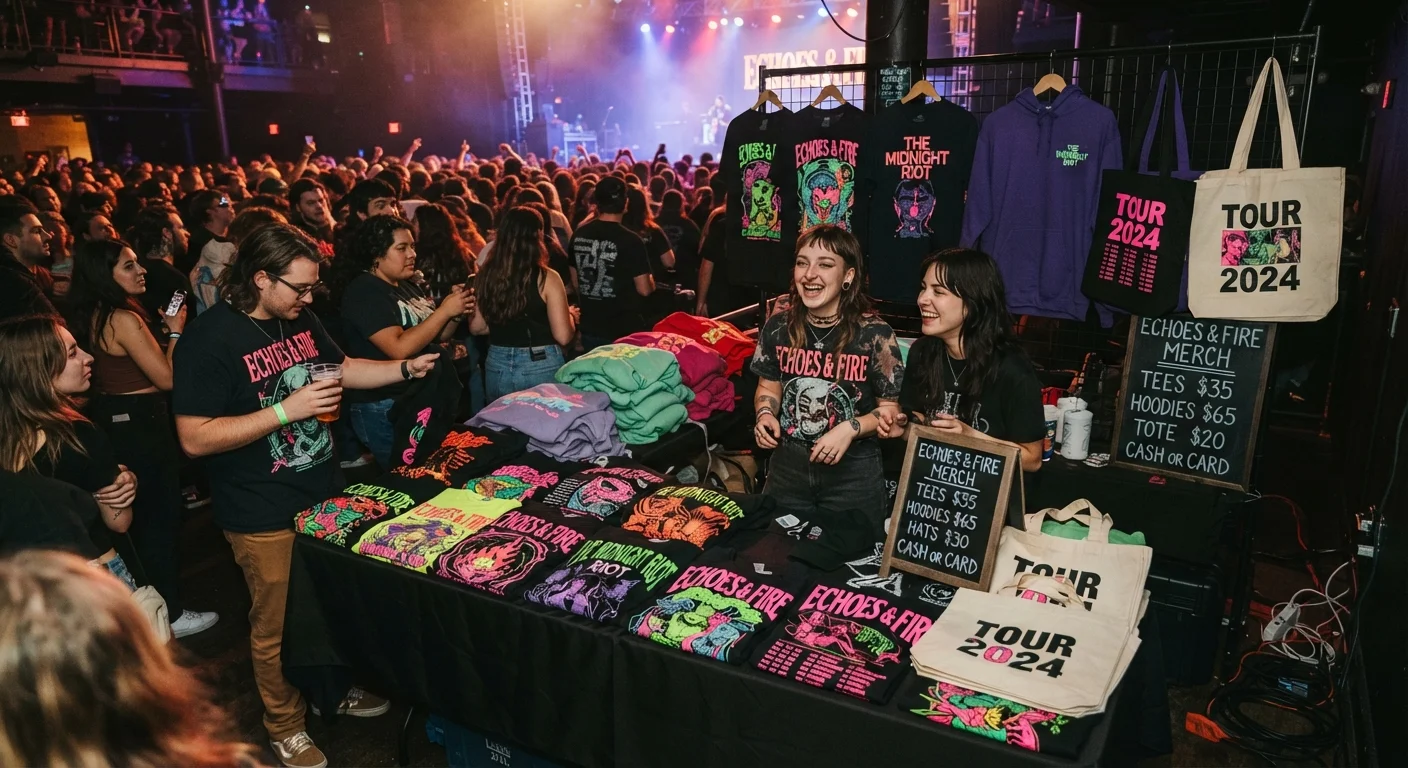
Not long ago, band merch meant one thing: an overpriced T-shirt with a tour logo sold out of a folding table near the bathroom hallway. Today, artist merchandise has become a multibillion-dollar cultural phenomenon that shapes what people wear, how they signal identity, and how artists survive economically. Drops sell out in minutes. Pieces appear on runways. Vintage band tees command serious resale prices.
This shift didn't happen accidentally. As streaming compressed per-play royalty payouts and traditional album sales declined, merchandise stepped up as one of the few income streams where artists - particularly independent and mid-tier ones - could retain meaningful control and margin. The myth that artists profit generously from streams is one reason merch has become so central to how musicians actually sustain careers.
The Real Upsides of Merch Culture
Direct income stream artists can largely control
Unlike streaming royalties, merchandise gives artists - especially independent ones - a revenue channel with higher margins and fewer intermediaries, making it critical for financial sustainability.
Strengthens fan identity and community bonds
Wearing an artist's merch is a form of public expression and group belonging, deepening the emotional connection fans feel both to the artist and to one another.
Extends the artist's creative vision visually
Designing merchandise lets artists translate their aesthetic into wearable form - collaborating with visual artists, playing with typography, and crafting a cohesive brand identity that goes beyond music alone.
Helps sustain careers between album cycles
Merch sales can provide a more consistent revenue floor than album releases or touring, helping artists maintain momentum and fund new creative projects during quieter periods.
Creates lasting physical mementos of live experiences
A tour tee or festival hoodie carries genuine sentimental value for many fans, serving as a tangible memory of a meaningful cultural moment they experienced firsthand.
Beyond personal economics, merch functions as community infrastructure. Wearing a faded Radiohead shirt or a limited hoodie from a favorite indie artist is a way of signaling taste, values, and belonging - especially for younger fans navigating identity. That signal becomes even more layered inside the world of dedicated fan communities, where owning specific drops carries real social meaning.
Merch also provides artists with creative latitude that the music industry rarely offers. Designing a collection gives musicians a canvas to extend their visual world beyond album artwork - collaborating with illustrators, choosing ethically sourced fabrics, or releasing limited pieces that feel genuinely collectible rather than mass-manufactured.
The Downsides That Fans Shouldn't Ignore
Label or management deals often cut artist revenue
Many artists - particularly those signed to major labels - face merch deal structures where a significant portion of sales revenue goes to the label or venue, not to them directly.
High prices exclude lower-income fans
Premium merch drops at $80 hoodies or $50 tees create economic barriers that can alienate dedicated fans who cannot afford to participate, making fandom feel stratified by wealth.
Fast-fashion production raises environmental concerns
Large print runs using synthetic fabrics and overseas supply chains contribute to textile waste and carbon emissions, a growing tension as fans become more environmentally conscious.
Unauthorized sellers mislead and overcharge fans
Bootleg or scalped merch - sold outside venues or on resale platforms - undercuts artists financially and often delivers inferior quality to fans who believe they're buying the real thing.
Commercialization can dilute authentic artistic meaning
When merch becomes primarily a branding exercise or a revenue checkbox rather than a creative extension, it risks eroding the genuine cultural connection that made it meaningful in the first place.
The economics of merch culture create winners and losers. When a major label or management company controls an artist's merch deal - which is common - the artist may see only a fraction of each sale. Fans paying a premium at the venue merch table sometimes assume that money goes directly to the artist, when in reality the split can be complex and heavily weighted toward middlemen.
There's also an accessibility tension. Limited drops with high price points or rapid sell-outs favor fans with disposable income and flexible schedules. When merch becomes a status marker within fan communities, those who can't afford it can feel subtly excluded from the inner circle - which runs counter to what music fandom is supposed to feel like.
Not All Merch Deals Are Created Equal
The terms of a merchandise deal vary significantly depending on whether an artist is independent, signed to a label, or working with a dedicated merch company. Some artists retain full control and profit; others have agreed to deals that heavily favor the label or distributor. Understanding this complexity is part of appreciating why merch purchasing decisions carry real weight for artists' livelihoods.
Environmental concerns are growing louder too. Fast-fashion production cycles applied to music merchandise - large print runs, synthetic fabrics, overseas manufacturing - carry a real ecological cost that the industry is only beginning to grapple with seriously.
Where Merch Culture Is Heading
The most interesting experiments in merchandise today push beyond the T-shirt model entirely. Artists are releasing vinyl variants, zines, digital collectibles, and locally produced capsule collections that feel intentional rather than transactional. Some are partnering directly with small manufacturers to offer transparent pricing and sustainable materials - signaling that fans are starting to ask harder questions about what they buy and why.
Merch culture also intersects with the broader live music experience in fascinating ways. Whether you encounter it at a stadium show or an intimate club set - two experiences that shape fandom very differently - what you buy and wear on the way out has become part of how the night lives on. At its best, a well-made piece of merch is a little piece of the show you carry home.
$3.5B+
Global music merchandise market value
Industry analysts have estimated the global music merchandise market at several billion dollars annually, reflecting its central role in how artists generate revenue.
~30%
Typical venue cut from merch sales
Many concert venues take a percentage of merchandise sales - commonly reported in the range of 25-35% - meaning artists see less of each dollar spent at the table.