

Key Takeaways
- Live game streaming is interactive - viewers can chat, cheer, and influence what happens on stream.
- Streamers manage gameplay, audience engagement, and technical setup simultaneously.
- Major platforms include Twitch, YouTube Live, and Kick, each with distinct community cultures.
- Monetization for streamers comes through subscriptions, donations, and platform ad revenue.
- Community moderation shapes the viewer experience and is a shared responsibility between platforms and creators.
- Even casual viewers participate in a social experience shaped by live, unscripted moments.
Live Game Streaming
Live game streaming is the real-time broadcast of someone playing a video game over the internet, where audiences can watch and interact as the action unfolds. Platforms like Twitch, YouTube Live, and Kick host these streams, connecting creators and viewers in the same shared moment. Unlike recorded videos, live streaming has no edits - what happens on screen happens right now.
Streamers encode and transmit video using software such as OBS Studio, which compresses and uploads footage to a platform's ingest servers in real time, typically at latencies ranging from a few seconds to under one second depending on the service.
How the Live Streaming Experience Feels from the Viewer's Side
Watching a live game stream is a fundamentally social activity. Unlike queuing up a recorded video, tuning into a live broadcast drops you into an ongoing conversation. The stream chat - a scrolling feed of viewer messages - pulses alongside the gameplay, full of reactions, jokes, and community in-jokes that build up over time.
Viewers aren't just passive observers. They can cheer on a streamer mid-boss fight, vote on which game gets played next, or trigger on-screen alerts by subscribing to a channel. Some platforms let viewers spend virtual currency to highlight messages or activate silly in-game effects, making them feel like active participants in the story unfolding on screen.
The appeal is also about personality. Audiences often follow specific streamers the way fans follow athletes or podcast hosts - for their humor, skill, or the specific energy they bring to a game. For a deeper look at how competitive gaming draws its own distinct viewership, see our Esports Viewership 101 guide.
~7.2M
Average daily live channels on Twitch
According to Twitch's publicly reported platform data, millions of channels broadcast at any given time across the platform.
31%
US adults who watch gaming streams
A Pew Research Center survey found roughly a third of American adults have watched someone else play video games online.
~2 hrs
Average daily time spent by active Twitch viewers
Platform engagement data indicates that regular Twitch viewers spend roughly two hours per day watching streams.
What Streamers Are Actually Managing Behind the Scenes
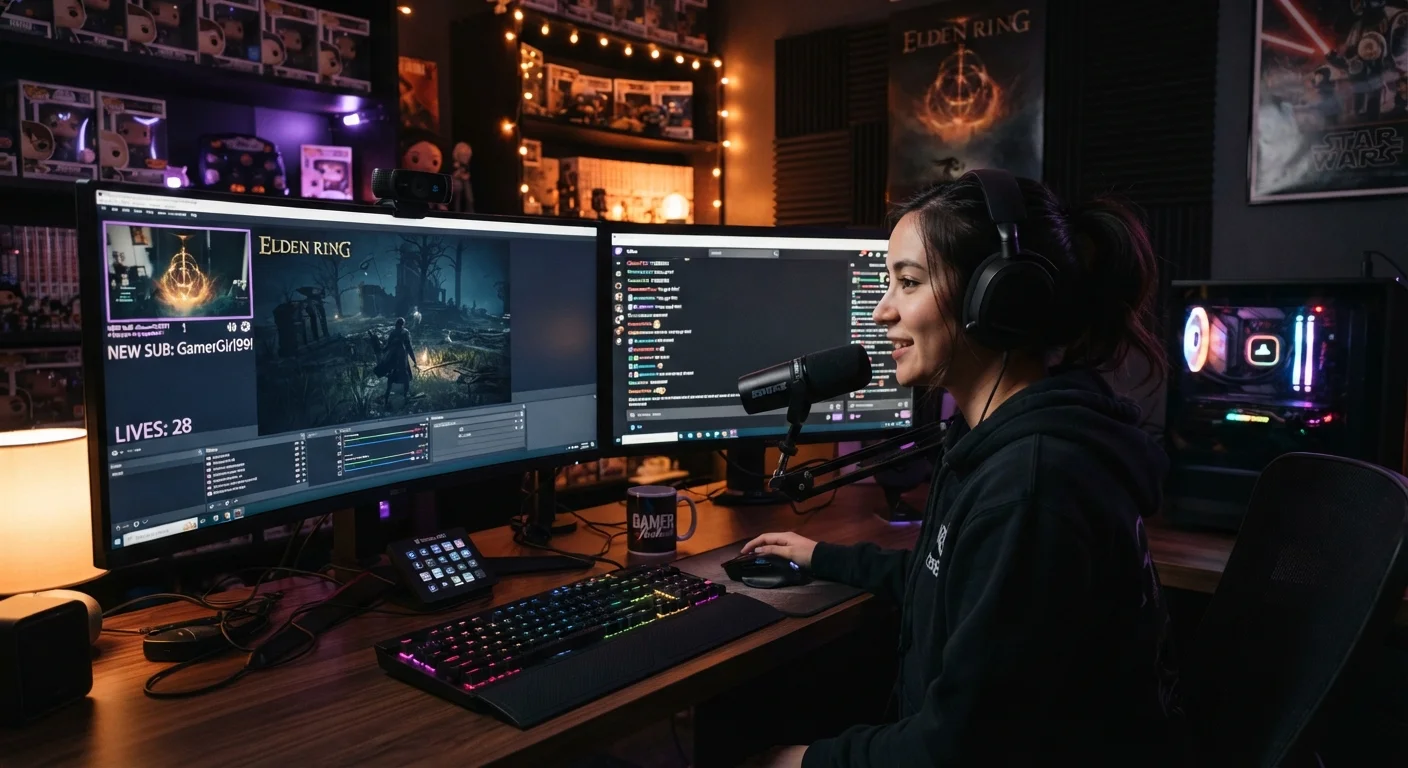
From the outside, streaming looks like someone playing a game while talking. From the inside, it's closer to running a small live television show alone. A streamer is simultaneously monitoring gameplay, reading chat messages, responding out loud, managing stream alerts, and keeping an eye on technical indicators - all at once.
Broadcasting software encodes the video signal in real time and sends it to a platform's servers. Streamers balance settings like bitrate and resolution against their internet upload speed to avoid buffering for viewers. A dropped frame or audio glitch during a critical moment can break immersion fast.
Starting Simple Saves Headaches
New streamers often try to launch with a professional-grade setup from day one. Starting with the basics - stable internet, free broadcasting software, and a single game you know well - lets you focus on engaging your audience before investing in equipment. Most platform communities respond more warmly to genuine personality than polished production.
Audience management adds another layer. Moderating chat - filtering hate speech, spam, or harassment - often falls on the streamer or a team of volunteer moderators. For a broader look at how platforms handle these responsibilities at scale, our article on streaming platform content moderation breaks down the policies involved.
The career side of streaming is equally complex. For those curious about what it looks like to do this full-time, our piece on gaming content creators explores the economics and realities behind the screen.
The Shared Space: Where Viewer and Streamer Meet
The most distinctive feature of live game streaming is the feedback loop between creator and audience. A streamer reads a funny message in chat and laughs - the audience sees the reaction and sends more. A viewer donates and types a challenge; the streamer decides whether to accept it. These moments of genuine human exchange don't exist in pre-recorded content.
“The parasocial bond between streamer and viewer is real, but what makes live gaming unique is that it can become genuinely social - the audience shapes what they're watching in ways TV never allowed.”
— T.L. Taylor, Professor of Comparative Media Studies, MIT; author of research on game streaming culture
This interactivity also creates memorable shared experiences. When a streamer beats a notoriously difficult boss after dozens of failed attempts, the chat erupts simultaneously. Thousands of people celebrate the same moment at exactly the same time, which mirrors the communal energy of watching a live sports event. The comparison isn't accidental - live streaming and live sports broadcasting share the core appeal of unscripted outcomes. Our piece on sports broadcasting and streaming explores how that same live tension drives rights deals and audience habits.
Community norms, running jokes, and shared vocabulary develop organically within a streamer's regular audience, creating a sense of belonging that keeps viewers coming back. It's less about any single game and more about being part of something that unfolds live, together.